
The European Commission announces the results of the first joint tender for the purchase of gas

- Europe and Arabs
- Tuesday , 16 May 2023 15:46 PM GMT
Brussels: Europe and the Arabs
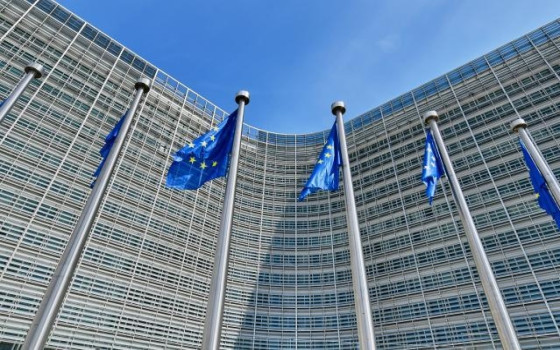
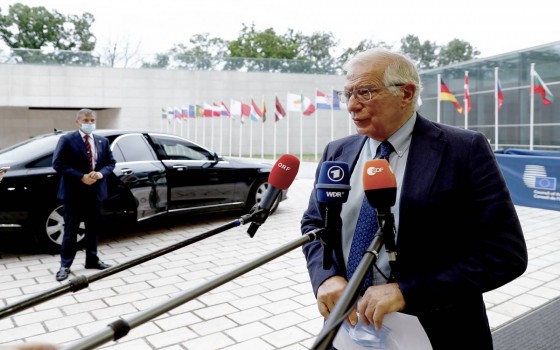
The Vice-President of the European Commission, Maros Sefcovic, announced the results of the first joint gas purchase tender in the European Union, and said in statements from the Commission's headquarters in Brussels today, "I stood here last week to announce the launch of the first joint gas purchase tender at the European Union level, within the framework of the European Union's energy platform. Today, I am really pleased to announce the positive reaction we have received from the market.
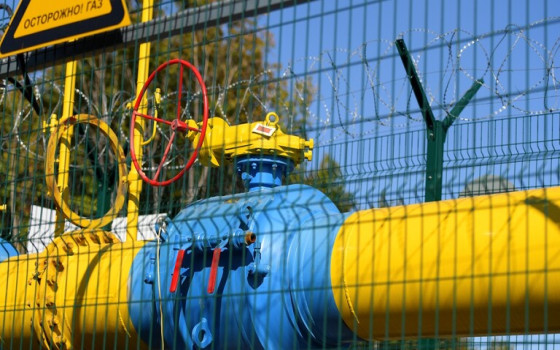
Reliable international suppliers have responded to our total demand of approximately 11.6 bcm of gas with bids to supply a total volume of over 13.4 bcm. This is nothing short of a remarkable success. It shows that we were right to pool our claims, use Europe's collective drawing power, and work together to fill our gas stores for next winter. I want to thank all 25 suppliers who submitted their bids - exceeding our collective demand.
Our service provider Prisma has matched the most attractive offers to customer requests. To be precise, a total volume of 10.9 billion cubic meters was matched. Of this volume, LNG accounts for more than 20% and the remaining nearly 80% is covered by pipeline gas. The bids cover 18 of the 21 pipeline gas virtual trading points and both virtual LNG trading points, in the north and south. Matching in the most vulnerable countries is particularly positive.
For example, gas shipments ordered by Bulgaria were exactly matched. In Ukraine and Moldova, 100% and 80% of the ordered sizes are matched, respectively.
Again, this is a great result for a machine that hasn't been around for about five months.
So I repeat, AggregateEU has become a dynamic new market for gas buyers and sellers in Europe - designed to strengthen our energy security, as we phase out Russian gas, and to suit the needs of market operators in Europe. This is why we have more than 110 companies participating in the AggregateEU mechanism and more companies are signing up every day. Covering all regions of the European Union as well as some countries of the Energy Community, these companies represent all types of gas operators and consumers of industrial gas. Now, what are the next steps?
All participants are informed of the outcome of the matching exercise and will be able to begin contractual negotiations.
As you know, this part happens outside of the EU's pooling mechanism - without any involvement from the Commission or Prisma.
The Commission has played its role as an aggregator and matchmaker, and now it is up to the parties involved to make their agreements. He added, "In the second half of June, we envisage launching the second round of collecting requests and bids. Three more rounds will follow before the end of this year. In the meantime, my team and I will continue to communicate with international gas suppliers to attract more of them in future rounds. I think this is an opportunity." For them to expand their customer base. Which is a win-win for all parties. Next week, I will host a virtual Steering Council, made up of high-level representatives from Member States as well as those of the Energy Community, where we will discuss these findings and our way forward.
And the European Commission announced, last week, that European companies were allowed to register their requests to buy gas within the framework of the first joint gas purchase project launched by the European Union, and the European Union countries had decided last year to buy gas jointly, in an attempt to secure prices and refill gas storage facilities. It allowed companies from the 27 EU member states, plus Albania, Bosnia and Herzegovina, Kosovo, North Macedonia, Georgia, Moldova, Montenegro, Serbia and Ukraine, to register their gas needs on an electronic platform until May 2.
Gas prices reached record levels last summer, after Russia cut its exports to Europe, and a European official said that Russian companies would be excluded.
"The energy crisis has taught us that the European Union works better when it acts in unity and solidarity," said Maros Sefcovic, Vice-President of the European Commission, in a statement at the time.




No Comments Found