

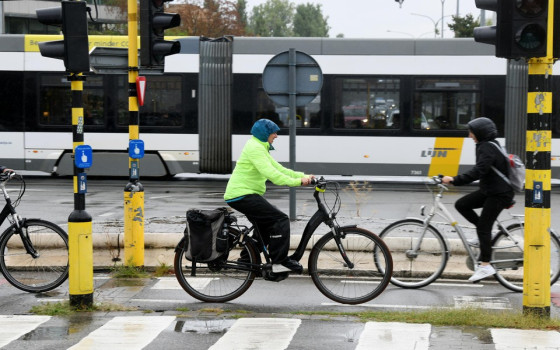
Steps to strengthen the efforts of the European Union to achieve its goals related to road safety...to reduce the number of accidents and casualties

- Europe and Arabs
- Tuesday , 18 June 2024 19:24 PM GMT
Brussels: Europe and the Arabs
The EU Council has approved the conclusions of the European Court of Auditors (ECA) report which aims to strengthen the EU's efforts to achieve its road safety objectives.
A statement issued by the Union institutions in Brussels said that on March 12, 2024, the Court published its special report entitled “Achieving the EU road safety objectives – time to move forward”, which provides an in-depth examination of the current situation and trends in the field of road safety in the European Union. . The report stressed that the time is right to evaluate policies to enable continuous improvement of road safety and reach the ambitious goals of halving road deaths and serious injuries by 2030 (compared to 2019) and getting as close as possible to zero road casualties by 2050 through “Vision Zero.” Or similar effective strategies.
We all agree that overall progress towards achieving our road safety goals is not yet sufficient. We should therefore take immediate action on multiple fronts focusing on active and most vulnerable road users, as well as engaging public authorities at all levels, all road users, industry and civil society actors to achieve better results. I am very pleased that the text of the Council Conclusions that we adopted today provides clear guidance in this regard. According to what the statement quoted from Georges Gilkennett, Belgian Deputy Prime Minister and Minister of Mobility, whose country holds the current rotating presidency of the Union.
The Council's conclusions are largely consistent with the report's observations. However, with regard to the aspect of coordinating the formulation and monitoring of road safety KPIs, it emphasizes differences in methods, practices and national characteristics between Member States which naturally limit such initiatives. The Council sees this difference as a valuable source of mutual learning and exchange of best practices, and considers that initiatives, including at European level, do not depend on full prior coordination of approaches.
The text also refers to commitments to ensure safe coexistence between different modes of transport, as expressed in the recently signed European Inter-Institutional Declaration on Cycling, or in the Stockholm Declaration on Road Safety, taking into account the growing importance of active transport. Which use small means of transportation. Mobility devices, which create additional challenges to road safety. It also reflects ongoing projects (Trendline, Sponsorship, Road Safety Monitoring Tool) and legislative initiatives at European level (Road Safety Package, Vehicle Regulation).
The text highlights the importance of investing in high-quality, resilient and sustainable road infrastructure, relevant road safety planning commitments, as well as interconnectivity and interoperability of traffic-related data to improve road safety management. Finally, the conclusions acknowledge the potential of innovative technologies for road safety, putting them in perspective in relation to driver knowledge and behavior and in relation to coexistence with vulnerable road users and with users of human-controlled vehicles.






No Comments Found