
The Brussels summit's message to Russia: You have not achieved your goals in Ukraine, and we will stand by her. The solution lies in serious negotiations. €90 billion in support for Kyiv and the postponement of the signing of a major trade agreement with South America.

- Europe and Arabs
- Friday , 19 December 2025 10:12 AM GMT
Brussels: Europe and the Arabs
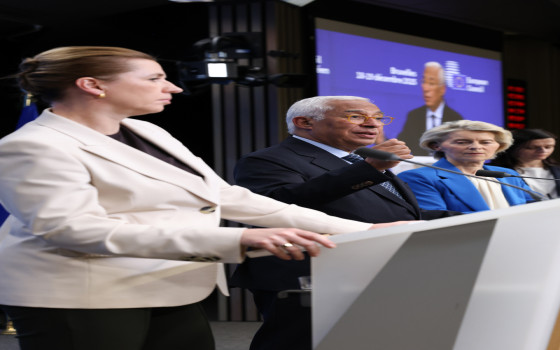
We have committed and fulfilled our commitments. With these words, European Council President António Costa began his remarks at the closing press conference of the European summit hosted by Brussels, which began Thursday morning and continued into the early hours of Friday morning. He added, "In October, we decided that the European Union would cover Ukraine's urgent financial needs for 2026 and 2027. Last week, we decided that Russia would not release its assets until Moscow ceases its aggression. Today, we agreed on a decision to provide €90 billion to Ukraine over the next two years. As a matter of urgency, we will provide a loan backed by the EU budget. This loan will meet Ukraine's urgent financial needs. Ukraine will only repay this loan after Russia pays compensation. The EU reserves the right to use frozen assets to repay this loan. At the same time, we have authorized the Commission to continue working on the compensation loan based on frozen Russian assets. Furthermore, we have agreed to extend our sanctions against Russia. Our goal is not to prolong the war. In fact, today's decisions are a crucial contribution to achieving a just and lasting peace for Ukraine." The only way to force Russia to the negotiating table is to strengthen Ukraine. Today’s decisions will provide Ukraine with the means to defend itself and support the Ukrainian people.
The message we are sending to Russia today is crystal clear:
First, you have not achieved your objectives in Ukraine;
Second, Europe stands with Ukraine. Today, tomorrow, and for as long as necessary;
Third, Russia must come to the negotiating table in earnest and acknowledge that it will not win this war.
Because the only way forward is a ceasefire and peace through negotiations. Our political and financial support for Ukraine is unwavering: in war, in peace, and in reconstruction. We are committed to building a free and prosperous Ukraine within the European Union.
Now turning to the rest of our agenda, I would like to speak briefly about our long-term budget.
The European Union has set itself an ambitious agenda, focused on security, competitiveness, and social cohesion. We need a budget that gives us the means to achieve our ambitions. This morning, Ursula and I began our day by meeting with representatives of farmers—many of whom were already gathered. Here in Brussels, we have listened to their concerns, and I want to tell them: Europe stands with you and will continue to support you. Everyone present at the European Council understands the strategic importance of agriculture. Protecting European farmers and safeguarding food security is a fundamental objective of the Union, and we will address it in the upcoming budget negotiations.
The European Commission's proposals provide an excellent starting point for discussion; they offer a new framework suited to a new reality. We must now continue working on this basis, as time is of the essence. We will continue our work at a rapid pace, as we need to create the conditions necessary to reach an agreement by the end of next year. This is crucial to ensure we have sufficient time to implement our decisions, adopt legislation, and prepare our administrations for the next budget cycle in 2028.
We all share one clear objective: a just and lasting peace for Ukraine. Therefore, we met with a clear objective: to meet Ukraine's urgent financing needs for the next two years. And I am very pleased to say: we have achieved this.
We have reached an agreement to meet Ukraine's financing needs for the next two years. As you know, the Commission proposed Two solutions. Both are legally sound. Both are technically feasible.
On the one hand, we proposed borrowing from the EU on the market. On the other hand, we developed the Compensation Loan. Last week, we sent a clear and strong political message by freezing Russian assets in the EU for the long term. Based on this, we agreed on a solution to finance Ukraine for the next two years.
Member States agreed to finance Ukraine by borrowing from the EU on the capital markets, in the amount of €90 billion for the next two years. We will achieve this by strengthening cooperation, supported by the EU budget surplus, and based on a unanimous agreement to amend the Multiannual Financial Framework.
As with the Compensation Loan, which is crucial, Ukraine will not be required to repay the loan until it receives the compensation. Until then, the assets will remain frozen. The EU reserves the right to use the available funds to finance the loan. This is the solution we reached together.
As discussed in recent weeks, financing for Ukraine beyond 2027 will be part of the discussion on the next Multiannual Financial Framework.
The budget The upcoming European Union meeting was also on the agenda. The Danish Presidency has done an excellent job. Today's focus was primarily on structure and timeline. We need a faster, simpler, and more flexible budget—a budget that ensures Europe can meet the demands of a crisis-ridden world, as demonstrated again today in the financing of Ukraine. Finally, we agreed on the need to expedite this agreement and on the intensive work ahead with the Cypriot Presidency.
We then moved on to discuss geo-economics, including the Mercosur agreement. This evening, we achieved a significant breakthrough that paves the way for the successful conclusion of the agreement in January. We need a few more weeks to address some issues with the member states. We consulted with our Mercosur partners and agreed to postpone the signing slightly.
This agreement is crucial for Europe—economically, diplomatically, and geopolitically. It opens up new trade and economic opportunities for all our member states. With additional due diligence and safeguards, we have included all the necessary guarantees to protect our farmers and consumers.
In a year dominated by news of rising tariffs and new trade restrictions, the positive impact of this agreement stands out. - Not just for our two regions, but for the global economy.




No Comments Found