
Politico: No current EU official on Washington's no-fly list... and gloom hangs over Commission headquarters after convoluted alternative plans for Brussels summit and the plastics package.

- Europe and Arabs
- Wednesday , 24 December 2025 8:39 AM GMT
Brussels: Europe and the Arabs
The US Secretary of State, known for his hawkish stances, warned that Washington intends to "bar prominent figures in the global surveillance system from entering the United States," targeting what he called "ideologues in Europe." This is a clear reference to the European Union, and specifically the European Commission. (Some technology policy experts told Politico that this latest move represents a "new escalation" in this dispute.)
According to a report by Playbook, the European edition of Politico, under the headline "No need to worry," no current EU officials appear to be among the five individuals sanctioned. However, the travel ban seems to have targeted a name familiar to Playbook readers: former Commissioner Thierry Breton, whom Under Secretary of State Sarah B. Rogers described as the "mastermind behind the Digital Services Act." Breton responded to X by asking if "the McCarthy witch hunt is back"—a reference to former Senator Joseph McCarthy's anti-communist campaign in the 1950s. Breton's response was supported by French officials.
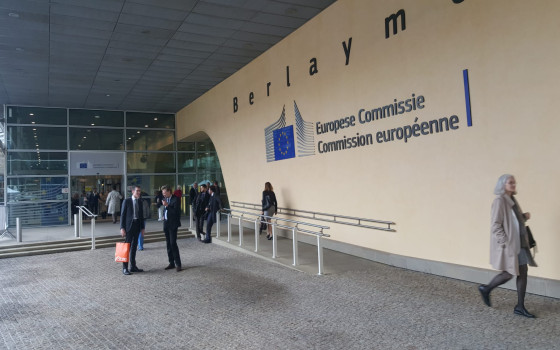
According to Playbook, the sense of emptiness pervading the Commission's headquarters building, Berlaymont, has been particularly strong since last week's exhausting EU summit, with its untapped potential and convoluted contingency plans. This included not only the legal and political minefield of the last-minute Ukraine funding agreement, but also the EU-Mercosur trade deal, which briefly resurfaced before collapsing again.
A pall of gloom hangs over the Commission. After months of bureaucratic wrangling and compromises, EU leaders have delivered a harsh reality: the Commission's ambitions have been dashed by political and national red lines. Under the headline "The Commission's Christmas Package: Here's the Bad News," Politico reported: "The holidays have become a favorite time for the Commission to quietly release its news. On Wednesday night, the Commission secretly released two noteworthy items. The first, a 'hidden' plastic package: There's a fitting irony here. The Commission effectively 'gifted' a plastic package without officially presenting it." There's a press release with quotes from commissioners, but no official launch, no press briefing, and of course, no questions from journalists.
When a tree falls in a forest: it makes you wonder how something like this could be approved without a Commission meeting. A Commission spokesperson told me it was adopted according to written procedures, and that this is the first of two circular economy packages—the second being the Circular Economy Act, due for adoption in 2026 (hopefully not in the height of summer).
It's easy to see why they did this: Politico's Marianne Gross delved into what the package actually means. In short, plastic bottles can be labeled as containing 30% recycled plastic, even if they don't actually contain that much recycled material.
The statistics are telling: this is thanks to a new methodology proposed for calculating the percentage of recycled content in products sold on the EU market. (Note: this is the second attempt; a similar proposal failed to gain support from MEPs in 2016.) (2024).
What’s the problem? EU law requires that PET bottles contain 25% recycled plastic, rising to 30% by 2030. The European Commission is seeking to include other technologies that count toward recycled materials, such as chemical recycling, which often relies on a mix of waste plastics and virgin plastics derived from fossil fuels (critics argue this is environmental misinformation).
Step Two: State Support Directive for the Emissions Trading System: The Commission’s Step Two amends the rules for state support related to the Emissions Trading System, significantly benefiting energy-intensive industries. The eligibility for compensation has been expanded to include 20 additional sectors, including organic chemicals, ceramics, and batteries. The support intensity for sectors already covered has also increased from 75% to 80% of the indirect carbon costs related to electricity that Member States can offset.
This is not a blank check. It is true that large beneficiaries will be required to reinvest. Part of the support goes towards projects that reduce electricity costs or support the green transition. However, for much of the industry, this is seen as a generous gift given away in offices.




No Comments Found