

Sudan After 1,000 Days of Conflict: Civilians Pay the Price for a War They Didn't Choose – Nearly 14 Million Displaced and 21 Million Suffering from Food Insecurity

- Europe and Arabs
- Saturday , 10 January 2026 11:15 AM GMT
Khartoum: Europe and the Arabs
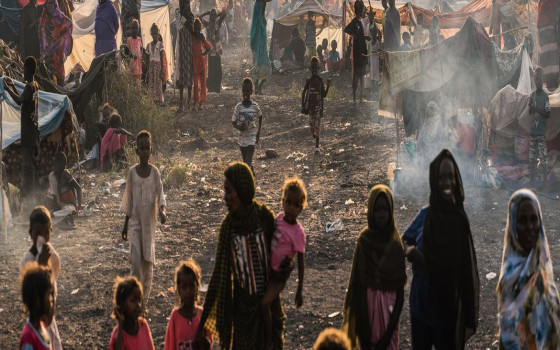
UN aid agencies marked 1,000 days of war in Sudan by recalling the grim reality it has created, leading to the world's largest hunger crisis and the largest emergency displacement, while civilians continue to "pay the price for a war they did not choose" with each passing day.
The latest UN figures indicate that 9.3 million people remain displaced by the conflict across the country, and more than 4.3 million have fled across borders, placing immense pressure on neighboring countries. It is also believed that more than 21 million people are suffering from acute food insecurity nationwide, according to the UN Daily News.
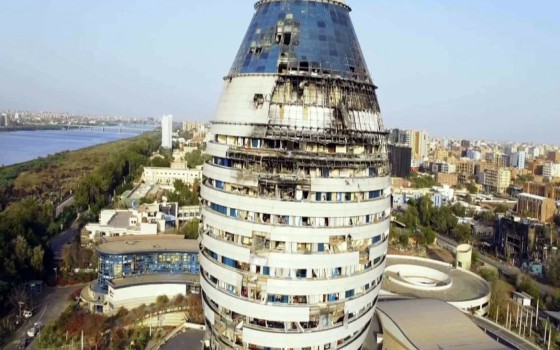
The bulletin added that although many displaced people have returned to the capital, Khartoum, civilians there still face numerous challenges and dangers, including the threat of unexploded ordnance.
Clashes continue "on multiple fronts in Kordofan," Jens Laerke, spokesperson for the UN Office for the Coordination of Humanitarian Affairs (OCHA), told reporters in Geneva on Friday. He noted that the blockade has cut off access to Kadugli, the capital of South Kordofan state, and Dilling, a town north of Kadugli, restricting access to food, healthcare, farms, and markets.
Daily Drone and Missile Attacks
In Darfur, “ground clashes and drone attacks from the air” continue, while long-range strikes on civilian infrastructure far from the front lines have also been recorded, according to Larke.
Children continue to be killed and injured amid ongoing clashes between the Sudanese Armed Forces and the Rapid Support Forces. Eight children were reportedly killed in an attack in El Obeid, North Kordofan state, earlier this week.
According to UNICEF, nearly 5,000 children have been displaced every day since the conflict began in April 2023. “Many have been displaced not just once, but repeatedly, with violence following them wherever they flee,” said UNICEF spokesperson Ricardo Pires.
He warned that millions of children, including infants, are also at risk of rape. “Behind every one of these numbers is a frightened, hungry, and sick child wondering why the world hasn’t come to their aid,” said Perez.
The scourge of sexual violence
Women are also subjected to “rampant” violence and sexual assault. An estimated 12 million people are at risk of gender-based violence, the vast majority of whom are women and girls, according to OCHA.
“Female-headed households are three times more likely to be food insecure, and three-quarters of these households report not having enough to eat,” said Larke.
The global humanitarian funding crisis has impacted the work of the UN and its partners in Sudan, with only 36 percent of the $4.2 billion requested last year being funded by donors.
Urgent appeal
In light of this funding shortfall, OCHA has been forced to prioritize more stringent needs in its 2026 response plan, aiming to assist 20 million of the nearly 34 million people in Sudan believed to be in need of humanitarian assistance. The cost of this plan was estimated at approximately $2.9 billion.
The OCHA spokesperson emphasized that this decrease in demand "reflects the reality of the funding environment, not the level of needs on the ground."
Larke noted that 1,000 days represents nearly half the duration of World War II, and therefore launched an urgent appeal calling for:
First: "An immediate cessation of hostilities and genuine steps towards a lasting peace."
Second: "Adherence to international humanitarian law, facilitating aid access across conflict lines, and protecting civilians, including aid workers, and civilian infrastructure."
Third: "A renewed mobilization of funding efforts, with a particular focus on supporting local networks, women-led organizations, and national partners who remain at the forefront of the response."
Unprecedented Displacement Crisis
For its part, the International Organization for Migration (IOM) stated that nearly a third of the Sudanese population has been displaced during the conflict, amounting to more than 15 million people, including 11.58 million internally displaced persons (IDPs) within Sudan and approximately 4 million who fled across borders at the height of the crisis. In a statement, the organization said that, on average, five displacement-causing events occurred weekly during this period, resulting from conflicts and natural disasters, leading to widespread displacement.
In this context, the organization's Director General, Amy Pope, said that the conflict "has taken a devastating toll on the Sudanese people." She added: "Behind every displacement statistic stands a family doing everything they can to protect their children, preserve their dignity, and survive with minimal resources. The resilience of the Sudanese people must be met with sustained international action that protects civilians, supports displaced families, and creates the conditions for peace so that people can return safely, recover, and rebuild their lives."
Today, 1,000 days into the conflict, some 9.33 million people remain internally displaced, more than half of them children, while some 3 million have returned to their areas of origin, with more than 1 million of them returning to Khartoum alone. However, the organization said that returns remain fragile and often occur in areas with damaged infrastructure, limited services, and persistent insecurity. She stressed that without tangible progress towards peace and stability, "millions of Sudanese will remain trapped in a cycle of displacement, loss and uncertainty."

No Comments Found