
High-level European meetings to decide on migration, growth, competitiveness, defense spending, and humanitarian crises in Sudan and Syria

- Europe and Arabs
- Monday , 9 February 2026 7:14 AM GMT
Brussels: Europe and the Arabs
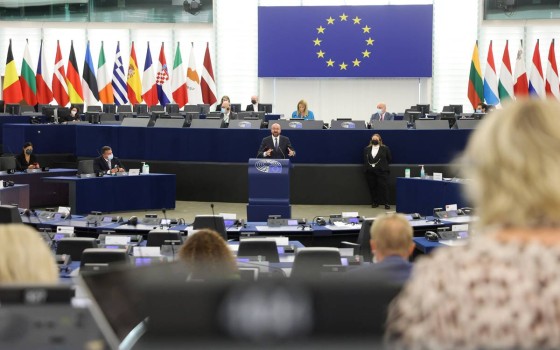
European Union institutions in Brussels and elsewhere are holding high-level meetings starting today and continuing over the next few days to make decisions on important issues, focusing on political, economic, and defense matters. Members of the European Parliament will travel to Strasbourg for the plenary session this morning, Monday, while defense ministers will be in Brussels on Wednesday. Leaders will arrive in the Belgian countryside for strategic talks on Thursday, before many of them head to the Munich Security Conference, which begins on Friday, according to a report by Playbook, the European edition of Politico. The report, titled "Growth or Perish," stated that "EU countries are pressing the European Commission to take seriously the task of reviving the bloc's struggling economy, amid fears that it is becoming at the mercy of other superpowers such as the United States and China. Capitals are striving to take measures to link markets, keep money within the continent, and eliminate regulations that harm key sectors, ahead of the European competitiveness summit on Thursday."
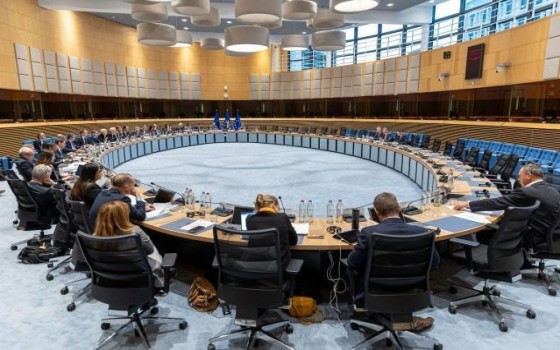
This debate will culminate behind closed doors at Alden Besen Castle on Thursday, where presidents and prime ministers will hear from two former Italian prime ministers who are now considered leading figures in the field. Economy: Mario Draghi and Enrico Letta. The summit agenda includes reforms to the European market, boosting productivity, and addressing an increasingly turbulent geoeconomic environment. According to an EU official, European Commission President Ursula von der Leyen will address leaders today, "pledging to take more concrete action to advance the competitiveness agenda" as the basis for discussions on growth.
"Without GDP growth, we will be vulnerable to external shocks," Polish Finance Minister Andrzej Dumanski said in preparations for the summit. He added that Poland can only spend "around 5% of its GDP on defense, given its high tax revenues." The Commission and other EU policymakers must "focus on growth, focus on deregulation, and be more ambitious," something critics say the Commission has failed to achieve.
During a lunch with ambassadors last Friday, von der Leyen was repeatedly questioned about energy prices and trade, according to diplomats who attended. These two issues remain stumbling blocks. Prosperity, despite new action plans and agreements with third countries. Von der Leyen countered that Brussels is doing its part by planning seven more packages of deregulation—or what Brussels calls “sweeping reforms”—to reduce red tape. She cited energy taxes and harmonizing the single market as ways capitals can do their part.
Belgian Prime Minister Bart De Wever released a book this morning addressing the deregulation debate, titled “On Prosperity.” De Wever warns that “the European engine that was supposed to propel us forward is stalling” at a time when it is most needed, and he blames over-regulation for harming emerging sectors like artificial intelligence. For those still unfamiliar with the terminology, my colleague Peter Haeck has already explained it.
Meanwhile, Germany is warning countries that they will not be able to relinquish control and become more integrated into the single market unless European officials pledge not to continue piling up bureaucratic procedures. This is according to a position paper circulated by Berlin and obtained by Politico over the weekend. This week.
In an interview with Playbook, Valdis Dombrovskis, the EU commissioner responsible for reducing unnecessary regulations, stated that he is "fully prepared" for a new push from member states to accelerate the process. "We have made this a top political priority. A year after taking office, we have introduced ten comprehensive packages that will save more than €15 billion in annual administrative costs. But this is just the beginning," he said.
Dombrovskis added: "Let me give you an example: small and medium-sized enterprises (SMEs). Today, they represent 99.8% of all our businesses, employ nearly 90 million people, and contribute more than half of the EU's value added. 55% of our SMEs cite regulatory hurdles and administrative burdens as their biggest challenge." Our program to streamline procedures aims to enable companies to focus on what they do best: investing, innovating, and expanding, not on filling out forms. Under the headline "EU Money for EU Business," Playbook reported: "Among the most controversial aspects of the new growth drive is an initiative to ensure that more EU public funds are spent within its markets on key industries. France has embraced the idea, but Germany, Sweden, and other countries are wary, fearing that rigid rules will stifle the economy rather than support it." A European diplomat who supports the move told Playbook: "I think it's time to think about this and see what we can do. We don't need protectionism, but smart, targeted solutions." Leaders hope to finalize the details of what "buy European" will mean in practice, as the document, currently being drafted by officials, remains at the technical stage and has not yet been presented to the Council.
“The proposal in its current form would not have passed in the Council—it is fundamentally too protectionist and too broad,” an EU official stated. A tremendous effort has been made, and work is still underway. It is crucial, so it must be done perfectly. As the saying goes in Brussels: on the rare occasions when Paris and Berlin agree, it might actually happen.
Immigration
Crackdown on Violence: Under new proposals put forward by Sweden, murderers, rapists, and other serious violent offenders could be deported if they are not EU citizens. Stockholm’s Minister for Migration, Johan Forssell, is calling on his counterparts to rally support for a comprehensive review of international agreements. The plan aims to ensure that criminals can be returned to their countries of origin, even in cases where UNHCR guidelines prevent this.
Forssell explained to Playbook that Sweden’s center-right coalition government will introduce new measures in the spring aimed at increasing the return of migrants sixfold. However, Forssell said that international agreements limit the possible measures, “especially when people with refugee status commit rape and other forms of serious sexual violence.”
Regarding changing the rules, Forssell said: “The Refugee Convention allows for the expulsion of refugees if they commit a very serious crime and pose a threat to the national security of the member state. Rape is an example of a very serious crime, but the UNHCR guidelines… require an individual assessment of the characteristics of the crime to determine whether it is very serious or not.” Sweden’s initiative aims for a comprehensive review of the UNHCR guidelines so that rape and other forms of serious sexual violence are always considered very serious crimes.
The European Parliament will vote on Tuesday on new rules that create lists of safe countries to which rejected asylum seekers can be easily returned without lengthy review procedures. The vote will also identify safe third countries that can serve as return centers. Meanwhile, members of the European Parliament will discuss the humanitarian crises in Syria, Sudan, and the Democratic Republic of Congo that have forced civilians to flee their homes in search of safety abroad.




No Comments Found