


Lakjaa’s Modernity, Benkirane’s Archaism, and the Message of Prophet Muhammad — By Abdelmajid Moumerous

- Europe and Arabs
- Tuesday , 27 October 2026 5:50 AM GMT
Safeguarding Morocco’s nascent democratic experiment requires ensuring an effective government and a constructive opposition, within a balanced institutional framework. It also necessitates the free exercise of partisan activity—within the bounds of the law—alongside the implementation of the constitutional principle that links authority with accountability. Therefore, it must first be emphasized that the party that emerged at the forefront of the September 23rd elections should learn a lesson from the fate of Akhannouch’s party—with its predatory, neoliberal-leaning ideology—which failed to deliver on the exaggerated promises made during its election campaigns.
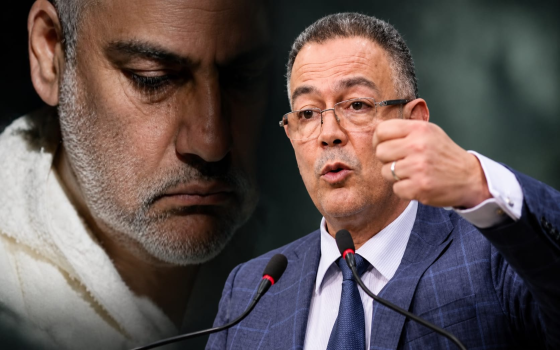
Secondly, it is worth reminding those who might benefit from such a reminder that the very results of the September 23rd elections pushed the Justice and Development Party (PJD) to the brink of a dogmatic opposition—one that weaves reactionary alliances with deeply harmful opportunism, devoid of any viable social alternatives. When Fouzi Lekjaa’s reformist approach was introduced, it shocked and terrified Benkirane. In response, the PJD’s godfather resorted to a shallow, tiresome rhetoric, clearly unsettled by Lekjaa’s modernizing vision. He has sought to turn this vision into a convenient scapegoat—a hook upon which to hang a host of preemptive accusations, supported only by flimsy justifications, distorted pretexts, and fabricated arguments.
Thus, the dogmatic nature of this opposition has become manifest, stemming from the PJD’s lack of a coherent national cultural framework—a framework that would otherwise be capable of resolving the party’s glaring identity-related contradictions. The Justice and Development Party (PJD) proves itself to be, in form, a "priesthood gathered around a table," and in substance, a "useless party," as it offers no new reformist ideas. Indeed, it is an established cultural reality—asserted with absolute certainty—that this Moroccan offshoot of the Muslim Brotherhood has, since its hybrid inception, existed entirely outside the context of Morocco’s constitutional, intellectual, and historical evolution. It opposes the very progress of the Kingdom and seeks to proscribe any project for civilizational advancement or the national modernity to which the country aspires.
Thus—much to Benkirane’s chagrin—I find myself compelled to pull the ears of these misguided traditionalists, to remind them that the era of political posturing and extortion has come to an end—by the will of God, the Wisest of Judges. It is my hope that this piece serves as a word of counsel to the leader of these "Brotherhood" figures, who have strayed far from the path of Morocco’s constitutional democracy.
For by dragging the role of the opposition into the mire of political superstition—as the Justice and Development Party persists in doing—it will never succeed in forging a productive opposition capable of meeting the demands of this new national phase. This applies both to the party’s political function—in terms of generating honest, ideologically sound discourse—and to its alignment with the legal framework that governs the operations of political parties. The ideological framework of the PJD (Justice and Development Party) views Lekjaa’s budget with the utmost suspicion. Driven by a partisan impulse—prone to political malice—the party seeks to devise regressive, rogue tactics in response to the election results of September 23rd, while casting doubt on the major social reforms outlined in the 2027 draft finance bill.
Amidst a display of hypocritical lamentation and contentious vitriol, one observes Benkirane reveling in the fabrication of a "new" discourse for the PJD—reimagining its relationship with the state, society, and its own parent organization. Yet, the evidence presented in my previous article clearly demonstrates the inherent limitations of this estranged faction; they have succeeded only in ideologizing the divine religion and slandering the message of Muhammad by falsely claiming that the Prophet incited his companions to kill men and women.
Consequently, the PJD must undergo a moral and partisan rehabilitation, engage in a sustained process of rational political modernization, and urgently update its flawed identity-based framework—grounding it instead in a conscious, responsible national foundation. Given the regressive, alienated mindset that these members have cultivated—which has effectively obstructed Morocco’s path toward democratic reform and development—it would be far better for Benkirane to refrain from his pseudo-intellectual prattle and his "undemocratic" rejection of the outcomes of the nation’s democratic electoral process. Hypocrites cannot polish the image of their clerical interpretation of the electoral process at the expense of the integrity of our nascent constitutional democratic experience.
Thus, driven by the profound naivety of mindsets defined by contradictory identities, the party of "governing religiosity" clings with devoted zeal to an undesirable cultural archaism. The alarmist, hyperbolic fear surrounding the modern approach represented by Fouzi Lekjaa exposes the extent of a "moral atrophy" afflicting the leaders of the Justice and Development Party (PJD). This compels us to refute falsehoods with sound argument, while documenting the steady, progressive successes of our constitutional democratic experiment. These cumulative achievements lay bare the true nature of the bankrupt opposition offered by an electoralist, non-civil organization—one that has deprived the Moroccan people of the chance to confront multidimensional challenges with a more equitable, robust, and vibrant socio-cultural and economic resilience.
Abdelmajid Moumiros
Poet and Op-ed Writer
Vice President of the Freedom and Equality Organization








No Comments Found