

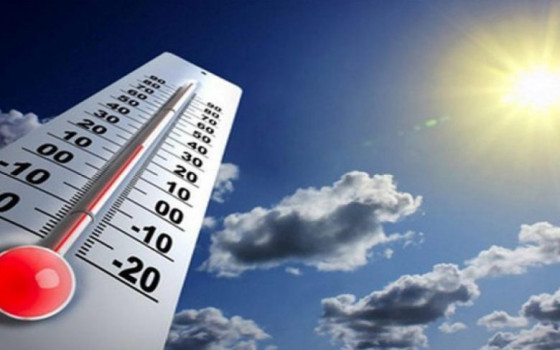
Hottest Year Ever in the Arab Region

- Europe and Arabs
- Thursday , 4 December 2025 13:32 PM GMT
New York: Europe and the Arab World
The hottest year on record for the Arab region was 2024, and the rate of warming has accelerated in recent decades, accompanied by more intense heat waves and droughts, as well as heavy rainfall and storms. This was stated in a report issued by the World Meteorological Organization (WMO) on Thursday regarding the state of the climate in the Arab region, according to the UN Daily News.
The report, prepared by the WMO in partnership with the United Nations Economic and Social Commission for Western Asia (ESCWA) and the League of Arab States, explained that these climate threats intersect with ongoing socio-economic challenges, such as rapid urbanization, conflicts, poverty, and population growth, highlighting the urgent need to build resilience, invest in risk reduction, and achieve water security.
Heat Strains Societies
WMO Secretary-General Celeste Solo said that the rising temperatures in the Arab region are a continuation of a long-term trend.
She added: "Temperatures are rising at more than double the global average, accompanied by severe heat waves that strain societies." The report stated that human health, ecosystems, and economies cannot cope with prolonged periods of temperatures exceeding 50°C.
It revealed that the average temperature in 2024 was 1.08°C higher than the 1991–2020 average. Heat waves have been increasing in length, particularly in North Africa and the Near East, with a clear upward trend since 1981. According to the organization, several countries reported temperatures exceeding 50°C in 2024.
A potential increase of up to 5 degrees
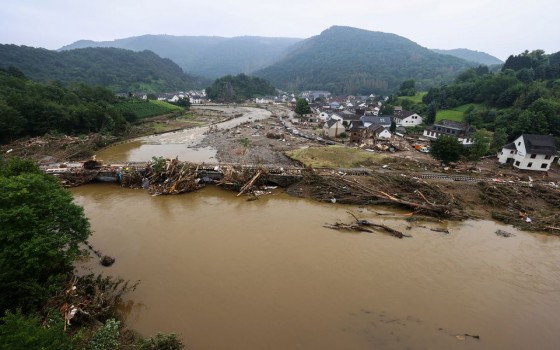
The report further explained that drought in 2024 worsened in West Africa after six consecutive failed rainy seasons, particularly in Morocco, Algeria, and Tunisia. Conversely, torrential rains and flash floods caused deaths and destruction in arid countries, including Saudi Arabia, Bahrain, and the United Arab Emirates.
The report also indicated a potential increase of up to 5 degrees. Extreme weather events in 2024 affected nearly 3.8 million people and resulted in more than 300 deaths, mostly due to heat waves and floods, according to the report.
“Climate models covering the Arab region predict a potential increase in average temperatures of up to 5 degrees Celsius by the end of the century under high-emission scenarios,” said Rola Dashti, Executive Secretary of ESCWA.
She also warned that rising sea levels threaten coastal cities, while declining rainfall exacerbates water scarcity and jeopardizes food production.







No Comments Found