


Reasons behind Netanyahu’s surprise visit to the UAE; Israel revokes diplomatic status of Dutch officials in the West Bank; Hezbollah declares on the anniversary of Nasrallah’s assassination: Israel failed to break the resistance.

- Europe and Arabs
- Monday , 28 September 2026 5:46 AM GMT
Beirut – West Bank: Europe and the Arabs
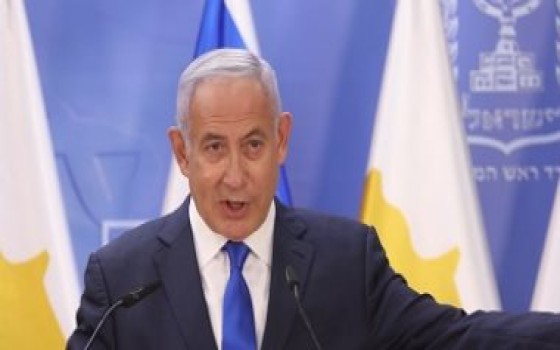
Israeli Prime Minister Benjamin Netanyahu traveled to the United Arab Emirates yesterday, Sunday, to meet with the President. Neither country announced the visit, according to multiple Israeli media reports.
According to news outlets "Channel 12" and "Kan," as well as the newspapers *Haaretz* and *The Jerusalem Post*, Netanyahu traveled to the UAE and returned on Sunday, meeting with President Mohamed bin Zayed Al Nahyan. Netanyahu’s office did not initially confirm the news. According to media reports from Brussels—the capital of Belgium and the European Union—this visit follows reports published by *Haaretz* and international media regarding a warning allegedly issued by the UAE to Netanyahu shortly before the October 7, 2023 attacks, concerning a potential Hamas operation. The reports state that the Israeli Prime Minister did not inform security agencies of this warning. Netanyahu himself denies the existence of such a warning.
Israel Revokes Diplomatic Status of Dutch Diplomats in Ramallah
Under this headline, a report by the Belgian newspaper *Nieuwsblad* stated that the Israeli Foreign Ministry announced on Sunday the revocation of diplomatic status for Dutch diplomats at the Dutch Representative Office in Ramallah. This move came in response to the Dutch government's ban on importing products originating from Israeli settlements in the occupied West Bank. According to the ministry, the diplomatic status of the Dutch diplomats was set to expire within seven days.
Hezbollah leader asserts Israel's inability to "break" the group's resistance
Naim Qassem, the leader of the Lebanese group Hezbollah, asserted in a televised address on Sunday—marking the anniversary of his predecessor Hassan Nasrallah's assassination—that Israel had failed to "break" the group's resistance.
Qassem declared: "They failed to achieve their goals—breaking the resistance, eliminating its presence, and perpetuating the Israeli occupation" of southern Lebanon.
Qassem succeeded Hassan Nasrallah two years ago. The charismatic leader had headed the pro-Iran group for decades before being killed on September 27, 2024, in an Israeli airstrike on Beirut's southern suburbs.
Thousands of Hezbollah supporters flocked to Nasrallah's shrine on Sunday to commemorate their former leader. Tributes were also paid to his designated successor, Hashem Safieddine, who was killed in another airstrike just days after Nasrallah.
Hezbollah launched a war against Israel in support of the Palestinian movement Hamas in Gaza. The conflict not only dismantled Hezbollah's leadership but also destroyed part of its arsenal.
Following a ceasefire agreement in November 2024, Lebanon devised a plan to disarm the group. However, Hezbollah—refusing to surrender its weapons—plunged Lebanon back into war by launching attacks on Israel in early March in support of its Iranian ally. Trump Expects Further Talks with Iran
Despite rejecting an Iranian proposal to reopen the Strait of Hormuz, U.S. President Donald Trump anticipates new negotiations with Tehran in the coming week. He stated this on Sunday during a telephone interview with the news outlet Axios.
Trump told Axios, "I expect more talks with Iran. They want to reach a deal, but it’s not the deal I’m aiming for. It’s a deal we would have agreed to a year ago. They overestimated their position." Two regional sources confirmed to Axios that further talks are scheduled for next week. The sources expect a new round of indirect talks between the U.S. and Iran to take place as early as Monday.
On Saturday, Trump rejected an Iranian proposal to reopen the Strait of Hormuz within seven days. According to U.S. Ambassador to the UN Mike Waltz, Tehran’s prior demands are unacceptable; he cited, among other things, the lifting of sanctions and access to frozen assets.
Waltz told CNN on Sunday, "They demanded everything upfront." He explained that Iran would not agree to negotiations until those demands were met. Waltz added that Trump was not convinced Iran would negotiate in good faith regarding the termination of its controversial nuclear program.
However, Iran does not appear inclined to back down on its conditions. Foreign Minister Abbas Araghchi stated on state television: "Our conditions are clear, and any step toward reopening the Strait of Hormuz depends on meeting these conditions. We will not back down on this."







No Comments Found