
Protecting Trump, Putin, and Netanyahu from Prosecution: The EU Faces a Test of Its Commitment to the International Criminal Court – A Proposal Seeks to Limit the Court’s Authority to Pursue Citizens of Non-Member States

- Europe and Arabs
- Tuesday , 24 November 2026 6:13 AM GMT
Brussels – The Hague: Europe and the Arabs
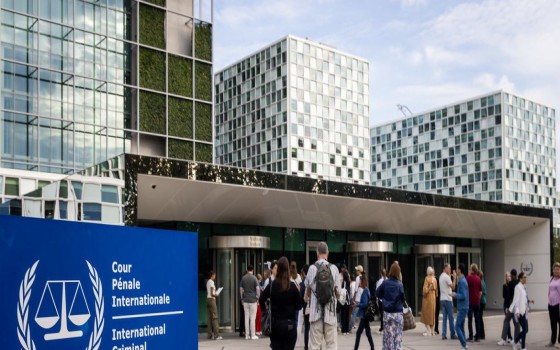
A proposal—backed by Donald Trump—aiming to limit the scope of the International Criminal Court (ICC) is set to test Europe’s commitment to the institution, especially following Washington’s imposition of sweeping sanctions last month and its threat to dismantle the court "brick by brick."
The proposal would restrict the ICC’s ability to prosecute nationals of countries that have not joined the court, including the United States, Russia, China, and Israel. According to *Brussels Playbook*—the European edition of the American outlet *Politico*—and citing four high-ranking government officials and EU lawmakers familiar with the plans, the proposal could effectively shield Donald Trump, Vladimir Putin, Xi Jinping, and Benjamin Netanyahu from prosecution.
For Brussels, this dispute exacerbates existing tensions with Washington over other issues, such as digital taxation and support for Ukraine. It has also created a divide among EU member states regarding how boldly they should defend the court; some favor seeking an agreement with the United States, while others are calling for the European Commission to invoke a "blocking statute" that would prohibit EU member states from complying with the sanctions imposed by Washington. According to the officials, member states of the ICC are set to discuss this proposal—which was formally submitted by Guatemala—during the court’s annual meeting in The Hague, beginning this Monday. The core of the issue: The proposal calls for opening a dialogue with non-member states regarding limiting the Court’s authority to prosecute their citizens. If adopted, it would mean that "the International Criminal Court would no longer be able to prosecute heads of state from countries that are not parties to the Rome Statute" (the treaty that established the Court), according to Chloé Ridel, a French lawmaker affiliated with the Socialists and Democrats group.
Furthermore, a statement signed by Trump, Putin, and Xi during their meeting in Shenzhen last week included a call to impose restrictions on the International Criminal Court.
In this context, Dirk Gotink, a center-right Member of the European Parliament—who has corresponded with American lawmakers on this matter—stated: "The outcomes of the trilateral summit between Xi, Trump, and Putin clearly reveal the intention of the three leaders... to hollow out the Court’s judicial mandate and ensure that they, along with their citizens, remain beyond the reach of prosecution by the International Criminal Court."
Regarding Trump, Xi, and Putin, a high-ranking official from one of the Court’s member states—who requested anonymity given the sensitivity of the process, the details of which have not yet been made public—remarked: "They are seeking to protect themselves." (The International Criminal Court [ICC] has not taken any legal action against Trump or Xi. It did, however, issue an arrest warrant for Putin in 2023 regarding allegations of the unlawful deportation and transfer of children from occupied territories in Ukraine, and it issued a warrant for Netanyahu in 2024 on charges of war crimes and crimes against humanity linked to the Israeli military offensive in Gaza. Both Putin and Netanyahu have denied these allegations and rejected the court’s jurisdiction.)
The United States’ response: In addressing questions on this matter, the U.S. State Department stated: "President Trump and Secretary Rubio have made it clear that the ICC must stop threatening American sovereignty. The United States has never consented to the ICC’s jurisdiction over its armed forces personnel, officials, or citizens." It added: "Either the court ends its threats, or we will end the court."
Europe’s response: Belgian Foreign Minister Maxime Prévot told the *Playbook* newsletter that he is "concerned about various reports regarding potential new initiatives concerning the ICC." He noted that the language used in the "Shenzhen Declaration"—regarding the court’s jurisdiction and the immunity of state officials—"further exacerbates these concerns."
A high-ranking official indicated that supporters of the ICC are divided on whether to seek an agreement with Washington or to pressure the European Commission to invoke a "blocking statute." For its part, the Netherlands has denied reports that it is yielding to American pressure; a European diplomat described the Dutch position as a "driving force behind the efforts of countries seeking to support the International Criminal Court."


No Comments Found