
Insecurity in Sudan and Yemen: Rising Displacement and Worsening Humanitarian Needs
Thousands displaced in Blue Nile and West Kordofan states; 364,000 people displaced and the vaccination of 350,000 children disrupted in Taiz.

- Europe and Arabs
- Wednesday , 25 November 2026 5:54 AM GMT
Sanaa/Khartoum – Europe and the Arabs
The United Nations Office for the Coordination of Humanitarian Affairs (OCHA) has expressed concern over reports of renewed fighting in Sudan, which is exacerbating humanitarian needs and driving further displacement—all against the backdrop of an already dire humanitarian situation across most of the country.
An assessment conducted by the office and its UN partners in Blue Nile State has revealed the displacement of more than 6,700 additional families. According to the United Nations’ daily news bulletin—a copy of which we received this Wednesday morning—these families face urgent needs for water, food, nutritional support, healthcare, emergency shelter, and other essential supplies.
The Office [for the Coordination of Humanitarian Affairs] reported that it and its partners are responding by distributing emergency shelter materials and addressing critical gaps in the provision of water, food, and nutritional support.
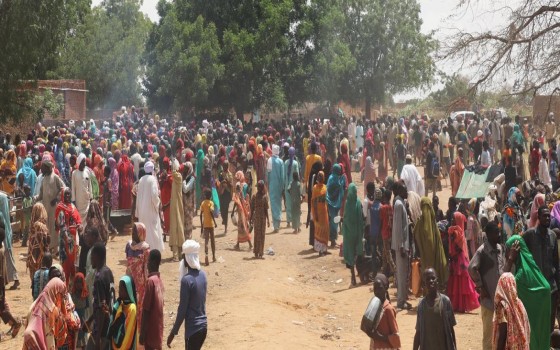
In North Darfur State, the UN Office for the Coordination of Humanitarian Affairs (OCHA) led an inter-agency mission yesterday, Tuesday, which discovered families living in dire conditions—many attempting to use trees as shelter.
The mission identified urgent needs for emergency shelter, food supplies, blankets, safe drinking water, healthcare, water services, and vaccinations.
New Displacement in West Kordofan
In another development, OCHA reported that more than 1,100 people were displaced yesterday, Tuesday, in the Abu Zabad locality of West Kordofan State—adding to the 6,400 people who had been displaced in the same area last Thursday.
The Office reiterated the necessity for all parties to comply with their obligations under international humanitarian law, which requires them to protect civilians and facilitate the delivery of humanitarian aid.
It further stated that there is an urgent need for increased funding to expand life-saving humanitarian support in these and other areas.
Yemen
Humanitarian workers have reported the displacement of more than 364,000 people in Yemen since the beginning of August, amid ongoing hostilities and a lack of security.
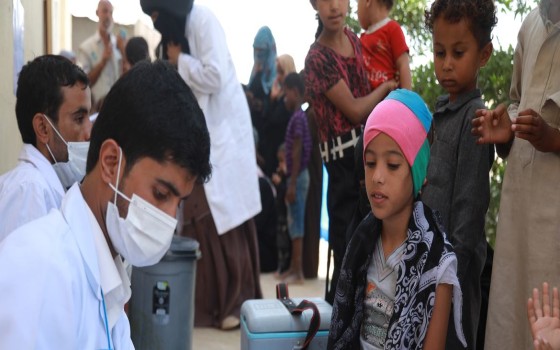
In Taiz, UN health partners have reported that approximately 350,000 children were unable to be reached by the national measles and rubella vaccination campaign, as insecurity prevented the delivery of vaccines.
Furthermore, more than 30,000 children under the age of one are at risk of missing their routine vaccinations due to the ongoing situation on the ground.
While the World Health Organization (WHO) and UNICEF possess the necessary resources and vaccines, they are currently unable to reach the children targeted for vaccination in Taiz. In other parts of Yemen, a vaccination campaign launched earlier this month has successfully immunized over 600,000 children to date.
Despite access constraints, the United Nations—in collaboration with its partners—continues to deliver aid. Since August, more than 25 humanitarian partners have provided health assistance to over 100,000 displaced persons through mobile health teams, ambulances, and support for medical centers.
On a broader scale, the UN and its humanitarian partners have provided emergency food assistance, hygiene supplies, and other essential relief items to more than 300,000 displaced individuals since August.
The United Nations has reiterated its call for the protection of civilians, the assurance of safe and unimpeded access for humanitarian workers, and the lifting of restrictions that prevent the population in Taiz from accessing basic healthcare and humanitarian aid.
Regional Diplomatic Efforts
On the political front, the UN Special Envoy for Yemen, Hans Grundberg, continues... He has been engaging with key regional stakeholders. He recently concluded a visit to Kuwait, during which he met with the Minister of Foreign Affairs, Sheikh Jarrah Jaber Al-Ahmad Al-Sabah.
The discussions focused on recent political and military developments in Yemen, the repercussions of renewed hostilities for the country and the broader region, and ongoing diplomatic efforts.
Grundberg emphasized the importance of continued regional and international coordination in responding to the evolving situation—and its political, security, and economic consequences—especially given the mounting humanitarian pressures facing the population in Yemen.
Grundberg expressed his appreciation for Kuwait’s continued support for the Yemeni people, building on its long-standing role in backing UN-led peace efforts.







No Comments Found