
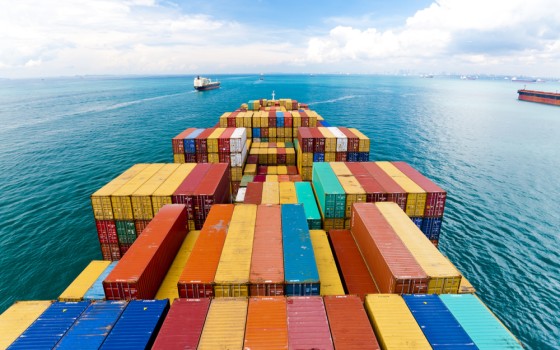
The slowdown in maritime trade is exacerbating the global cost of living, amid threats to key maritime corridors, including the Strait of Hormuz.
Ultimately, it is the consumer who bears the burden when shipping costs rise—"though this burden does not fall on everyone equally."

- Europe and Arabs
- Friday , 27 November 2026 6:42 AM GMT
Geneva: Europe and the Arabs
The United Nations Conference on Trade and Development (UNCTAD) has stated that maritime trade—a cornerstone of the global economy—continues to slow down. Meanwhile, disruptions stemming from conflicts and climate-related factors are disproportionately affecting the least developed countries and small island states.
In an updated report on global maritime trade, UNCTAD noted that the total volume of seaborne cargo reached 12.3 billion tons in 2025. However, the growth rate has slowed to 1.9%—half the pace recorded in 2024.
With at least four vital maritime corridors—the Strait of Hormuz, the Red Sea, the Black Sea, and the Panama Canal—facing simultaneous pressures this year, the UN agency projects zero growth for 2026, followed by a 3.2% recovery in 2027, according to the UN’s daily news bulletin, a copy of which was received on Friday morning.
Repercussions of the Strait of Hormuz Crisis
Pedro Manuel Moreno, Acting Secretary-General of UNCTAD, stated that consumers ultimately bear the burden when shipping costs rise, "but this burden does not fall on everyone equally."
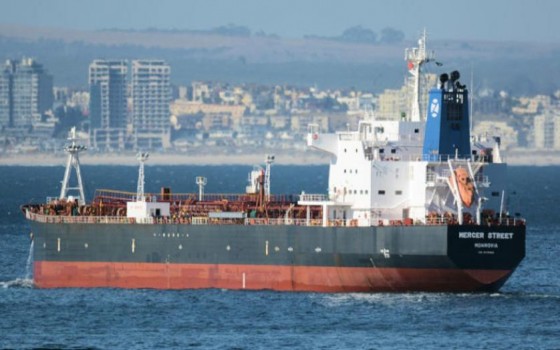
During a press conference in Geneva on Thursday, Moreno pointed out that attacks on vessels—occurring within the context of the conflict involving Iran and the United States—have led to a near-halt in the flow of oil and gas through the Strait of Hormuz. He explained that economies lacking the capacity to absorb shocks have been the hardest hit by rising fuel prices and increased transportation and production costs—factors that have, in turn, driven up food prices and exacerbated inflation.
He emphasized that "small island states and the least developed countries are the most vulnerable," noting that their imports often rely on multi-stage shipping routes. He stressed that "every additional mile means greater fuel consumption, more time, and higher costs."
According to UNCTAD, following disruptions in the Strait of Hormuz, war-risk insurance costs for an oil tanker valued at $100 million surged from approximately $200,000 to $1 million per voyage in just a few days. Furthermore, container shipping lines have imposed emergency surcharges to cover war-risk premiums and fuel costs, in response to their rising operational expenses.
The Importance of Maritime Transport
More than 80% of globally traded goods—including essential food supplies and fuel—are transported by sea. While rerouting vessels ensures that the flow of goods continues, it extends voyage durations and drives up costs, particularly for smaller economies.
UNCTAD data confirms this trend: while trade volumes are not expected to see any growth this year, the total distance traveled by cargo is projected to increase by 1.5%. According to the agency’s authoritative annual report on maritime transport, if the current "fuel shock" persists until 2027, high shipping costs alone could drive up the prices of consumer goods in the least developed countries by as much as double the global average.
Moreno explained: "Disruption in a single vital maritime corridor can quickly escalate into a cost-of-living crisis thousands of miles away. This is how maritime transport disruptions translate into higher living costs and further widen the gap between economies."
Growth in routes between developing countries
On a more positive note, container shipping routes within the "South-South" corridor—connecting markets, manufacturing hubs, and ports across Asia, Africa, the Middle East, and Latin America—grew by 12.1% last year, accounting for about one-third of the total growth in container trade.
The UNCTAD report also noted that the least developed countries—most of which are in Africa—have improved their maritime shipping connectivity at a pace three times faster than the rest of the world over the past two decades.
Moreno emphasized that "while these gains are significant, they do not eliminate underlying vulnerabilities." He highlighted the fragility of the world’s key strategic maritime corridors, which offer the shortest and most efficient routes—and, in some cases, are the only available paths—while simultaneously being the most difficult to replace. In this context, he pointed to the substantial additional costs incurred when ships are forced to reroute around South Africa to avoid security risks in the Red Sea and the Arabian Gulf.
To help the most vulnerable nations withstand current and future disruptions to shipping, the UNCTAD Review of Maritime Transport recommends establishing shared stockpiles of essential food commodities and fuel, as well as pre-arranging alternative trade routes and customs procedures to ensure the continued flow of vital goods.





No Comments Found