

Borrell: Everyone is talking about ending the war in Gaza, and no one is talking about the West Bank, even though it is the main obstacle to the two-state solution. The issue of double standards must be addressed and the Arab initiative supported

- Europe and Arabs
- Monday , 19 February 2024 15:54 PM GMT
Brussels: Europe and the Arabs
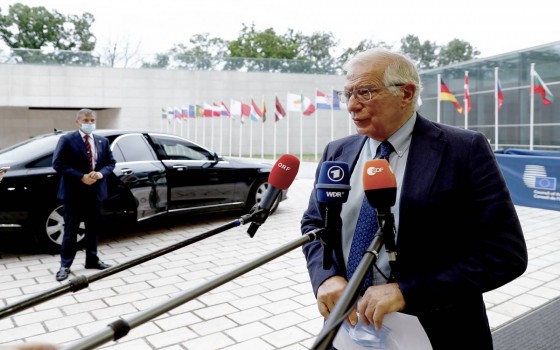
Hours before the start of the meetings of European Union foreign ministers on Monday in Brussels, which are scheduled to discuss developments in the situation in Gaza and Israel’s plans to carry out a military attack against the Palestinians in Rafah and demand that Israel not do so, European Union Foreign and Security Policy Coordinator Josep Borrell spoke before... Attending the Munich Security Conference in Germany, he said, regarding the Middle East, we must encourage a political solution, a comprehensive solution that includes not only Gaza, but the West Bank as well.
We talked a lot, but not much about the situation in the Middle East. I am surprised, because everyone is talking about ending the war in Gaza. Yes, we have to end the war in Gaza, but no one talks much about the West Bank. The West Bank is the real obstacle to the two-state solution.
Borrell added in his speech, according to a statement published by the European official’s office in Brussels, “The West Bank is boiling. The level of violence against the Palestinians has been increasing since October 7th. It was already very high before that. If UNRWA is now forced to stop supporting the Palestinian people, In the West Bank, we may be on the cusp of an even bigger explosion.
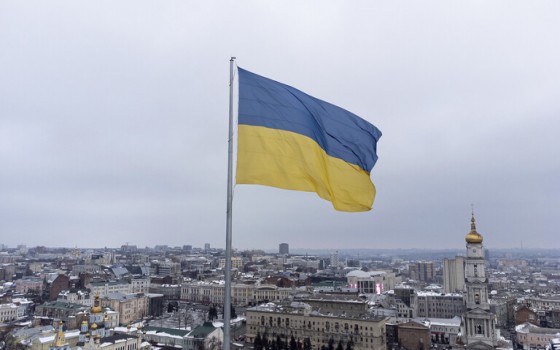
The question is: Is there political space for Europe to support the two-state solution? I think there is. But to achieve this, we have to be more united. If we want to play a geopolitical role on this issue, we have to be more united as we did in the case of Ukraine, where our unity was noticeable – except perhaps in one country. But I see here that there is a fragmentation of approach and that many Member States want to play their own game.
We have to join the United States more than any other country, but we have to support the Arab initiative. We have discussed a lot with the Arabs and are waiting for the proposal from the other side that we Europeans can support in order to make this two-state solution implementable. We've been talking about this for 30 years, but we've done nothing - and I'll say nothing, almost nothing - to make it a reality. Without that, there will be no peace in the Middle East. Without clear prospects for the Palestinian people, there will be no peace in the Middle East, and Israel's security will not be guaranteed by military means alone.
And the Global South - the third. They have their own dynamism, but there is no doubt that the war in Ukraine and Gaza has dramatically expanded the political space of the Global South vis-à-vis us. We must avoid "the rest against the West."
For Russia, this new geopolitical scenario has significantly increased its position since the beginning of the war in Gaza. They make good use of our mistakes.
They blame double standards: this is something we must address, and not just with nice words.
It is clear that the wind is blowing against the West, and it is blowing against us. We must win the battle of narratives about the Middle East and Ukraine. These wars are different, with different reasons, and different reasons because they are wars for land. We are told that geography no longer matters. Yes it matters. These wars are classic wars of people fighting for their land.
Many topics will appear, but above these three challenges we will discuss a word about security and defense. Two years ago, we launched the Strategic Compass and I said: Europe is in danger. No one paid much attention. And now everyone is talking about it. Everyone is talking about security and defence, the Defense Commissioner, defense structures, defense procurement, the defense industry... and they are right. It's not too early. We have been in a long period of silent disarmament in Europe, silent. Little by little, we began to lose our military capacity. Our industry has been underestimating its capacity.
And now it is increasing. And in one year, 40% more. It's not enough, but at least we're moving at a better pace. We will not be able to play a geopolitical role if we cannot defend ourselves. This starts with industry, and the “defense industry” is important, but it is different from defence. Defense is the exclusive prerogative of member states.
It is the member state that has an army. It is the member states that have the defense capacity. And we have to get them to work better together, to have more interoperability and more coordination, and the ability to launch missions together. Not to have a “European army”, but to be able to mobilize our armies - collectively - in order to meet challenges, when we can do it better together.
During my tenure, I launched seven or seven civilian and military missions within the framework of the Common Security and Defense Policy. Only one selfie was fired. Today, Monday, we will launch another line to the Red Sea to provide security for navigation in these areas. So, if we want to become a geopolitical player, we have to have the means. The means begin with having a strong defensive ability. At least they start by having a strong defense industrial capacity




No Comments Found