

Report on the Worst Climate Disasters of 2025: Experts Warn: Women and the Poorest Will Be Hardest Hit

- Europe and Arabs
- Wednesday , 31 December 2025 10:30 AM GMT
Brussels: Europe and the Arabs
A new report by the World Weather Attribution (WWA) warns that women bear a disproportionate burden from the most deadly extreme weather events worldwide.
This year's extreme weather has hit marginalized groups particularly hard, prompting experts to call for an urgent transition away from fossil fuels.
The report analyzes the impacts of climate-driven disasters over the past 12 months, warning that greenhouse gas emissions are driving global temperatures higher and fueling devastating weather events on every continent. WWA, founded in 2014 by experts and working with organizations including Imperial College London, the Royal Netherlands Meteorological Institute, and others, stated in the report, published by Euronews in Brussels, that while 2025 is not expected to break the global heat record set in 2024, the report identifies extreme heat waves as among the most lethal forms of extreme weather. While floods and storms leave a visible trail of physical destruction, heat waves remain a “silent killer,” having claimed the lives of more than 24,000 Europeans this summer.
The true death toll is believed to be much higher, as the vast majority of deaths would be attributed to pre-existing health conditions rather than the heat itself.
How do extreme heat waves affect women?
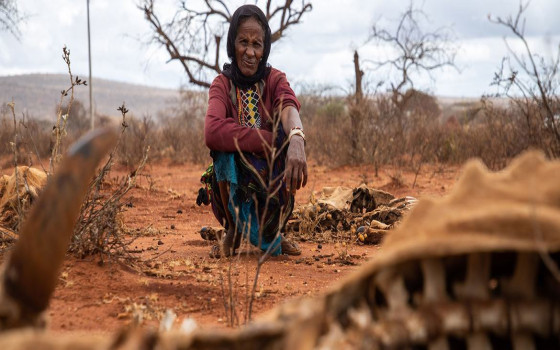
Last February, a severe heat wave swept through South Sudan, causing dozens of children to faint from heatstroke and forcing schools to close for two weeks. Residents were urged to stay indoors and stay hydrated, but many homes in the country have corrugated iron roofs and lack cooling, electricity, or clean water.
A WWA study found that human-induced climate change made this heat wave four degrees hotter, and that burning coal, oil, and gas has “turned what was once a very rare event into a common occurrence,” now expected to happen every two years. Extremely high temperatures, sometimes exceeding 40 degrees Celsius, have disproportionately affected women, the majority of whom work in agriculture or in heat-exposed occupations such as street vending.
The World Weather Watch (WWA) reports that women in South Sudan spend approximately 60 percent of their time on unpaid care work, such as fetching water and cooking in sweltering heat, exposing them to a range of long-term health effects, including cardiovascular stress, kidney damage, and increased susceptibility to heat stress.
"Education is severely impacted by heat waves," the report states. "Prolonged school closures increase the likelihood of learning losses, reinforce gendered expectations within the family, and raise the risk of early marriage, making it more difficult for girls to return to school."
Do our climate evidence need to change?
The WWA found that women globally bear a disproportionate burden, often increasing their risk of exposure to dangerously high temperatures. However, these inequalities extend far beyond this, permeating the scientific evidence itself. Many WWA studies in 2025 focused on extreme rainfall events in the "Global South," a collective term for countries in Africa, Asia, Latin America, and Oceania (but excluding Australia and New Zealand) commonly referred to as "developing" or "least developed" countries.
These countries are generally poorer than those in North America and Europe, experience higher levels of income inequality, and suffer from lower life expectancies.
Scientists have repeatedly discovered gaps in observational data, arguing that reliance on climate models primarily designed for the "Global North" has prevented confident conclusions.
The report adds: "This unequal base in climate science reflects the broader injustices of the climate crisis."
Transition away from fossil fuels
The WWA calls for an "urgent" transition away from fossil fuels and increased investment in adaptation measures to help address the increasing frequency of extreme weather events. It is widely accepted that fossil fuels are the primary driver of global warming, accounting for approximately 68 percent of global greenhouse gas emissions and nearly 90 percent of total carbon dioxide emissions.
The WWA states that adaptation to climate disasters is sometimes limited. The report adds, "When a severe storm strikes small islands like Jamaica and other Caribbean nations, relatively high levels of preparedness do not prevent significant loss of life and damage."
"This underscores that adaptation alone is insufficient, and that rapid emissions reductions remain essential to avert the worst impacts of climate change."





No Comments Found