

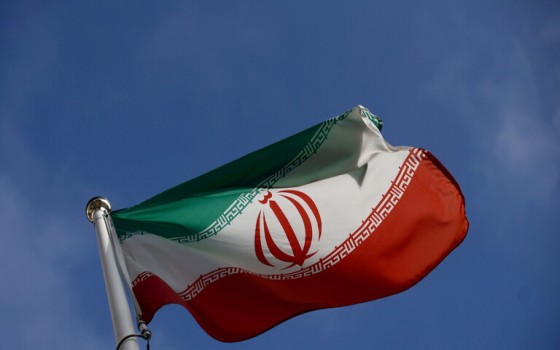
After Iran declared its readiness for both negotiations and war, Larijani is in Muscat today and will be in Qatar tomorrow. Araqchi is holding telephone conversations with Egypt, Turkey, and Saudi Arabia.

- Europe and Arabs
- Tuesday , 10 February 2026 9:18 AM GMT
Muscat – Tehran: Europe and the Arabs – Agencies
Ali Larijani, Secretary of Iran's Supreme National Security Council, arrived in the Omani capital, Muscat, on Tuesday morning for talks with senior Omani officials as part of the indirect negotiations between Iran and the United States, which Oman is mediating. The Iranian official is expected to convey his country's response to the outcomes of this round of talks.
Larijani will meet with Sultan Haitham bin Tariq and Omani Foreign Minister Badr bin Hamad al-Busaidi to discuss the latest regional and international developments and ways to enhance bilateral cooperation between the two countries, according to the Iranian news agency Tasnim. This was reported by the European news network Euronews in Brussels.
The Iranian Foreign Ministry stated that the Secretary of Iran's Supreme National Security Council will also visit Qatar as part of a pre-arranged program aimed at strengthening bilateral relations between Iran and the relevant countries.
The statement added that the first round of indirect negotiations with the United States, held in Muscat on Friday, was dedicated to assessing the other party's seriousness and did not yet address specific details. It emphasized that future rounds of the diplomatic process will more clearly define its course and future. The Iranian Foreign Ministry stressed that Washington must act independently, free from pressures that harm the region and American interests. It emphasized that it is "working diligently and earnestly to reach an agreement with the United States that guarantees the lifting of sanctions."
The statement also warned that "Iran considers any move by the Israeli entity to be coordinated with the United States, and therefore, the Iranian response to any aggression will be strong, decisive, and painful."
Araghchi Holds Calls with Neighboring Countries
In a related development, Iranian media reported that Iranian Foreign Minister Abbas Araghchi held separate telephone conversations with his counterparts in Turkey, Egypt, and Saudi Arabia, briefing them on the latest developments regarding the negotiations. Meanwhile, Turkish Foreign Minister Hakan Fidan stated that the current situation does not indicate an imminent threat of war between the United States and Iran.
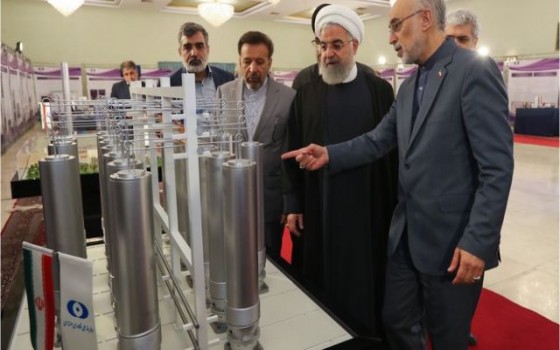
Araghchi had previously affirmed the existence of a "wall of distrust" with the American side, emphasizing that the Iranian people are capable of both negotiation and war, and that Tehran will not compromise on its demands, even if it leads to a military confrontation. For his part, the head of the Atomic Energy Organization of Iran, Mohammad Eslami, stated that Iran's reduction of its uranium enrichment to 60% is contingent upon the complete lifting of all sanctions imposed on it.
Precautionary measures by Iran?
In a related development, satellite images published by the Institute for Science and International Security in Washington on Monday confirmed that Iran has taken extraordinary precautionary measures at a nuclear site in Isfahan, which was previously targeted by Israeli strikes during the 12-day war in June.
The images showed that the three main tunnel entrances at the site were covered with earth, a move intended to minimize damage from any airstrike and to make them difficult to locate for any potential ground operation.
Meanwhile, the US Navy warned ships transiting the Strait of Hormuz and the Gulf of Oman of the risk of being detained or seized by Iran, emphasizing that it is assessing the maritime security situation in the region to ensure freedom of navigation and protect US vessels. In light of these developments, the talks held in Muscat were described as positive, but a state of uncertainty and distrust prevails, especially ahead of an expected visit by Israeli Prime Minister Benjamin Netanyahu to the White House, amid reports of Israeli encouragement to strike Iran and overthrow the regime, a scenario that may bring back memories of the June War, when the United States intervened in support of Tel Aviv and bombed Iranian nuclear sites after five rounds of negotiations in Oman.




No Comments Found