

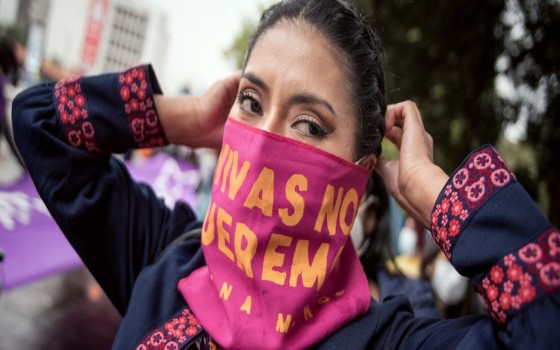
More than 740,000 women and girls are detained… Urgent action needed to protect women in prisons and reduce over-criminalization… UN appeal precedes the 70th session of the Commission on the Status of Women

- Europe and Arabs
- Friday , 20 February 2026 6:46 AM GMT
New York – Geneva: Europe and the Arabs
Independent UN human rights experts have urged member states to take action to strengthen the protection of women and girls in criminal justice systems, warning that access to justice, safety, and dignity for women deprived of their liberty remains dangerously inadequate. According to the UN Daily News, the independent experts issued a press release ahead of the 70th session of the Commission on the Status of Women, stating: “As the principal intergovernmental forum on gender equality, the 70th session of the Commission on the Status of Women presents an important opportunity to bring renewed attention to the situation of women and girls who are criminalized, detained, or imprisoned.”
The statement noted that globally, an estimated 740,000 women and girls are in detention, representing approximately 7% of the world’s prison population. Since 2000, the female incarceration rate has increased by 60%, nearly three times that of men. Around 19,000 children are living in prisons with their mothers. Experts said that most women are detained for non-violent offenses linked to poverty, inability to pay fines or bail, and punitive drug control policies.
They added that “criminalizing women for survival, caregiving responsibilities, and socioeconomic vulnerability does not address the root causes or meet protection needs.”
Addressing the Root Causes
The experts explained that detained women face increased risks of violence, including sexual and gender-based violence, inadequate healthcare, overcrowding, and other conditions that may amount to ill-treatment or torture—risks that are even more severe in conflict and fragile areas.
The experts called on states to use the 70th session of the Commission on the Status of Women to adopt ambitious and concrete commitments that address the root causes of women’s criminalization, including poverty, racial and ethnic exclusion, inequalities rooted in the injustices of the colonial era, and discriminatory social norms. Protection as a Priority
The independent experts stressed the importance of States reducing their reliance on imprisonment as a default punishment for minor, non-violent offenses, prioritizing and expanding appropriate community-based alternatives to detention, including for women and girls.
They added, “At the same time, where appropriate alternatives are not available, the protection of women in prisons and other detention facilities must be a top priority,” calling for gender-sensitive and trauma-sensitive prison policies.
They reminded States that all women in detention have the right to conditions of detention appropriate to their sex and age, protection from all forms of violence and abuse, regular contact with their families, rehabilitation including education and vocational training, healthcare equivalent to that available in the community (including mental, sexual, and reproductive health services), as well as effective access to legal aid and confidential complaint mechanisms.
The experts stated, “The 70th session of the Commission on the Status of Women can, and should, be a turning point, ensuring that the role of women and girls interacting with criminal justice systems is highlighted, protected, and their voices heard in global gender equality policies.” The experts are:
Alice Gill Edwards, Special Rapporteur on torture and other cruel, inhuman or degrading treatment or punishment.
Margaret Satterthwaite, Special Rapporteur on the independence of judges and lawyers.
Claudia Flores (Chair), Ivana Krstić (Vice-Chair), Dorothy Estrada Tank, Haina Lo, and Laura Nyernkende; Working Group on discrimination against women and girls.
Ghana Judkiewska (Chair-Rapporteur), Matthew Gillett (Vice-Chair for Communications), Miriam Estrada Castillo (Vice-Chair for Follow-up), Mumba Malela, and Ethan Hee-Seok Shin; Working Group on arbitrary detention.
Nahla Haidar (Chair), on behalf of the Committee on the Elimination of Discrimination against Women.
Claude Heller (Chair), on behalf of the Committee against Torture.
Maria Luiza Romero (Chair), on behalf of the Subcommittee on Prevention of Torture. It should be noted that Special Rapporteurs and independent experts are appointed by the Human Rights Council in Geneva, an international body responsible for promoting and protecting human rights worldwide. These rapporteurs and experts are mandated to examine human rights situations and report on them to the Council. They perform their duties in their personal capacity and are completely independent of any government or organization, including the Office of the High Commissioner for Human Rights and other UN agencies. Any views or positions they express are their own and do not necessarily reflect the positions of the United Nations or the Office of the High Commissioner.
No Comments Found