

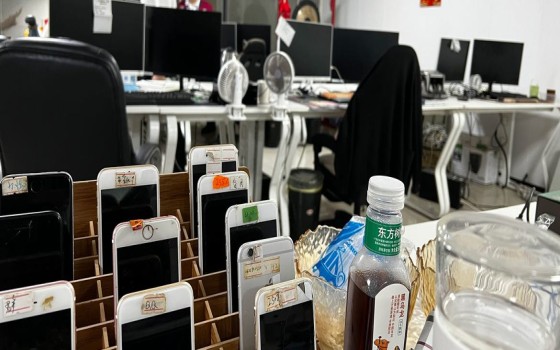
"Shocking" Abuses in Fraud Centers: Torture and Exploitation of Human Trafficking Victims... Most of These Operations Are Concentrated in Southeast Asia, as well as the Gulf States, West Africa, and the Americas

- Europe and Arabs
- Sunday , 22 February 2026 7:31 AM GMT
New York: Europe and the Arabs
A new United Nations report has revealed shocking details about hundreds of thousands of people trafficked from dozens of countries and forced to work in organized fraud centers, where they are subjected to torture, sexual exploitation, forced abortions, arbitrary detention, and extortion for ransom, according to the UN News Daily.
The report by the UN Office of the High Commissioner for Human Rights documents the experiences of people lured with false job promises and then forced to carry out online scams, including identity theft, extortion, financial fraud, and emotional manipulation.
The majority of these operations are concentrated in Southeast Asia, particularly in the Mekong region, but they also extend to some Pacific Island countries, South Asia, the Gulf States, West Africa, and the Americas. The report was based on interviews with survivors from Bangladesh, China, India, Myanmar, Sri Lanka, South Africa, Thailand, Vietnam, and Zimbabwe who were trafficked to fraud centers in Cambodia, Laos, Myanmar, the Philippines, and the United Arab Emirates between 2021 and 2025. It also included interviews with police and border officials and representatives of civil society.
Fences and Barbed Wire
The report describes a harsh detention environment where victims were forced to work in sprawling, self-contained city-like compounds. These compounds consisted of multi-story buildings surrounded by high walls topped with barbed wire and heavily guarded by armed security personnel. Survivors reported that those who failed to meet monthly fraud targets faced severe punishments, including being submerged in water tanks (known as water prisons) for hours.
Victims also reported being forced to witness or commit abuses against others to ensure compliance. Some recounted incidents in which people lost their lives while trying to escape the compounds. The report stated that failed rescue attempts were met with harsh punishments.
The report also revealed that traffickers made video calls to victims' families, showing their relatives being mistreated in order to extort money and demand ransoms. Although most victims reported receiving wages, these were subject to escalating deductions, and none received their full promised pay.
Protecting Victims of Trafficking
The UN High Commissioner for Human Rights, Volker Türk, said the scale of the violations was "staggering and heartbreaking," noting that victims often face suspicion and stigma instead of protection, care, and access to justice.
Türk stressed that responses must be based on international human rights law, recognizing the issue of coercion in committing crimes under anti-trafficking laws and ensuring that trafficking victims are not punished. The report also emphasized the importance of conducting coordinated and safe rescues, respecting the principle of non-refoulement (refoulement to places where they may be at risk), and providing support mechanisms for rehabilitation and addressing the risks of re-trafficking. The report called for expanding safe labor migration pathways, strengthening oversight of recruitment processes, prosecuting criminal networks involved, and addressing corruption associated with these processes, while enabling independent media and human rights defenders to perform their roles without interference.

No Comments Found