

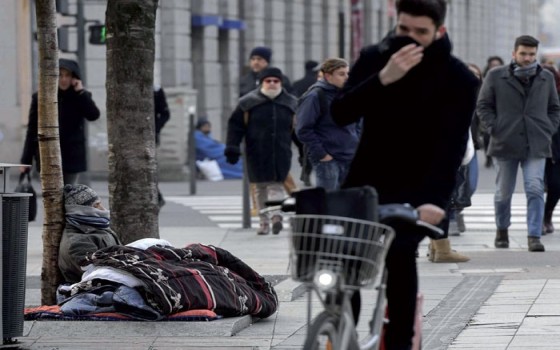
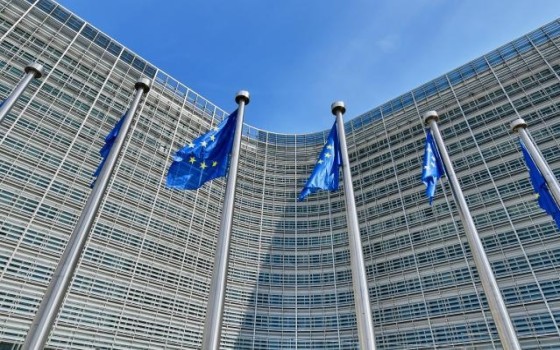
To combat poverty in the European Union and save 93 million people from its threat, an event is being held in Brussels with the participation of member states, regional and local authorities, social partners, and civil society organizations.

- Europe and Arabs
- Tuesday , 24 February 2026 7:17 AM GMT
Brussels: Europe and the Arabs
Roxana Menzatu, Vice-President of the European Commission for Social Rights, Skills, Good Jobs and Preparedness, is hosting an executive dialogue in Brussels today, Tuesday, focusing on tackling poverty and social exclusion across the European Union. The dialogue will bring together representatives from member states, regional and local authorities, social partners, and civil society organizations.
“Poverty and social exclusion remain persistent challenges across the European Union,” the Commission said in a statement. “In 2024, 93 million people in the EU, including 19.3 million children, were at risk of poverty or social exclusion – 21% of the population. This threatens social cohesion, undermines equal opportunities, and weakens the EU’s long-term growth potential and competitiveness. The Commission is committed to building a fairer and more equal Europe, and poverty reduction is a key element of this endeavor. In her 2025 State of the Union address, European Commission President Ursula von der Leyen reaffirmed the EU’s long-term vision, emphasizing that the Union will put forward its plan to help eradicate poverty by 2050. Policy measures to combat poverty are based on the European Pillar of Social Rights and its 2021 Action Plan, under which the Commission set a target of reducing the number of people at risk of poverty or social exclusion by at least 15 million by 2030, including at least 5 million children.” The number of children per child has increased compared to 2019 levels.
The dialogue aims to help address these challenges and find practical ways to improve the implementation of two key anti-poverty policy instruments: the Council Recommendation on an adequate minimum income to ensure effective inclusion and the Council Recommendation on the European Child Guarantee. The Executive Vice-President will assess progress towards achieving existing policy objectives, identify obstacles to effective implementation, and explore opportunities to facilitate implementation and further streamline relevant EU anti-poverty policies. The outcome of this dialogue could contribute to the development of the EU's first-ever Anti-Poverty Strategy and the Strengthening of Child Guarantees, which is due to be launched this spring.
Implementation dialogues are part of the Commission's commitment to seeking public input on the implementation and streamlining of EU policies. As outlined in the Commission's Implementation and Streamlining Statement 2024-2029, all members of the College of Commissioners are required to host these dialogues annually.






No Comments Found