

Climate Change Exacerbates Global Health Emergency: More Than Half a Million Lives Annually from Extreme Heat, Threatens Hospitals Worldwide

- Europe and Arabs
- Saturday , 15 November 2025 9:40 AM GMT
Belém, Brazil: Europe and the Arabs
Climate change is already exacerbating a global health emergency, claiming more than half a million lives annually due to extreme heat and threatening hospitals worldwide, according to a report released Friday at the UN Climate Change Conference (COP30) in Belém, Brazil.
The special report on health and climate change—produced by the World Health Organization (WHO) and the Brazilian government—warns that one in 12 hospitals could face closure due to climate change. It calls for urgent action to protect health systems in a world experiencing rapidly rising temperatures.
This follows the launch on Thursday of the Belém Health Action Plan, a flagship initiative of COP30 that places health at the heart of climate policy. According to the UN Daily News, a copy of which was received Saturday morning, WHO Director-General Dr. Tedros Adhanom Ghebreyesus stated, "The climate crisis is a health crisis, not a distant future crisis, but a health crisis here and now." He added: “This special report provides evidence of the impact of climate change on individuals and health systems, and real-world examples of what countries can do—and are already doing—to protect health and strengthen health systems.”
The report’s significance: Global temperatures have already exceeded 1.5°C. The report concludes that between 3.3 and 3.6 billion people live in areas highly vulnerable to climate impacts, while hospitals face a 41% higher risk of damage from extreme weather events compared to 1990. Without rapid decarbonization, the number of health facilities at risk could double by mid-century. The health sector itself contributes about 5% of global greenhouse gas emissions, underscoring the need for a rapid transition to resilient, low-carbon health systems.
Key gaps in health adaptation: The report highlights glaring gaps in health adaptation planning, including:
➡️ Only 54% of national health adaptation plans assess the risks to health facilities.
➡️ Fewer than 30% consider income disparities. Only 20% of them are gender-sensitive.
Less than 1% include people with disabilities.
Progress has been made, with the number of countries having multi-hazard early warning systems doubling between 2015 and 2023, but coverage remains uneven, particularly in least developed countries and small island developing states.
What’s happening
To further bolster these efforts, a coalition of more than 35 philanthropic organizations today pledged $300 million to accelerate solutions to the challenges at the intersection of climate and health.
The Climate and Health Funders Alliance—comprising Bloomberg Philanthropies, the Gates Foundation, the IKEA Foundation, the Rockefeller Foundation, and the Wellcome Trust—will support innovation, policy, and research related to extreme heat, air pollution, and climate-sensitive diseases, as well as strengthening health systems and data integration.
In its first funding effort, the alliance supports the Belem Health Action Plan and aims to deliver life-saving interventions now. With the past decade recording the highest temperatures on record, and temperatures remaining near historic highs, experts warn that inaction could have dire consequences for human health.
Adapting is urgent.
UN News spoke with Ethel Massel, Special Envoy for Health for COP30 and one of the authors of the Belem Plan of Action for Health, who emphasized that climate change is no longer a distant threat but is already reshaping health systems.
"How do we prepare our health units, hospitals, and facilities for these extreme events that will occur with increasing frequency?" she asked. "And how can we provide training and capacity building for health workers so they can cope with these extreme events that will result from the climate changes we are already experiencing?"
"For example, here in Brazil, last year's floods in Rio Grande do Sul, which triggered the largest dengue fever epidemic in history, were driven by these climate changes. So, we don't have to think about the future; it's happening now. Therefore, thinking about how to adapt our system is urgent." The 30th United Nations Climate Change Conference (COP30) in Belém, Brazil, saw the launch of an action plan for global health systems to adapt to rising temperatures and extreme weather, which Brazil described as "a pivotal moment to demonstrate the power of the health sector in global climate action."
The plan, called the "Belém Health Action Plan," was adopted on Thursday by UN agencies, partners, and governments, and focuses on addressing inequalities in healthcare.
The plan's adoption on Health Day at COP30 acknowledges that the climate crisis is also a health crisis. The Director-General of the World Health Organization, Dr. Tedros Adhanom Ghebreyesus, warned on the eve of the conference that "if our planet were sick, it would be in intensive care."
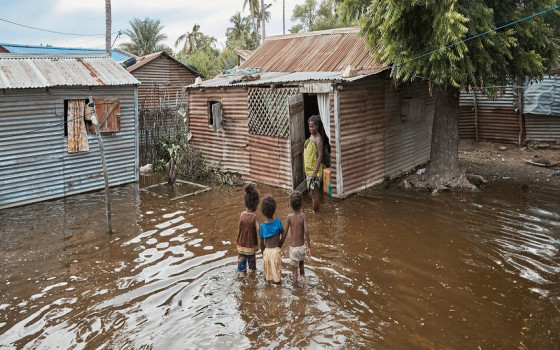
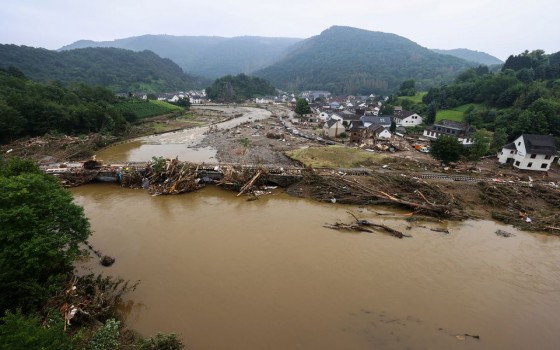
Extreme heat, floods, droughts, and storms not only pose environmental threats but also contribute to disease outbreaks, food and water insecurity, and the disruption of essential health services.





No Comments Found