

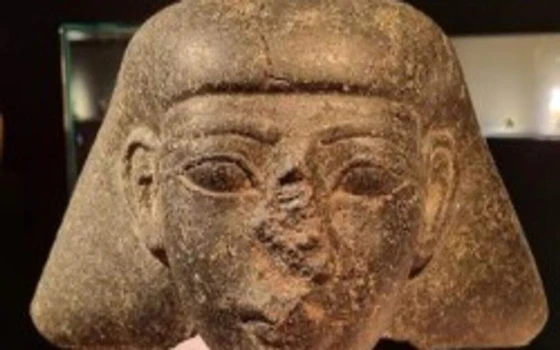
The Illicit Trade in Antiquities Fuels Global Criminal Networks Linked to Money Laundering, Tax Evasion, and Even Terrorist Financing

- Europe and Arabs
- Sunday , 16 November 2025 9:12 AM GMT
New York: Europe and the Arabs
The illicit trafficking of cultural property is one of the oldest and most lucrative forms of criminal activity in the world, but current efforts by the United Nations and law enforcement agencies worldwide are helping to dismantle these global operations. According to the UN Daily News, last year alone, more than 37,000 cultural items—including antiquities, works of art, coins, and musical instruments—were seized during an international operation conducted by Interpol and other organizations, in cooperation with law enforcement and customs authorities from 23 countries.
According to Interpol, Ukrainian customs authorities intercepted 87 items of historical value, including icons of St. Seraphim of Sarov and ancient coins, which smugglers attempted to illegally export to Poland, Moldova, and Romania. In Spain, investigators uncovered a group that looted archaeological sites in the province of Cáceres, using metal detectors to extract thousands of Romanian coins and sell them via social media. In Greece, three people were arrested for attempting to sell five Byzantine icons for $80,000.
International Cooperation
According to the United Nations Office on Drugs and Crime, the trafficking of cultural property ranks alongside arms and drug trafficking as one of the most lucrative illicit trades. However, unlike other forms of trafficking, the trade in cultural property is not outright prohibited.
High demand for antiquities and works of art, coupled with weak regulation, makes the market extremely profitable and relatively low-risk, especially during times of political instability, war, and social unrest, when shifting priorities often leave archaeological sites and museums unguarded. Organized criminal networks exploit crises, operating through complex supply chains and profiting from both legal and black markets.
Speaking to UN News on the occasion of the International Day against Illicit Trafficking in Cultural Property – observed annually on November 14 – Christa Pekkat of the United Nations Educational, Scientific and Cultural Organization (UNESCO) said: “The illicit trafficking of cultural property, and the accompanying theft and illicit transfer of cultural property, touches on issues such as cultural rights, cultural identity, our memory, and also societies and their history.”
Traffickers are increasingly turning to online platforms and auctions to sell stolen artifacts, including those recovered from underwater archaeological sites.
UNESCO condemned the theft of eight priceless cultural objects from the Louvre Museum in Paris, France, in October 2025, warning that such crimes “jeopardize the preservation, study, and transfer of priceless historical artifacts.”
Financing Terrorism
UNESCO emphasized that illicit trafficking fuels global criminal networks involved in money laundering, tax evasion, and even the financing of terrorism. Since 2023, UNESCO has trained more than 1,200 museum and customs professionals from 80 countries to strengthen legal frameworks, provide training, and raise public awareness.
“We are also collaborating with some of our partners, for example, the International Atomic Energy Agency, to see how nuclear technology can be applied to provenance research,” Ms. Pekkat added. “It is also interesting to see how new technologies in artificial intelligence are offering us new opportunities in combating illicit trafficking.”
In September, UNESCO launched the world’s first virtual museum of stolen cultural objects, using 3D modeling and virtual reality to display digital replicas of stolen artifacts.
The platform includes educational materials, testimonies from affected communities, and examples of successful recovery efforts. “The idea behind the museum is that it will one day be empty,” Ms. Pekkat said.
She shared a personal example from her native Estonia, which proposed including several sculptures from a church altar on a small island in the museum’s collection. These artifacts, crafted by Lübeck artisans in the 16th century, reflect Estonia's historical ties to the Hanseatic League. Their true value lies not in monetary worth, but in their historical, cultural, and spiritual significance. UNESCO warns that a society deprived of its heritage loses a part of its identity and the foundation for future development.
UNESCO continues to support countries in their efforts to identify and recover stolen artifacts, including in Central Asia, where artifacts have been smuggled from Afghanistan.
Digital tools such as electronic records, databases, and blockchain technology are now helping to trace the provenance of artifacts. Authorities urge buyers to always request official documentation to verify origin and to avoid anonymous online sellers. Suspicious items can be reported to local law enforcement or directly to Interpol.
Each repatriated artifact restores a precious link between the past and the present.





No Comments Found