
A year since the ceasefire in Lebanon, and Israeli violations continue... Is the agreement on the verge of collapse?

- Europe and Arabs
- Thursday , 27 November 2025 8:6 AM GMT
Beirut – Brussels: Europe and the Arabs – Agencies
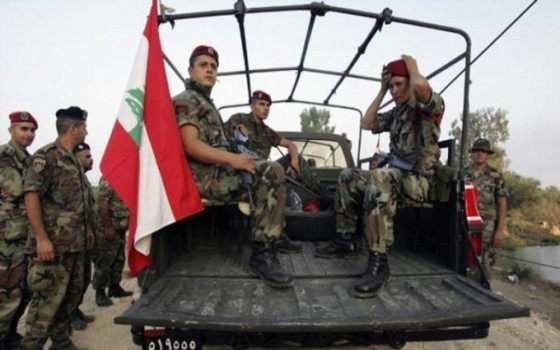
On the first anniversary of the ceasefire, the Lebanese continue to live in daily fear of war amidst ongoing Israeli violations. The European news network Euronews in Brussels listened to the concerns of some residents and added in a report on the matter: "Hiba al-Amin (a Lebanese resident of the Ouzai area of Beirut) could not have expected that the memory of that night would haunt her for so long. Although the bombing did not directly target her family, the experience left its mark: constant fear, a lack of security, and daily anxiety about any sound resembling a sonic boom. She tells Euronews that today she cannot even bear the sound of firecrackers: 'Fear has become my constant companion.' Despite a year having passed since the agreement, Hiba has never been convinced that the war has truly ended. The bombing has not stopped, Israeli planes are still in the skies, and military operations shift from one area to another, while people live in anticipation of the next attack. A fragile agreement... and a more dangerous reality. The agreement stipulated that Israel would refrain from any targeting of Lebanese territory by land, sea, and air, in exchange for Hezbollah completely halting its military operations. However, the subsequent course of events contradicted the spirit of the agreement, as the reality on the ground during the The following months were far from calm, with continued Israeli violations and escalations that nearly undermined the very foundation of the understanding.
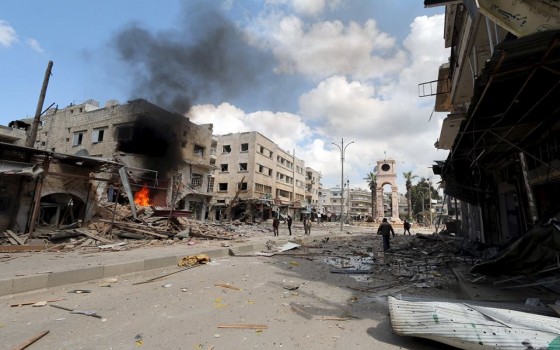
As time passed, it became clear that Lebanon was still subjected to almost daily attacks: airstrikes, land destruction, and reconnaissance aircraft constantly in Lebanese airspace. The attacks escalated to an unprecedented level with Israel's assassination of Haytham Tabatabai, Hezbollah's chief of staff and second in command after its Secretary-General, Naim Qassem. The strike on Sunday was different: the symbolic significance of the target, the nature of the site, and its timing, which cannot be separated from the context of Israeli pressure to force Lebanon to disarm Hezbollah.
UNIFIL forces announced that since the signing of the agreement, they had recorded more than 7,300 Israeli airspace violations, in addition to more than 2,400 military activities north of the Blue Line. These figures reveal that the agreement, which was supposed to provide a framework for de-escalation, was already fragile.
Concerns about the war expanding
"There is no such thing as a ceasefire," Kawthar Yassin (from the Bekaa Valley) told Euronews in an interview. For her, the war has not yet ended. It has already stopped. She describes the current phase as more dangerous than open warfare, as the inability to predict strikes doubles the insecurity: "We live in constant anxiety every day."
Kawthar believes that what is happening today is "an actual war," and that the daily attacks will not stop through diplomacy alone. For her, the next confrontation is inevitable; it may be small or large, but ultimately, it is a battle that, "unfortunately," must occur because the attacks will not cease without it.
As for Hiba, psychological warfare is more devastating than field warfare, especially with the constant talk of "confirmed and widespread strikes," which keeps people in a state of perpetual anticipation of a new explosion. This state, in her opinion, is more exhausting than the war itself.
Between Hiba's and Kawthar's accounts, it becomes clear that the Lebanese have not truly emerged from a state of war, despite a year having passed since the agreement. The agreement itself appears fragile, while the Israeli escalation continues unabated, military operations are expanding, and international pressure on Lebanon is mounting, culminating in American criticism of the Lebanese army's performance and its commander, Rudolf. The structure, given the party's refusal to surrender its weapons.
Is Lebanon nearing a new round of fighting?
The general situation suggests that the truce is on the verge of collapse, while the Lebanese remain suspended between the fear of an escalation of the war and the absence of certainty. Thus, the field and political reality in Lebanon raises a fundamental question as the anniversary of November 27th approaches: To what extent can the ceasefire agreement hold in light of thousands of daily violations, assassinations, and Israeli advances in the south?
Therefore, Euronews conducted an interview with writer and political analyst Sarkis Naoum to offer a clear perspective on the likely course of events.
In his response to the questions, Sarkis Naoum said: "The current situation we are experiencing is no less dire than a devastating war that could resume. We are in a continuous war, escalating and subsiding, but we have not yet entered a phase of peace. We are still in a state of war: primarily an internal war, among the Lebanese people, who have been divided into sects and denominations, and are no longer one people, but rather four or five. National allegiance is no longer to Lebanon, but has become..." The ultimate allegiance is to the sect, the denomination, or the state that sponsors the sect. Therefore, I believe we are still in a continuous war that has not ended: an ongoing internal war, and a regional war as well. It is well known that Israel does not hesitate to bomb any area in Lebanon, regardless of who inhabits it. If it identifies a target it considers hostile, it bombs it. We witnessed this when the war began, and many residents of the south sought refuge in areas supposedly far from danger, including Christian areas. However, when the Israelis received information about the presence of displaced people with ties to Hezbollah, those areas were targeted, and we saw several strikes of this kind.
War rarely remains confined to one area; its repercussions can extend to other regions. Today, it is said that Beirut, or its southern suburbs, may be targeted. If Israel decides to exert further pressure on the Lebanese state by striking essential infrastructure, such as bridges, these bridges are not only located in the southern suburbs, the south, and the Bekaa Valley, but also in Beirut, Mount Lebanon, the north, and its surrounding areas. Therefore, the situation is extremely difficult and its direction is unclear. It is certain that it will not move towards a peaceful resolution, as the Israeli approach remains one of war. As for the timing of any new developments, it will not occur before the Pope's visit.
Today, Hezbollah refuses to relinquish its weapons and threatens to put an end to the attacks. Could this stance affect the chances of de-escalation and increase the likelihood of further escalation?
Sarkis Naoum: This is one of the possible reasons for the escalation that Israel might resort to, and this is no secret. Hezbollah declares it, everyone knows it, and the international community is aware of it. Everyone knows what Israel's objective is, and also what deters Israel and what might compel it, with international approval, to continue its war on Hezbollah or on Lebanon through Hezbollah. Therefore, the reasons for this possibility are clear and well-known: some consider it justified from Israel's perspective, while others consider it an unjustified aggression.
The truth is that both sides, to varying degrees, have justifications they defend. Hezbollah convinced the Lebanese of the "army, people, and resistance" triad, and was waging a war on behalf of the Lebanese, without their consent, and in their name, against Israel, on behalf of Iran, and as part of the Iranian Shiite Islamic ideology. When Hezbollah engaged in a war of support after the war on Gaza, it opened the door to a war that provided Israel with the conditions and justifications to strike Lebanon, especially since it did not do what some expected it to do at the beginning of the war on Gaza: launch an attack on northern Palestine in support of Hamas. Thus, we entered a path from which we can no longer extricate ourselves.
In your opinion, what are the actual limits of Hezbollah's right to engage in confrontation on the Lebanese-Israeli front? Sarkis Naoum: On the Lebanese-Israeli issue, there is no doubt that Hezbollah has some justification. However, the situation is entirely different regarding the Palestinian issue, which is, of course, a legitimate cause, and the Lebanese have historically stood with the Palestinians. But this issue will not be resolved through an armed Lebanese party that possesses a militia and weapons supplied by Iran, and which is considered a representative of Iran. It is not waging a war to support the Palestinians as much as it is waging a war to strengthen and expand Iranian influence in the region. This has led to sectarian and religious divisions that have deepened the internal rift, and this path cannot produce a solution.
Hezbollah raises the slogan of defending Lebanon against Israeli aggression, and this slogan is correct in principle, as Israel is undoubtedly an enemy. However, it violated the truce agreement and considered it null and void.
After the liberation—a liberation in which Hezbollah and all Lebanese resistance fighters played a role—other factors came into play: the Israeli withdrawal had been predetermined by Israeli Prime Minister Ehud Barak, and the Israeli army's losses contributed to this decision. However, Syria, which had a presence in Lebanon, wanted to keep the Lebanese front ablaze so that the Golan Heights issue wouldn't resurface. Syrian and Iranian interests converged on maintaining Hezbollah's resistance, under the pretext of the Shebaa Farms, even though the United Nations considers them Syrian territory. Syria publicly claims they are Lebanese, but informs the UN and the US that they are Syrian. Thus, Lebanon became a tool in a confluence of interests, a price for which Lebanon has paid dearly and will continue to pay.
Today, do you believe Hezbollah's weapons are still important?
Sarkis Naoum: I believe that a state cannot exist with weapons outside its control, whether those of Hezbollah, the Lebanese Forces, the Druze, or the Palestinians. Either there is a state, or there isn't. Let's be frank: a state based on components divided into five sects, each considering itself an independent nation, cannot create a unified state. A Lebanese citizen must be a Lebanese citizen first and foremost, not a Shiite, Christian, Druze, or Sunni citizen. This categorization threatens and tears the nation apart. Even if the war stops and the situation stabilizes, this pattern will reproduce the explosion in the future.
Does the Lebanese state possess effective tools to prevent the country from sliding into a new war, or is it constrained? Sarkis Naoum: In my opinion, the state doesn't possess significant tools. It is constrained, and any incoming authority will also be constrained. What limits it is the current situation, the regional, international, and Palestinian situation, and what happened in Gaza and its repercussions. All of this shackles the Lebanese state. However, the most influential factor in the state's paralysis is the division among the Lebanese themselves. They talk about the state, the army, and institutions, but in practice, they treat the three presidencies as sectarian positions, not national ones.
Can regional powers play a role in preventing the escalation of war?
Sarkis Naoum: Naturally, regional powers act according to their interests. Their ability to pursue these interests becomes easier when they deal with a country whose people are divided along sectarian and religious lines, with each group affiliated with a foreign state that shares their sect or religious affiliation. Thus, these powers become able to exploit these divisions to achieve their interests.



No Comments Found