

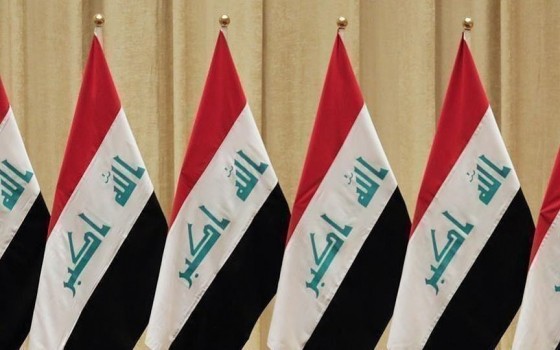
Following the return of millions of displaced persons and the improvement in the security situation, the United Nations says Iraq is steadily progressing towards greater stability, and that international cooperation is now focused on development.

- Europe and Arabs
- Thursday , 8 January 2026 10:50 AM GMT
Baghdad – New York: Europe and the Arabs
The UN Resident Coordinator in Iraq affirmed that with the conclusion of the United Nations Assistance Mission for Iraq (UNAMI) mission, the UN presence in Iraq is "shifting from a mission- and policy-based approach to a greater focus on development," according to the UN Daily News, a copy of which we received this morning, Thursday.
Ghulam Mohammad Ishaqzai explained that this aims to "support Iraq's social and economic needs, as well as to build upon the significant work accomplished over the past two decades, to preserve these gains and continue supporting Iraq's institutions."
This came during a press conference he held at the UN headquarters in New York yesterday, Wednesday, where he also addressed Iraq's signing of a five-year cooperation framework with the United Nations.
He added that this framework focuses on key areas including economic growth, social services, environmental protection and addressing climate change, and governance and the rule of law. He noted that there are positive indications that Iraq will contribute to financing the implementation of the new cooperation framework, adding, "This demonstrates the growing partnership and responsibility on the part of the Iraqi government, and its aspiration to become a donor after having been a recipient of humanitarian and development aid for many years."
Poverty Reduction and Successful Elections
The UN Resident and Humanitarian Coordinator in Iraq said that the country has changed significantly in the past two decades, "with Iraq enjoying increasing confidence in its institutions and its regional standing, and steadily progressing towards greater stability."
He cited several examples, including the reduction of poverty in the country from 20% in 2018 to 17.5% in 2025, adding that preliminary reports also indicate that Iraq's Human Development Index may have reached a point where it could be classified as a country with high human development.
He also stated that another important achievement was the successful holding of Iraq's sixth parliamentary elections on November 11 of last year, explaining that the UN played a significant technical role in supporting the Independent High Electoral Commission. Return of Millions of Displaced Persons
The UN official also noted that the improved security situation has enabled the return of 5 million internally displaced persons. He explained that approximately 100,000 displaced people, mostly from the Yazidi minority, remain in camps in the Kurdistan Region.
He added that "most of those who remain in the camps are not there because of insecurity, but rather for reasons related to housing, civil identification cards, and other development issues."
Isaac Zew also commended Iraq's role in repatriating its citizens from northeast Syria, where 23,000 people have been successfully returned to Iraq.
He added that the UN is heavily involved in the repatriation process for these Iraqi citizens, noting that "this issue has become increasingly complex globally."





No Comments Found