
United Nations: The legacy of colonialism has left deep scars through entrenched mechanisms of economic exploitation, as well as persistent forms of racism, inequality, and exclusion from decision-making bodies.

- Europe and Arabs
- Tuesday , 17 February 2026 6:40 AM GMT
New York: Europe and the Arabs
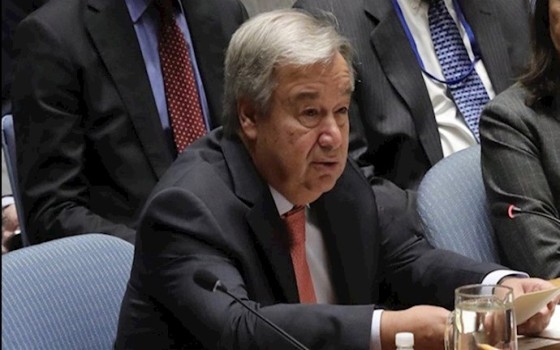
UN Secretary-General António Guterres said that the legacy of colonialism has left deep scars through entrenched mechanisms of economic exploitation, as well as persistent racism, inequality, and exclusion from decision-making bodies.
However, the Secretary-General also emphasized that the world has come a long way, "with more than 100 countries having gained their independence since 1945. Today, more people enjoy the right to self-determination and dignity," according to the UN Daily News. The Secretary-General reminded the audience that "decolonization has always been a goal of the United Nations since its inception." He noted that while much has changed for the better, there is still work to be done.
This came in his remarks at the opening of the 2026 session of the Special Committee on Decolonization on Monday at UN Headquarters in New York, delivered on his behalf by his Chief of Staff, Earl Courtenay-Rattray. Continuing to Work Tirelessly
The UN Secretary-General emphasized the need for three priorities to guide the future of the 17 remaining non-self-governing territories:
First, an inclusive dialogue between the non-self-governing territories, their governing bodies, Member States, and all relevant stakeholders.
Second, the pivotal role of youth. The vision and leadership of the next generation are vital for building a productive and inclusive future.
Third, the urgent need for climate action.
In closing, the Secretary-General said, “Let us continue to work tirelessly, as one team, to advance decolonization for all.”
A few days earlier, UN Secretary-General António Guterres stated that the African Union represents “a beacon of multilateralism” in a world rife with division and mistrust, recalling that cooperation between the UN and the African Union has reached new heights over the past decade. In his address to the African Union summit in Addis Ababa, Ethiopia, Guterres said the United Nations was honored to support the African Union's priorities, from the Silencing the Guns initiative to the African Agency for Humanitarian Action and the promotion of inclusive political transitions.
He stressed that the absence of permanent African seats on the Security Council was unjustifiable, adding, "We are in 2026, not 1946. When decisions are made concerning Africa and the world, Africa must be present."
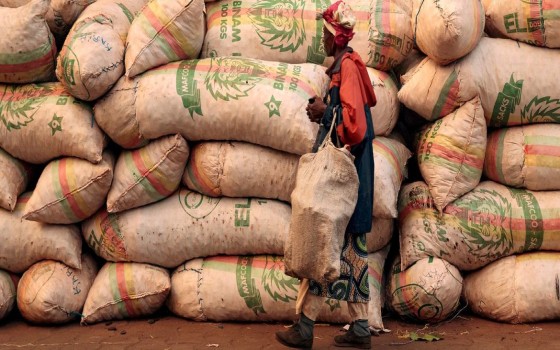
The people of Africa must benefit from their resources. The UN Secretary-General identified three key areas of focus for looking to the future: peace, economic action, and climate action.
He spoke about several conflict zones on the continent, including Sudan, where he reiterated that "the parties must commit to an immediate cessation of hostilities and resume talks for a permanent ceasefire and an inclusive, Sudanese-led political process." On economic action, Guterres warned that Africa loses more money annually on debt servicing or illicit financial flows than it receives in aid, reiterating his call for reform of the international financial system to ensure that developing countries have a voice and genuine participation in decision-making.
On climate action, Guterres warned that Africa has contributed only a small percentage to the climate crisis, yet it is now facing a faster-than-average rise in temperatures.
He emphasized that Africa can become a leading power in clean energy, calling for the people of Africa to "benefit from their resources."
He urged continued efforts to strengthen the partnership between the United Nations and the African Union for peace, sustainable development, and human rights in Africa and around the world. Not a goodbye.
Because Secretary-General Guterres' term ends at the end of this year, he said at the conclusion of his address to the African Union Summit: "Some describe my presence here today as a farewell, but this is not true. I assure you that until the very last moment of my term, Africa will remain the United Nations' top priority in all its activities. The partnership between the African Union and the United Nations will be the deepest strategic partnership between us. After December 31, I assure you that Africa will always remain at the heart of my concerns and my active solidarity, wherever I am and wherever my work is."


No Comments Found