

A deserted village after an Iranian drone, launched by Hezbollah, struck it. "Europe and the Arabs" reports on the atmosphere of fear among the residents of the Cypriot village.

- Europe and Arabs
- Thursday , 19 March 2026 4:3 AM GMT
Akrotiri, Cyprus: Nour El-Din Amrani
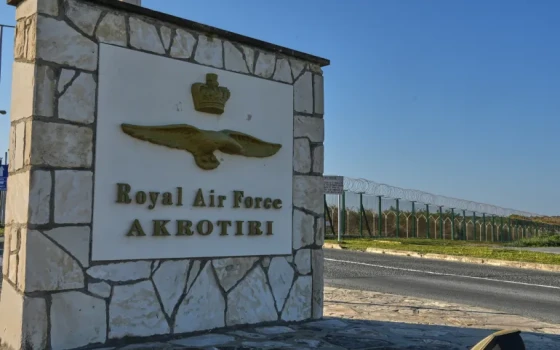
Calm has returned to the British base near the village of Akrotiri in Cyprus, but fear and panic persist among the residents. This comes two weeks after an Iranian drone struck the British base, which shares the village's name. The incident prompted residents to flee the village in search of safety, fearing further drone attacks from Iran. The "Europe and the Arabs" website reported on the situation in a field report, stating, "The village appeared almost deserted after its residents fled. Although relative calm has returned, fear still prevails." A subsequent investigation revealed that the drone was launched from Lebanon, most likely by the Islamic Resistance Movement (Hezbollah). A warehouse was damaged, but there were no injuries. However, fear has lingered ever since.
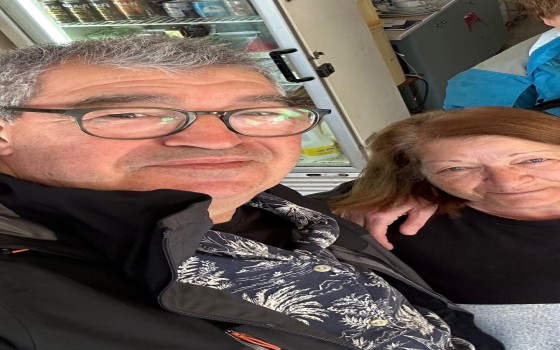
“It’s quiet now, but everyone is scared,” says Katerina Michael from behind the cash register at her butcher shop. “Business isn’t good, and the village is deserted by both residents and tourists. People have really left.”
Akrotiri, located in southwestern Cyprus, is one of two UK bases on the island. These bases encompass not only an airfield and fenced barracks but also the surrounding land, which is considered a British Overseas Territory.
This was a condition imposed by Britain when it granted Cyprus independence in 1960. As a result, about 3% of Cyprus’s land is British territory. Of the approximately 20,000 people who live there, roughly half are Cypriots, and the other half are British military personnel, support staff, and their families.
In the days following the incident, British fighter jets intercepted two more drones heading towards Cyprus, but since then, the situation has been calm. “We feel safer now,” Michaëlle continued, as she sliced the meat, but the situation remained unclear.
Neither Cyprus nor its government knew what was happening at these two bases. The British generally use them for military operations and intelligence gathering. Cyprus is highly strategically located, with Turkey, Syria, Lebanon, and Israel all within easy reach.
British Prime Minister Keir Starmer assured President Nicos Christodoulides that Britain was not involved in a war against Iran and that the Americans were not permitted to use the Cypriot bases to launch attacks. But this didn't seem to bother Iran much; the bases were considered legitimate targets by Tehran.
President Christodoulides repeatedly emphasized, “Cyprus is not a party to the war and doesn't want to become one.” But this didn't prevent the war from drawing ever closer.
This situation was creating tension, particularly in the villages surrounding the bases. “We don’t really know what to do now,” says Tasos Stavrinides in a café, having just finished a game of chess with a friend. “I know it’s not easy, but it would have been better if we had a say here, if the bases had been closed.”
This is a view shared by many Cypriots, and has been for a long time. They see the British military presence as a vestige of the colonial era, and now add that it is also a source of insecurity.
Even if Cyprus really wanted to, getting rid of the bases wouldn’t be easy. “The British made it very clear in 1960 that they wanted to stay here for a long time,” says Nacia Hadjigouriou, an associate professor of law at the University of Central Lancashire in Cyprus. “Moreover, to renegotiate that deal, you need not only the British, but also the Cypriots. And by that, I mean the Greek Cypriots and the Turkish Cypriots.” They have been in conflict for decades.
Since 1974, Turkey has occupied a third of the island. The government in Nicosia has no authority there. Reunification attempts have repeatedly failed and have been stalled for several years. The chance of a quick breakthrough is slim, and therefore, so is the chance of changing the status of the British bases.
So, in the café, Stavrinidis is relieved that other EU countries are now stepping in to help. France, Germany, the Netherlands, Spain, and Italy have all sent frigates to defend Cyprus in case of another drone or missile attack.
But Stavrinidis has particular confidence in his long-standing ally, Greece. “We feel Greek here,” he says with a smile. Athens has also sent two warships to Cyprus, in addition to deploying four more F-16 fighter jets to the island.
In the Cypriot village of Lassos. The shop owner, Mrs. Marwa, said, “What happened in Akrotira is unacceptable, but the media hype by the BBC is completely unacceptable because the Cypriots are the ones who will ultimately suffer from the crisis if tourists stop visiting us, and this will negatively affect Cypriot tourism, especially since our daily livelihood depends on tourists coming and not scaring and terrifying them because of a drone crash in the village. We understand the fear and anxiety of the residents, but at the same time, we consider the television news, especially the British news, to be misleading and exaggerated.”

No Comments Found