


War Developments: Attacks Target US Interests in Baghdad, British Ship Off Sharjah, and Drones Intercepted in Saudi Arabia's Eastern Province... More Than 20 Countries Express Desire to Secure the Strait of Hormuz

- Europe and Arabs
- Sunday , 22 March 2026 5:24 AM GMT
Capitals: Agencies – Europe and the Arabs
The ongoing conflict in the Gulf and Middle East witnessed new developments in the early hours of Sunday morning. Reuters, citing security sources, reported that explosions rocked the Iraqi capital, Baghdad, coinciding with drone attacks targeting a US diplomatic facility near Baghdad Airport.
Drone Crashes Southwest of the Capital
In a related development, an Iraqi security source reported that a drone crashed in the Saydiya district southwest of Baghdad, without providing immediate details on the extent of the damage or casualties.
Escalating Attacks on US Interests
These developments reflect an escalation in attacks targeting sites associated with the United States in Iraq, amidst rising regional tensions.
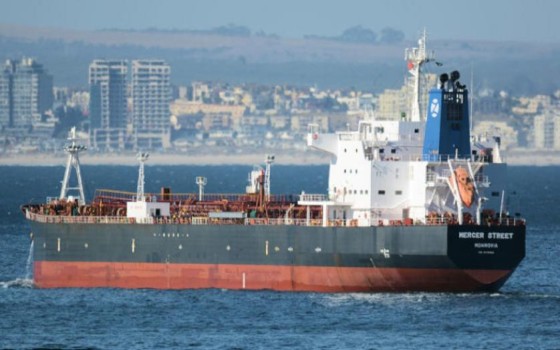
Meanwhile, the official spokesman for the Saudi Ministry of Defense, Major General Turki al-Maliki, announced the interception and destruction of two drones in the Eastern Province. The United Kingdom Maritime Trade Operations (UKMTO) reported that a projectile of unknown origin struck a vessel 15 nautical miles north of Sharjah, UAE. Reuters quoted UKMTO as saying it had received a report that all crew members were safe.
Meanwhile, the US military asserted that Iran's ability to threaten the Strait of Hormuz had been "degraded" following the bombing this week of an underground facility where the Islamic Republic was storing cruise missiles and other weapons.
On Saturday, 22 countries expressed their readiness to participate in securing the Strait of Hormuz and called for an end to Iranian attacks on infrastructure in neighboring countries.
A joint statement issued by most European countries, along with the UAE and Bahrain, read: "We express our readiness to contribute to appropriate efforts to ensure safe passage through the Strait," welcoming "the commitment of participating countries in preparatory planning." The statement added: "We condemn in the strongest terms the recent Iranian attacks on unarmed commercial vessels in the Gulf, attacks on civilian infrastructure, including oil and gas facilities, and the de facto closure of the Strait of Hormuz by Iranian forces," and called for "an immediate and complete cessation of attacks on civilian infrastructure."
For its part, the British Ministry of Defence accused Iran of launching "reckless attacks" and seizing control of the Strait, considering this a threat to British interests and those of its allies.
In contrast, Iranian Foreign Minister Abbas Araqchi, in statements to Japanese media, denied that his country had closed the Strait, saying: "We did not close the Strait of Hormuz, but rather imposed restrictions on the ships of countries involved in attacking us," adding that Tehran is ready to guarantee the safe passage of ships from countries like Japan, provided there is coordination with Iran.
Meanwhile, the Financial Times reported that at least six ships unloaded their cargo at the port of Imam Khomeini and transited the Strait between March 15 and 16. Bloomberg also quoted the crew of an Indian gas tanker as saying that Iran allowed them to pass through the Strait of Hormuz last week following diplomatic intervention.
On the diplomatic front, UN Secretary-General António Guterres, according to Politico, said he is in contact with key players in the Gulf and the European Council regarding the Strait of Hormuz.
This international move comes after US President Donald Trump called for the formation of a military coalition to secure the strait, through which approximately 20% of the world's oil and gas production typically passes.
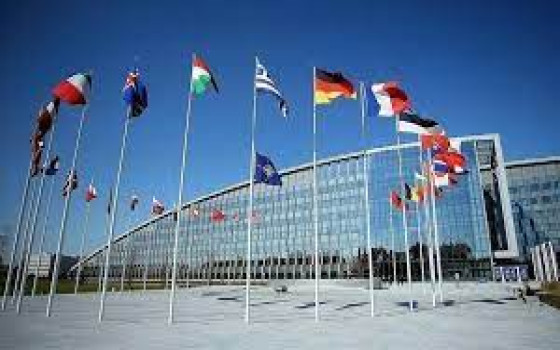
In new statements, Trump called for China and South Korea to participate in efforts to reopen the Strait of Hormuz and also asked NATO countries to assist in this matter.
He added that "assistance in securing the Strait of Hormuz will not be necessary once the Iranian threat is eliminated," emphasizing that countries that use the strait should be responsible for its protection and security, saying, "We do not use it." According to an analysis by Kepler, only 116 cargo ships transited the Strait of Hormuz between March 1 and 19, a 95% decrease compared to pre-war levels.
In terms of military operations, the US military claimed that Iran's ability to threaten the Strait of Hormuz had been diminished following airstrikes targeting underground storage facilities on the Iranian coast.
The strikes employed bunker-buster bombs, each weighing over two tons and designed to penetrate underground targets.
According to US Central Command chief Admiral Brad Cooper, the strikes destroyed the underground facility, which housed anti-ship cruise missiles, mobile launchers, intelligence support sites, and missile-guided radar used to monitor ship movements.
In a tally of operations since the start of the war, Cooper stated that the US military had targeted 8,000 Iranian targets, including 130 ships, describing it as "the largest attack on a naval force since World War II." He asserted that Tehran’s ability to threaten freedom of navigation in the Strait has diminished as a result of these strikes, emphasizing that US military operations in this regard will not cease.





No Comments Found