
Don't Forget Gaza Under the Pretext of the War in Iran... Humanitarian Needs Exceed the Response Amidst Tight Restrictions... and Escalating Violence in the West Bank

- Europe and Arabs
- Friday , 3 April 2026 6:42 AM GMT
Gaza: Europe and the Arabs
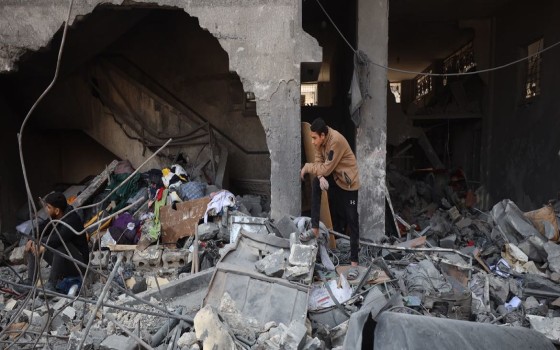
Fears are growing that the crisis in Gaza will be forgotten amidst global attention focused on the ongoing conflict in the Middle East between the United States and Israel on one side and Iran on the other. This has prompted international organizations to issue a warning. The United Nations Office for the Coordination of Humanitarian Affairs (OCHA) stated that the needs of the population in the Gaza Strip still far exceed what aid organizations can provide, given the severe restrictions and other obstacles.
According to UN spokesperson Stéphane Dujarric, OCHA emphasized the urgent need to facilitate the work of humanitarian partners and allow a wider range of essential goods into the Strip through the available crossings. He noted that only one crossing is currently open for the movement of goods. This information was included in the UN daily news bulletin, a copy of which we received this morning, Friday.
Regarding food security, OCHA reported that humanitarian partners completed their March aid distributions this week, reaching one in two families with food rations that covered half of their minimum daily caloric needs. Approximately 1.5 million meals are being provided daily, and around 130,000 loaves of bread, each weighing 2 kilograms, are being produced. However, this remains insufficient. The limited entry of commercial goods, particularly cooking gas, restricts the ability of families and kitchens to prepare food, with nearly half of all households relying on unsafe cooking methods, including burning waste.
In the health sector, UN-supported emergency medical teams provided approximately 23,000 medical consultations during the last week of March across Gaza. However, ongoing delays in the entry of specialized medical and surgical equipment are limiting the provision of complex healthcare.
Regarding shelter, most of the population remains displaced, and the response is limited to short-term solutions. More sustainable solutions depend on the entry of equipment and materials that are difficult to obtain approval for, including those needed for clearing rubble and explosive remnants of war and repairing damaged homes. During the last week of March, partners reached approximately 14,000 families with assistance, including plastic sheeting and household items, prioritizing those whose property was damaged by recent rains. In the education sector, last week’s rains damaged at least 15 temporary learning spaces, disrupting services for some 20,000 students. Partners, led by UNICEF, are continuing to set up specialized learning tents and distribute stationery and recreational materials for children.
Increased Violence in the West Bank
In the West Bank, OCHA data for the first three months of the year indicates that two-thirds of Palestinian casualties occurred after the regional escalation on February 28, with 22 of the 33 Palestinians killed by Israeli forces or settlers. Four other Palestinian women were killed by shrapnel during an Iranian missile attack.
More than 200 settler attacks were recorded in March, resulting in injuries or property damage and affecting more than 100 Palestinian communities, averaging nearly six attacks per day. The United Nations and its partners affirmed their continued support for the health system in the West Bank and for displaced and affected families, stressing that preventing further violence requires protecting Palestinians, holding those responsible for unlawful attacks accountable, and abolishing policies that contribute to exacerbating humanitarian needs.






No Comments Found