
Millions in the Arab region are threatened with food and water insecurity as a result of conflict. The cycle of death and destruction sweeping the Middle East is affecting the poor worldwide.

- Europe and Arabs
- Saturday , 4 April 2026 6:26 AM GMT
Beirut – New York: Europe and the Arabs
Hours after the UN Secretary-General stated that the humanitarian crisis is worsening due to the ongoing war, adding that "when the Strait of Hormuz is choked, the world's poorest and most vulnerable people can't breathe,"
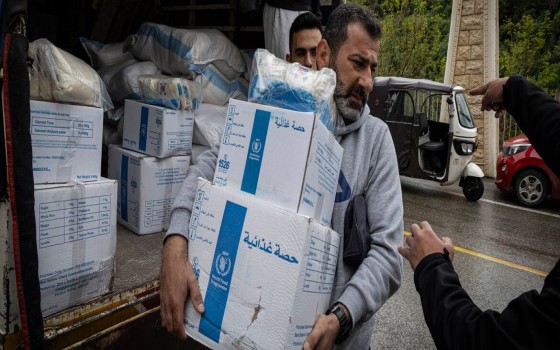
the UN Economic and Social Commission for Western Asia (ESCWA) warned that a 20% increase in global food prices could push an additional five million people into food insecurity across low- and middle-income Arab countries, according to the UN's daily news bulletin. ESCWA emphasized that the danger is immediate and growing, particularly for fragile and conflict-affected countries with limited fiscal space and reliance on food imports.
This came in a new study issued by the committee entitled "Conflict and its Repercussions: Exacerbating the Impacts and Risks on Energy, Water, and Food Systems in the Arab Region." The study highlighted the immediate disruption to the energy trade at the macroeconomic level, with oil markets under severe strain. Crude oil exports from the Gulf have declined by between 75% and 90% since the start of the war, and oil prices have risen to over $112 per barrel as a result of the near-total closure of the Strait of Hormuz.
ESCWA stated that these disruptions are leading to increased inflation, widening fiscal deficits, and a dramatic rise in transportation and insurance costs in the region.
Risks to Water Security
The study also addressed the emerging and alarming risks to water security. It pointed out that approximately 40 million people in the Gulf Cooperation Council (GCC) countries rely on desalinated water extracted from the Gulf, making them more vulnerable to any damage to energy or desalination infrastructure, as well as the risks of seawater pollution resulting from the conflict. She added that the continuation of these disruptions could rapidly lead to a humanitarian crisis, given the inability of families to store water for emergencies.
Acting Executive Secretary of ESCWA, Mourad Wahba, said: “These figures call for urgent and coordinated cooperation to protect essential supply chains, including the adoption of early warning systems, the building of strategic reserves, the diversification of trade routes, and the acceleration of investment in alternative and resilient energy, water, and food systems.”
“Deepening the Poverty Gap”
The study stated that food systems are facing increasing pressure, as the Arab region imports most of its grain needs, while stocks remain limited, sufficient for no more than three months.
It predicted that rising oil prices, disruptions to shipping routes, and increased fertilizer costs will further exacerbate food prices and production costs, negatively impacting low-income families and the most vulnerable groups. The acting executive secretary of ESCWA warned that "without swift intervention, the cumulative effects of the conflict could deepen poverty, cause social unrest in fragile countries, and undermine progress made in sustainable development in the Arab region."
This came after UN Secretary-General António Guterres said that we are "on the brink of a wider war that could engulf the Middle East, with enormous repercussions around the world," repercussions that the entire world is already feeling.
Speaking to reporters in New York, Guterres stressed that human suffering is constantly worsening as a result of the ongoing war, adding that "when the Strait of Hormuz is choked, the world's poorest and most vulnerable people can't breathe."
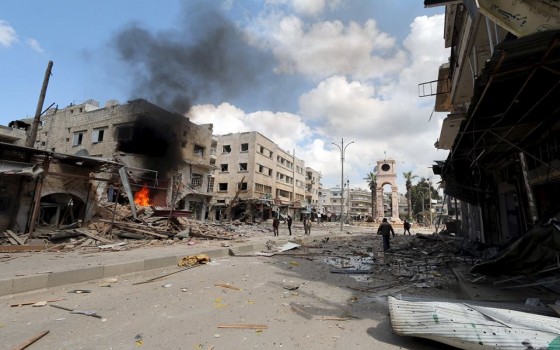
As the war enters its second month, the Secretary-General noted that—in addition to the escalating destruction and indiscriminate attacks targeting civilians and civilian infrastructure—rising food and energy prices are impacting communities worldwide. He added: “Many aspects of this conflict may be fraught with uncertainty, but one thing is unequivocal: if the drums of war continue to beat, escalation will only worsen the situation. This spiral of death and destruction must stop.”
He stressed the need to respect and protect civilians and civilian infrastructure, including nuclear facilities, and emphasized the importance of preserving freedom of navigation, including through the Strait of Hormuz.
Guterres also stressed the need to allow space for the ongoing diplomatic efforts to find a peaceful way forward, adding that the sovereignty and territorial integrity of all UN member states must be respected.
While noting that he is in close contact with the parties involved, the Secretary-General announced that he is dispatching his Personal Envoy, Jean Arnault, to the region to support these efforts.
He said: “My message is clear: to the United States and Israel: it is time to stop this war, which is causing immense human suffering and already devastating economic consequences. To Iran: stop attacking your neighbors.” Guterres concluded by emphasizing that conflicts do not end on their own, but rather "end when leaders choose dialogue instead of destruction. This option is still available, and it must be taken now."



No Comments Found