
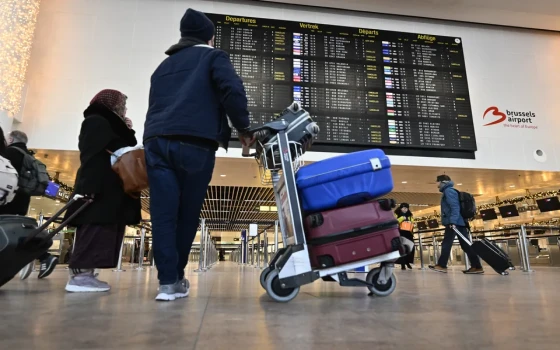
Royal Air Maroc suspends flights to Brussels and other European cities due to rising fuel prices

- Europe and Arabs
- Monday , 25 May 2026 1:40 AM GMT
Brussels: Europe and the Arabs
On the eve of Eid al-Adha and just weeks before the start of the summer holidays for Moroccans living abroad, Royal Air Maroc announced it would temporarily suspend several flights to African and European destinations due to soaring jet fuel prices, increased operating costs, and weak demand.
Tensions in the Middle East have led to a sharp rise in global jet fuel prices, putting pressure on airlines and forcing them to temporarily suspend some flights.
According to Reuters, the airline said in a statement that it would suspend flights connecting Moroccan airports to several African cities, including Bangui, Brazzaville, Kinshasa, Douala, Yaoundé, and Libreville.
It also decided to suspend flights to European destinations, including Barcelona, Lyon, Bordeaux, Marseille, and Brussels. According to written statements by Moroccan journalist Noureddine Amrani, based in the Netherlands, Royal Air Maroc has announced the temporary cancellation of several flights to Europe and Africa.
The state-owned Moroccan airline explained that it was forced to temporarily adjust its international network due to the "significant increase in kerosene prices" and a decline in demand on some routes.
In addition to Brussels, flights from Marrakech to Marseille, Lyon, and Bordeaux have been temporarily suspended. Flights from Tangier to Barcelona and Malaga will also be suspended, according to the Belgian newspaper Nieuwsblad on Sunday.
Several African destinations from Casablanca have also been canceled, including Bangui, Brazzaville, Kinshasa, Douala, Yaoundé, and Libreville.
According to Royal Air Maroc, the company is "closely monitoring the international situation" and will work to resume flights as soon as economic and commercial conditions allow.
The war in the Middle East and the closure of the Strait of Hormuz have put significant pressure on the aviation sector. Before the conflict, approximately 20% of the kerosene used in Europe passed through the strait. Since then, high fuel prices have raised concerns about potential shortages during the summer.
It is worth noting that Royal Air Maroc, in which the Moroccan state owns more than 98% of the shares, launched an ambitious growth plan in 2023 to expand its fleet from 50 to 200 aircraft by 2037.




No Comments Found