

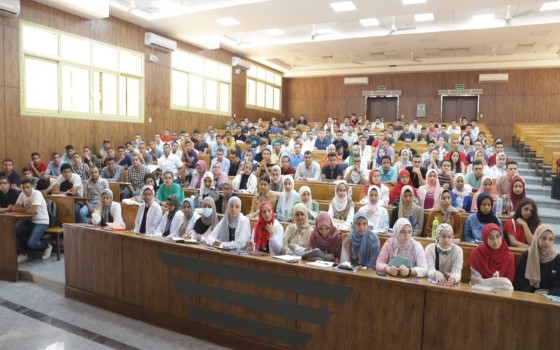
Higher education enrollment in Arab countries has tripled; while students tend to remain within the region, they face difficulties in securing employment. Women are now outnumbering men, with Egypt and the United Arab Emirates serving as the primary hubs for higher education.

- Europe and Arabs
- Sunday , 8 November 2026 7:5 AM GMT
Doha/Cairo – Europe and the Arabs
UNESCO has welcomed the significant expansion of the higher education sector in Arab countries, noting that the number of enrolled students has reached approximately 15 million—nearly triple the figure from 25 years ago. However, the organization cautioned that access to education remains unequal and that graduates continue to face persistent difficulties in securing employment.
This assessment was presented in a report released during the inaugural session of the committee overseeing UNESCO’s updated convention on the recognition of higher education studies, certificates, and degrees in Arab states. The session took place a few days ago in Doha, Qatar, according to the United Nations’ daily news bulletin. The report provides a comprehensive review of higher education systems and policies across 19 Arab countries and outlines key future priorities, including:
Expanding access to education through more diverse learning pathways.
Strengthening student support and improving employment prospects for graduates.
Investing in academic and research capacities.
Advancing a responsible digital transformation.
Deepening regional cooperation.
Key Highlights from the Report
The report reveals that, since 2007, women in Arab countries have consistently outpaced men in both higher education enrollment and graduation rates. Furthermore, women account for nearly half of all graduates in the fields of science, technology, engineering, and mathematics (STEM)—a significantly higher proportion than the global average of approximately one-third.
UNESCO also noted that Arab countries are increasingly attracting international students, currently hosting nearly 600,000 out of the 7.3 million international students worldwide. It added that Arab students are increasingly inclined to remain within the region, with the United Arab Emirates and Egypt emerging as key regional hubs for education.
Despite the growth documented in the report, UNESCO noted that enrollment rates remain below the global average, with significant disparities between countries. It also pointed out that the youth unemployment rate in the region stands at 26%—nearly double the global average.
UNESCO reaffirmed its ongoing commitment to supporting Arab nations in building inclusive, high-quality, and future-ready higher education systems, noting that the developments highlighted in the report provide fresh momentum for regional cooperation.
The organization emphasized that the entry into force of the updated convention on higher education in Arab states—which took effect in April of this year—opens new avenues for facilitating the cross-border recognition of qualifications, promoting academic mobility, and fostering stronger ties between higher education systems across the region.





No Comments Found