

European Union: Registrations of New Battery-Electric Vehicles Increase 45-Further in Ten Years

- Europe and Arabs
- Saturday , 21 February 2026 4:49 AM GMT
Brussels: Europe and the Arabs
The European Statistical Office (Eurostat) in Brussels has published figures showing a time series for the years 2014-2024, covering twenty EU member states for which data is available, illustrating how the types of energy used in new passenger car engines have changed. In these countries, which accounted for 93% of new passenger cars in the EU in 2024, the number of diesel vehicles (including hybrids) decreased by 67%, while the number of gasoline vehicles (including hybrids) increased by 60%.
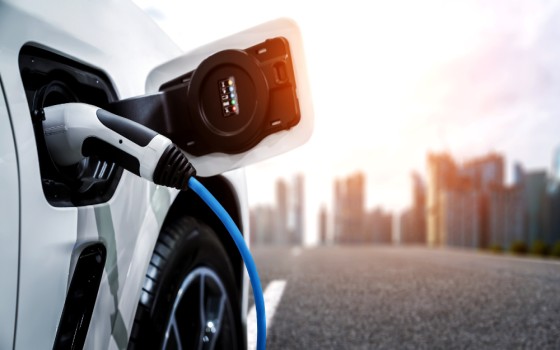
As for alternative energy sources, the number of new battery-electric vehicles registered in 2024 increased 45-fold compared to 2014, representing 13.9% and 0.3% of total new car registrations, respectively. Registrations of new vehicles powered by other alternative fuels (LPG, natural gas, hydrogen, fuel cells, bioethanol, biodiesel, dual fuels, etc.) increased by 13% in 2024 compared to 2014. This data, according to a statement from Eurostat, the European statistical office in Brussels, includes new passenger car registrations in the EU from 2014 to 2024 (percentage, by power source). A stacked bar graph is also provided, broken down by petrol, diesel, battery electric only, and other alternative fuels. The statement explains, "The 2025 edition of 'Key Figures on European Transport,' published in January, brings together all the essential data on the transport of people and goods, while also providing broader context. This edition covers infrastructure, economic impact, energy consumption, and environmental effects. Today's focus is on new passenger car registrations."









No Comments Found