

Due to the increasing use of artificial intelligence, the nuclear energy industry is escalating as an alternative to power grids.

- Europe and Arabs
- Saturday , 17 January 2026 7:13 AM GMT
New York: Europe and the Arabs
The world's electricity grids are under immense pressure due to the increasing use of artificial intelligence. This leads to the belief that, in order to meet this growing demand without exacerbating the climate crisis, a comprehensive expansion of nuclear power is essential. According to the UN Daily News, global electricity demand is growing at an accelerating rate. By 2035, it is expected to increase by more than 10,000 terawatt-hours, equivalent to the total consumption of all advanced economies today.
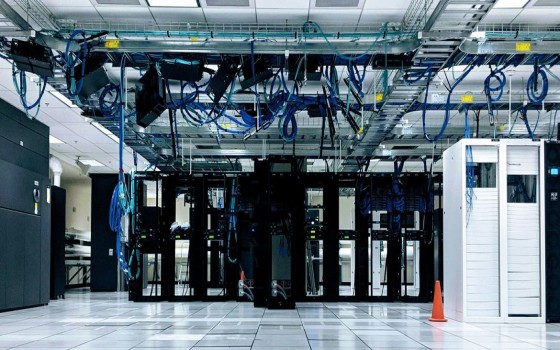
The rise of artificial intelligence plays a significant role in this, as AI technology relies on data centers, and the electricity consumption of an average-sized data center is equivalent to that of 100,000 homes.
According to the International Energy Agency (IEA), demand for data centers increased by more than three-quarters between 2023 and 2024 and is projected to account for more than 20% of electricity demand growth in advanced economies by 2030.
In the United States, home to many leading AI companies, energy consumption for processing AI-powered data is expected to exceed the combined electricity consumption for producing aluminum, steel, cement, and chemicals by the end of the decade.
The Engine of the Future
In December 2025, policymakers, technology companies, and nuclear industry leaders from around the world convened at the IEA headquarters in Vienna to explore opportunities for nuclear energy to enable the expansion of AI and how AI can drive innovation in the nuclear industry.
Training sophisticated AI models requires tens of thousands of CPUs to work continuously for weeks or even months. Meanwhile, the daily application of AI is expanding to encompass almost every sector, including hospitals, public administration, transportation, agriculture, logistics, and education. Every query, every simulation, every recommendation consumes energy. Manuel Greisinger, a director at Google specializing in artificial intelligence, said: “We need clean, stable, carbon-free electricity available 24/7. This is undoubtedly a very high standard, and it cannot be achieved with wind and solar power alone. Artificial intelligence is the engine of the future, but an engine without fuel is almost useless. Nuclear power is not just an option; it is an essential and indispensable component of the future energy architecture.”
Activity in the Nuclear Power Industry
For his part, the Director General of the International Atomic Energy Agency (IAEA), Rafael Grossi, believes that the nuclear power industry will be the energy partner for the AI revolution.
Grossi said: “Nuclear power alone is capable of meeting the five requirements for low-carbon power generation: 24/7 reliability, very high energy density, grid stability, and real scalability.”
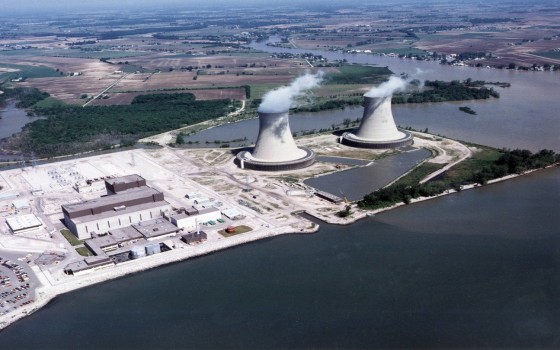
There appears to be a surge in the nuclear power industry, with 71 new reactors under construction, in addition to the 441 reactors currently operating worldwide. Ten reactors are planned for the United States, which already has 94 reactors, the most of any country.
Tech giants that use data centers have pledged to support the goal of at least tripling global nuclear power capacity by 2050. For example, Microsoft signed a 20-year power purchase agreement that allowed the restart of Unit 1 at the Three Mile Island nuclear power plant in Pennsylvania.
Investments in Europe, Japan, and the Middle East
The rest of the world is actively investing in nuclear power, driven by the growth of artificial intelligence. The Director General of the International Atomic Energy Agency (IAEA) explained that "Europe has the world's most dense digital corridor, with Frankfurt, Amsterdam, and London being key hubs."
He added, "Leading nuclear power countries like France and the UK are doubling down on their nuclear power plant construction efforts, and emerging countries like Poland are also accelerating their involvement."
Thanks to its strong research base in mathematics and computer science, Russia remains the world's largest exporter of nuclear power and is a leader in the operation and development of advanced reactor technologies, while China is making significant strides in both artificial intelligence and nuclear power.
Japan, for its part, is ramping up the construction and modernization of data centers to meet growing demand. In the Middle East, the United Arab Emirates has established a nuclear energy program and emerged as a regional hub for artificial intelligence.
Are small modular reactors (SMRs) the answer?
The need for more energy, and in the near future, is also driving the development of small modular reactors (SMRs), which are significantly different from traditional large power plants that require massive investments and a timeframe of up to 10 years.
"These types of reactors are characterized by their small size and advanced safety systems, and they can be deployed in nearby industrial areas, including data center complexes," said Grossi.
Technology companies using these reactors will not have to worry about regional grid supply constraints or power loss during transmission. This will be a crucial advantage in regions where grid modernization is slow and interconnection queues are long.
Although this type of reactor still needs to move beyond the research and development stage, the IAEA is working closely with regulators and industry to make it a viable option, and we may soon see large numbers of SMRs deployed to meet demand.
For example, Google has signed an agreement with an energy company to purchase nuclear power from several small modular reactors (SMRs), a world first. If all goes according to plan, these reactors could be operational by 2030. Google is also turning its attention to space, exploring space-based solar power networks to enable large-scale machine learning in orbit, fully harnessing solar energy. Two experimental satellites are scheduled for launch in early 2027 to test radiation tolerance and data processing capabilities in a space environment.
Whether it’s harnessing solar power in space, reactivating existing reactors, investing in a new generation of SMRs, or building large reactors, all these actions point in the same direction: building a nuclear-powered energy system that can meet the needs of future civilizations.






No Comments Found