

Dutch Mosques: Unregulated Investigations of Some Mosques Cost Municipalities Fines and Apologies

- Europe and Arabs
- Friday , 6 February 2026 9:10 AM GMT
Amsterdam, Netherlands: Nour Eddine Amrani
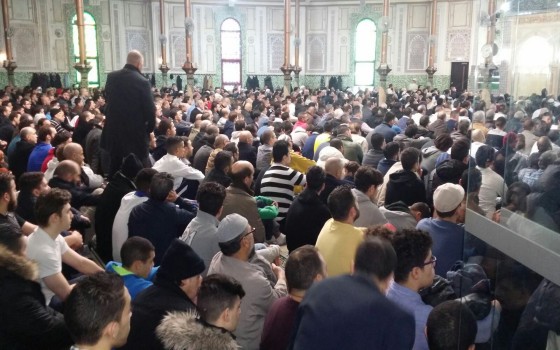
The Dutch Data Protection Authority (PDPA) has imposed fines totaling €25,000 on several mosques in the Netherlands, specifically the Delft municipality, for privacy violations. This stems from an investigation conducted by the PDPA into the Al-Ansar Mosque in Delft. Despite the municipality's apology to the mosque's management on February 4th, the Muslim community in Delft and other Dutch cities and towns has expressed concern and dismay. They believe such illegal practices exacerbate the growing extremism fueled by Islamophobic parties within Dutch society.
The Data Protection Authority has deemed the Delft municipality responsible for its illegal actions regarding the Al-Ansar Mosque. In a letter addressed to the mayor, the city's chief official responsible for security and stability, the Authority indicated the municipality's disregard for the law, particularly since the investigations were conducted in non-exceptional circumstances. The Authority considered the municipality's actions a violation of freedom of religion, enshrined in Article 1 of the Dutch Constitution. The Authority deemed the investigation a "serious" breach because it involved the collection of personal data, information about relationships, and descriptions of beliefs within the Muslim community, all under the pretext of "investigating movements and enhancing the informational website."
Former mayor Maria van Westerveld stated that the investigation took place during a period marked by heightened concerns about extremism and the departure of individuals to conflict zones.
According to the mayor, the Netherlands was shocked when young Dutch citizens of immigrant origin left the country to join ISIS and other groups to fight in Syria and Iraq. She had requested that municipalities be on high alert, urging the central government and security services to remain vigilant. Former mayor Maria claimed that the investigation's primary and ultimate goal was to prevent young people from leaving the country and joining ISIS in the Middle East and other conflict zones.
However, the privacy watchdog deemed the municipality's actions unlawful, stating that the mere fact of young people traveling to conflict zones did not warrant an investigation.
The fine remained at €25,000. This was because it was a one-time incident involving a relatively small group of 16 individuals. Furthermore, the municipality cooperated with the investigation and acknowledged that mistakes had been made. According to the watchdog, a recurrence is unlikely.
The Delft municipality was compelled to apologize to the Al-Ansar Mosque. Discussions were held between the mayor and mosque officials, and the municipality will also reimburse the mosque €10,000 for its legal costs in exchange for the mosque agreeing not to pursue further legal action. The municipality accepted the fine and did not contest it, expressing its desire to move past this incident in order to rebuild trust among the various segments of Dutch society, avoid any future unrest, and start afresh.
On another note, the Huizen municipality also apologized to the city's mosque for conducting a secret investigation into the mosque. The mosque had demanded an immediate apology from the municipality following the decision of the independent body responsible for protecting the rights of individuals and groups. Consequently, a fine of €25,000 was imposed on the municipal council responsible for conducting the investigation, which failed to respect the laws protecting individuals. The mayor of Huizen, Serge Ferraro, stated that an apology was inevitable and called for open dialogue with mosque officials to build new relationships based on mutual respect and cooperation. He said, "We have indeed interfered in an unacceptable way in the private lives of our residents, and we are all required to build new connections and restore trust." The municipalities of Eindhoven, Zoetermeer, and Tilburg were not spared fines for conducting secret investigations without adhering to the standards permitted by laws protecting individuals and groups in Dutch society.
The number of municipalities that fell into this trap reached ten, facing penalties, demands to apologize to various mosques, and fines. These included Haarlem-Meer, Ede, Hilversum, Veendale, and Goos-Meer.
It is worth noting that in the 1990s, several governmental and civil voices called for monitoring the activities of Muslims in the Netherlands by recording and translating the sermons delivered by imams in the four major cities. Such monitoring was met with rejection by Muslim communities, who expressed concern about the interference of unwelcome and disruptive elements that infringed upon individual freedom of belief and diminished their role in Dutch society.






No Comments Found