

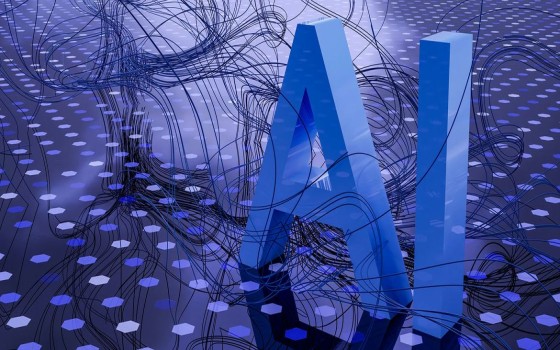
Unbridled Artificial Intelligence: UN Warns of the Danger of Creating a "Monster" Out of Control

- Europe and Arabs
- Saturday , 21 February 2026 11:50 AM GMT
New Delhi – New York: Europe and the Arabs
The UN High Commissioner for Human Rights stressed the need for regulations governing artificial intelligence (AI) to prevent an increase in inequality and bias. He warned that unchecked AI could become a “Frankenstein’s monster” if its developers lack a deep understanding of basic ethical and social principles, according to the UN Daily News, a copy of which we received.
In an interview with UN News during the AI Impact Summit in New Delhi, India, High Commissioner for Human Rights Volker Türk said: “When developers have a very superficial understanding of basic principles, it reminds me a bit of Frankenstein’s monster: they develop something they can’t control afterward. If they are unaware of the risks, they could create chaos.”
Türk urged governments and companies to put in place urgent safeguards to prevent this technology from exacerbating inequalities and biases and causing real harm. He said: “If data is collected from only one region of the world, and if AI development is limited to men, unconscious biases will take hold. It is essential to pay attention to marginalized groups and minorities because they are often excluded from AI development.”
The High Commissioner also likened the unchecked advancement of AI to “releasing a genie from a bottle.”
He warned of the impact of misinformation on the social fabric, saying: “It creates divided societies, where everyone lives in isolation from one another.” He also noted the alarming rise in misogyny: “Many women tell me they are considering leaving politics because of what they experience on social media.”
Turk compared the need to regulate AI to that of the pharmaceutical industry, saying: “We must require companies to conduct human rights impact assessments when designing, launching, and marketing AI.” He pointed out that some technology companies have budgets exceeding those of small countries, granting them global influence. “This influence can be used for good—health, education, and sustainable development—but also for evil: lethal autonomous weapons, disinformation, hate, and violent misogyny.”
A Vision for the Future
When UN News asked Turk what responsible artificial intelligence might look like in five years, he envisioned a scenario of “inclusive development, where power is not concentrated in the hands of a handful of North American companies, and AI is built on the richness and diversity of all societies.”
He concluded, “If we don’t offer a vision for a better world, we could end up with more polarization and wars beyond human control. That is extremely dangerous.”






No Comments Found