
Libya: Angry Protests in Tripoli and Western Cities Following UN Warnings of Deteriorating Economic Conditions and Fragile Security Situation

- Europe and Arabs
- Saturday , 28 February 2026 7:37 AM GMT
Tripoli – New York: Europe and the Arabs
Tripoli and several other cities in western Libya witnessed angry popular demonstrations denouncing the deteriorating living conditions and the continued collapse of basic services, amid worsening economic crises and rising living costs.
The demonstrators raised slogans holding successive political bodies responsible for what they described as a “chronic failure” in managing the country’s affairs. They demanded the departure of all political entities without exception, emphasizing that the current situation can no longer tolerate further promises or temporary solutions. This was reported by the Cairo-based Youm7 website, citing news agencies.
The protesters demanded improved basic services, price controls, the provision of cash liquidity, and an end to the political division, which they see as the main reason for the paralysis of state institutions and the decline in living standards.
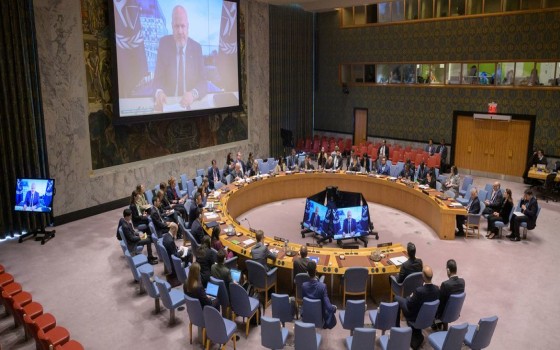
A few days ago, the Special Representative of the UN Secretary-General for Libya, Hanna Tetteh, stated that the deteriorating economic conditions, poverty, increasing pressure on society, and the fragile security situation are all cause for concern, as they could lead to unforeseen political and security challenges in Libya. In her briefing to the Security Council a few days ago on the situation in Libya, Ms. Tetteh stressed that this situation highlights "the need to work with Libyans through the roadmap to address the root cause of this dysfunction, namely the divided government with limited coordination and the unilateral actions of both sides."
Regarding the implementation of the political roadmap, Ms. Tetteh noted that the thematic working groups—those focusing on the economy, governance, security, national reconciliation, and human rights—have held two rounds of deliberations since the end of last year.
She said, "Across the four tracks, there is a clear sense of urgency to resolve the political impasse and implement governance and economic reforms."
She expressed regret that no tangible progress has been made between the House of Representatives and the High Council of State in implementing the first two steps of the roadmap, including the mechanism for selecting members of the High National Elections Commission's board, despite the efforts of the United Nations Support Mission in Libya (UNSMIL).
She pointed out that the two bodies' failure to utilize the agreed-upon mechanism and their subsequent unilateral actions have further eroded their credibility. She added: “This reinforces Libyan perceptions that the two bodies are either unable or unwilling to work together to implement the first two phases of the roadmap.”
Divided Judiciary
The Special Representative warned of a deteriorating situation in Libya on several fronts. She said that the Libyan judicial system, which has historically remained largely unified despite prolonged political challenges, is now experiencing increasing division, “which threatens serious repercussions for the country’s unity.”
She cautioned that “there are now competing jurisdictions, conflicting judicial rulings, and judicial inconsistencies.”
She continued: “If measures are not taken to preserve the unity, cohesion, and independence of the judiciary, the resulting conflicting legal systems will affect the economy, elections, governance, security, and human rights. This is a red line, and if it is crossed, it will undermine the unity of the state.” Deteriorating Economic Situation
Regarding the economic situation, the UN official warned that Libya's economic trajectory is deteriorating, and that "the Libyan people are facing immense difficulties due to the devaluation of the currency, rising prices, fuel shortages, and growing public discontent."
She pointed out that the absence of a unified national budget, the lack of coordination in public spending due to the existence of parallel government institutions, and the decline in oil revenues have contributed to the continued imbalances in the foreign exchange balance.
She also noted that shortcomings in governance, fragmented oversight, and the ongoing waste through smuggling and the illicit exploitation of resources continue to deplete the country's resources.
Transnational Criminal Networks
The Special Representative noted the flourishing of transnational criminal networks in Libya, which has further undermined stability and security, adding: "These networks thrive in an environment of fragmented security and law enforcement institutions, open borders, weak financial oversight, and limited accountability."
She referred to the report issued by the United Nations Office on Drugs and Crime in January 2016, which showed that Libya had become a major transit hub for drug trafficking. She referred to the joint report issued by the Office of the United Nations High Commissioner for Human Rights and UNSMIL on human rights violations against migrants and asylum seekers in Libya.
She also spoke about the continued targeted killings, calling for a swift and transparent investigation to ensure accountability for the perpetrators following the killing of Saif al-Islam Gaddafi – wanted under an arrest warrant issued by the International Criminal Court – in the Zintan region under unclear circumstances.
A situation that undermines the unity of the state
The UN official warned that the combination of factors she outlined in her briefing “is creating a situation that undermines the unity and territorial integrity of the state, which will have repercussions for the country and the region.”
The Special Representative stressed that “the only way forward is a political solution that unites Libyans.”
She said it is important that collective efforts, including bilateral initiatives, are integrated and address the serious economic and security risks in Libya.




No Comments Found