
The European Security Council discussed the evacuation and return of citizens from the Middle East, transportation risks in the Strait of Hormuz and the Red Sea, energy price and supply developments, and addressing any internal security threats.

- Europe and Arabs
- Tuesday , 3 March 2026 5:1 AM GMT
Brussels: Europe and the Arabs
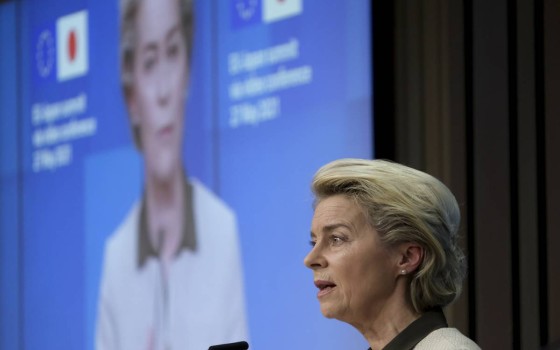
The European Security Council, in a meeting chaired by Ursula von der Leyen, President of the European Commission, reviewed developments in Iran and the Middle East and their implications for the European Union. According to a statement issued in Brussels following the meeting, "The Commission will be guided in its work by two priorities: supporting Member States and protecting EU citizens from the negative repercussions of the ongoing events in Iran and the Middle East." According to European sources, European Commission President Ursula von der Leyen convened a Security Council meeting on Monday – a new format comprising senior officials focused on security, defense, and foreign policy. This followed an emergency ministerial meeting on Sunday in which the EU discussed political and consular issues related to the war in Iran, with the repatriation of European nationals stranded in Iran and the Middle East emerging as one of the most pressing concerns. According to the statement issued Monday evening in Brussels, a copy of which we received, the Commission's work will focus, in particular, on the following areas:
The Commission will strengthen its support for Member States' evacuation and repatriation efforts, including through the EU Civil Protection Mechanism and the Emergency Response Coordination Centre, in close cooperation with EU delegations.
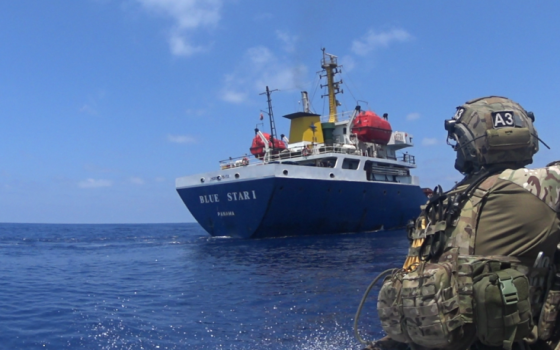
The Commission will also enhance monitoring of transport disruption risks, particularly around the Strait of Hormuz and the Red Sea, and intensify coordination with airlines, shipping companies, and authorities. National.
Regarding energy, the Commission is closely monitoring price and supply developments and will establish an energy task force comprising member states, in coordination with the International Energy Agency. The task force will hold its first meeting this week.
With respect to internal security, the Commission maintains the highest levels of vigilance and close cooperation with Europol and member states regarding potential internal security threats.
Finally, concerning migration, the Commission is working to enhance its preparedness by closely monitoring trends and strengthening cooperation with relevant UN agencies and partner countries.
At the international level, the spokesperson for the UN Secretary-General, Stéphane Dujarric, stressed the need to de-escalate tensions and return to diplomacy between Iran and the United States.
In a statement to Cairo News Channel on Monday evening, Dujarric clarified that he does not support any action that violates the UN Charter, including the threat of force by one state against another.
Dujarric expressed the UN's solidarity with the Gulf states following the attacks they suffered, noting that the military operations in the Middle East region have alarming repercussions.
The spokesperson for the UN Secretary-General stated that the Iranian strikes on the Gulf states are unacceptable and violate international law.
For his part, the President called for Russian President Vladimir Putin called on Monday for an immediate ceasefire, through a series of urgent telephone calls with leaders of the Gulf Cooperation Council countries, amid an open war waged by the United States and Israel against Iran and retaliatory reactions that have shaken the foundations of the region.

No Comments Found