
Ebola Response Efforts Continue in a "Highly Complex Context"... WHO Warns: Infection Transmitted When You Try to Help Someone Showing Symptoms

- Europe and Arabs
- Saturday , 30 May 2026 5:58 AM GMT
Geneva: Europe and the Arabs
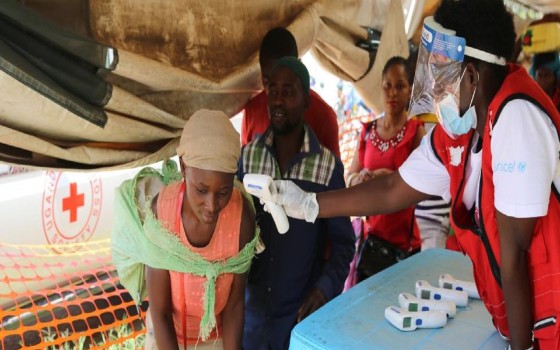
Anaïs Legend, a technical lead at the World Health Organization, told reporters in Geneva: "It's a disease you catch when you're caring for someone, whether it's your spouse, partner, child, or mother."
She added: "You catch it when you're trying to help someone who is showing symptoms, and that's horrific," explaining that families and friends should be advised not to touch their sick loved ones.
Legand emphasized the critical importance of prevention and early access to care in the face of this deadly disease, saying that "although five out of every ten infected people are likely to die, more can be done to improve the chances of recovery."
She stressed that experience has shown that Ebola outbreaks can only be controlled when local communities are "fully involved" in the response efforts, citing a recent case in the Democratic Republic of Congo where a patient made a full recovery and was discharged from the hospital. Conflict Response Efforts
Regarding efforts to assess potential treatments and vaccines, the UN official stated that the World Health Organization (WHO) has assembled a team of experts to review potential treatments and vaccines against the virus, with several products currently identified for further evaluation.
She added that the WHO is working closely with the governments of the Democratic Republic of Congo (DRC) and Uganda to support the assessment of these potential medical measures, while simultaneously working to "urgently scale up care capacity to ensure that all patients in affected communities have access to improved supportive care that can help save lives."
Legand cautioned that "this outbreak is occurring in a highly complex context," noting that in the affected Ituri province alone in eastern DRC, 1.2 million people are in need of humanitarian assistance, while ongoing conflict and food insecurity are hindering response efforts. According to the UN daily news bulletin, a copy of which we received on Saturday morning,
Before arriving in the Democratic Republic of Congo on Thursday, the Director-General of the World Health Organization (WHO), Dr. Tedros Adhanom Ghebreyesus, appealed to armed groups to declare a ceasefire to allow health workers to reach people in need and work to stop the spread of the disease.
According to the WHO, 125 confirmed cases have been reported in the Democratic Republic of Congo so far, including 17 deaths in the provinces of Ituri, North Kivu, and South Kivu. In Uganda, seven confirmed cases had been recorded as of Thursday, including one death.
The WHO is working with health authorities in the Democratic Republic of Congo to stop the transmission of the rapidly spreading Ebola virus, while the rollout of any potential vaccine for this strain of the virus is still months away.
To date, 30 people have been confirmed to have Ebola in Ituri province, in the northeast of the Democratic Republic of Congo. Uganda has also reported two confirmed cases in its capital, Kampala, including one death. Both cases involve individuals who had recently traveled from the Democratic Republic of Congo.
Additionally, a U.S. citizen has tested positive for the virus and has been transferred to Germany for treatment, according to U.S. authorities.
The World Health Organization (WHO) is currently working with authorities in the Democratic Republic of Congo, Uganda, and the United States as the response to the outbreak expands.
The WHO stated that several factors raise concerns about the continued spread of the virus and the potential for a rising death toll. In addition to the confirmed cases, more than 500 suspected cases and 130 suspected deaths have been reported. These figures are likely to change as surveillance, contact tracing, and laboratory testing are expanded.
Ituri province is experiencing severe insecurity, with conflicts escalating since late 2015 and intensifying significantly in recent months, resulting in civilian casualties and the displacement of more than 100,000 people. This region is also a mining area with high levels of mobility, which could accelerate the spread of the virus.
Uncertainty surrounds the extent of the outbreak.
The current outbreak is attributed to the Bundibugyo strain of the Ebola virus, for which there are currently no vaccines or specific drug treatments.
The World Health Organization (WHO) has deployed teams, equipment, supplies, and funding to support national authorities. The WHO Director-General has approved an additional $3.4 million from the WHO's emergency fund, bringing the total allocated to $3.9 million.
Speaking to reporters in Geneva from Bunia, Ituri province, where the first cases were detected, WHO Representative in the Democratic Republic of Congo, Anne Ancia, said the outbreak has also reached North Kivu province, with confirmed cases in Butembo and Goma. She added that "the number of cases and the extent of the outbreak remain largely unknown." She noted that there is still mystery surrounding how and where the outbreak began, adding: "I don't think we have identified the first case yet. All we know at the moment is that on May 5, a person died in Bunia. The body was taken to Mongwalu and placed in a coffin. Then the family felt that the coffin was not befitting the deceased, so they replaced it with another. After that, the funeral ceremony took place, and from there [the outbreak] began."
Dr. Ansia explained that the initial case detection process was slow because local tests conducted in Bunia came back negative for the Zaire strain of Ebola.
The wide range of symptoms—including fever, fatigue, diarrhea, and vomiting—also complicated the task of rapid diagnosis. Furthermore, nosebleeds, another symptom associated with the disease, only appeared on the fifth day of infection.
Ultimately, the Bundibugyo strain of the virus was only definitively detected through testing in the capital, Kinshasa. Dr. Ansia said there is an international focus on potential vaccines or treatments that could help combat the outbreak.
She added that the Ervebo vaccine, which is designed to protect against the Zaire strain of Ebola, is currently under investigation, but it "will take two months to become available." Dr. Ansia emphasized the need for grassroots fieldwork to contain transmission, warning, "If we resort to coercive measures that are not accepted by the population, we will see bodies disappearing, and we will see suspected cases refusing to go to hospitals and health facilities."
She stressed that health workers are continuing their efforts to communicate and collaborate with schools, churches, and community leaders. She said the WHO supports the government-led response in a "highly complex epidemiological, operational, and humanitarian context," characterized by insecurity and displacement.





No Comments Found