
Cases of conflict-related sexual violence doubled... The United Nations report addressed violations that occurred in Palestine, Sudan, Libya, Syria, and Ukraine

- Europe and Arabs
- Sunday , 31 May 2026 1:57 AM GMT
New York: Europe and the Arabs
The Special Representative of the United Nations Secretary-General on Sexual Violence in Conflict, Pramila Patten, warned of a sharp rise in crimes of conflict-related sexual violence during the year 2025, stressing that the number of documented cases has doubled compared to the previous year. I love the news of the United Nations, a copy of which we received over the weekend
Speaking to reporters in New York, Patten reviewed the Secretary-General's seventeenth annual report on sexual violence in conflict, which documented 9,788 confirmed cases of sexual violence, which represents more than double the number of cases recorded last year.
She added that these numbers do not reflect the true scale of the crisis, due to multiple factors, including: difficulty and limited access to conflict areas, security threats, risks of retaliation against humanitarian workers, and budget cuts.
Patten also stressed that the report relied on a “rigorous and well-established documentation and verification methodology” implemented by United Nations human rights monitors.
The annual report, which covers the period from January to December 2025, covers 21 countries affected by conflict, and focuses on survivors whose “bodies, minds and futures have been destroyed by unacceptable violence.”
Turning to the annex to the Secretary-General’s report, 77 actors are listed as perpetrators of violations, the majority of which are non-state actors (62). In the new report, 3 non-state actors and 2 governmental actors from Israel and the Russian Federation were added to the list.
It is noteworthy that last year's report had notified Russian and Israeli forces of their possible inclusion in the Secretary-General's next report.
Israel
The report of the Secretary-General of the United Nations included the Israeli armed and security forces among the list of parties accused of committing violations, based on what he described as “reliable information” indicating continuing patterns of rape and other forms of sexual violence against Palestinians.
Pramila Patten said that during the year 2025, the United Nations was able to verify 31 cases, most of which occurred inside detention centers, in addition to other cases at checkpoints and during military operations in the Gaza Strip and the West Bank.
According to the report, the cases included 14 men, seven women, nine boys and one girl. Patten said that these violations constitute “part of a pattern of sexual violence against Palestinians,” including its use as a form of torture.
Violations included rape, including rape using objects, gang rape, attempted rape, physical violence directed at the genitals, targeted shooting at the genitals, groping of the breasts and genitals, strip searches (of detainees) and body cavity searches without clear security justification, forced nudity, and threats of rape.
The report indicated that nine victims were subjected to gang rape, while 4 of them were subjected to repeated assaults in more than one incident.
He added that the violations occurred mainly during detention and interrogation, in 12 locations that included Israeli military camps, prison service facilities, and an Israeli police station, in what the report described as “a climate of complete impunity.”
Patten stated that UN human rights monitors still “face severe access restrictions,” noting that some cases were not verified until after detainees were released under the October 2025 agreement.
Russian Federation
The second entity listed in the annex to the Secretary-General's report is the Russian armed forces and security forces based on documented patterns of sexual violence against Ukrainian prisoners of war and civilian detainees.
The United Nations verified 310 cases including: rape, gang rape, genital mutilation, electrocution of the genitals, and severe beating of the genitals.
Patten said Russia has not communicated with her office since July 2022, despite the Secretary-General's letters outlining preventive measures.
A story from Sudan
Patten began her speech at the press conference with a personal story from Sudan, where she said that this morning she received a message via WhatsApp from a 25-year-old Sudanese survivor she met in Port Sudan. The young woman, an international relations graduate, was pulled from a bus and gang-raped by four soldiers from the Rapid Support Forces.
Patten said that the survivor asked whether the report “deals with only two countries,” which prompted Patten to emphasize that the report is global in scope, and focuses on victims in several conflict areas, including Sudan, South Sudan, the Democratic Republic of the Congo, Haiti and Myanmar.
She called on journalists not to limit their focus to specific cases and ignore the situation in other regions.
Patterns of violations
The ages of the victims ranged from one to 70 years, including people with disabilities. Women and girls were mainly targeted, and men and boys were also subjected to abuse, especially in detention centres.
Patten said that sexual violence is increasingly being used as a war tactic, a tool of torture, a method of political repression, and a strategy for terrorism and territorial control.
Non-state armed groups and criminal networks used sexual violence to control land and natural resource sites.
Countries where kidnapping and sexual violence linked to human trafficking were particularly prevalent included Mali, Nigeria, Somalia, South Sudan, Sudan, and Syria.
In Haiti and Colombia, organized crime groups used kidnapping and human trafficking to extort ransoms, finance operations, and control populations. Mistreatment of detainees and targeted groups
Patterns of sexual violence have been documented in detention centers in Libya, Myanmar, Ukraine, Russia, Yemen, Israel and the Occupied Palestinian Territory. Men and boys were often targeted for sexual torture to humiliate detainees and extract information from them.
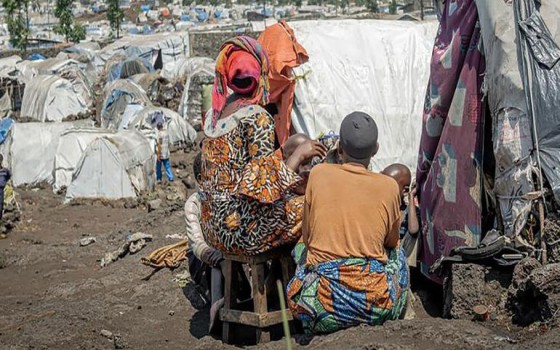
Patten also warned that LGBT people face increased risks of persecution and harassment in many conflict areas. Refugee women and girls in the Democratic Republic of the Congo, Somalia, South Sudan and Sudan were most at risk.
The report stated that the widespread proliferation of small arms also contributed to the escalation of sexual violence.
The need not to forget the victims
The Special Representative of the Secretary-General of the United Nations on Sexual Violence in Conflict concluded her briefing by saying: “These violations are neither isolated nor limited to limited contexts, but are global in scope, devastating in impact, and require a response that is not based on political outreach, selective anger, or preconceived narratives, but rather on the rights, needs, and dignity of victims, survivors, and affected communities, who are in desperate need of recovery and hope.”




No Comments Found