

Record-Breaking Temperatures: World Meteorological Organization Warns of Imminent El Niño

- Europe and Arabs
- Wednesday , 3 June 2026 5:6 AM GMT
Geneva: Europe and the Arabs
The United Nations has urged all countries to strengthen their early warning systems following confirmation of the El Niño phenomenon, warning that this warming of the Pacific Ocean will lead to higher temperatures "almost everywhere," exacerbating extreme weather events. This information comes from the UN's daily news bulletin, a copy of which we received Wednesday morning.
According to the World Meteorological Organization (WMO), the probability of El Niño conditions developing is 80% between June and August, rising to 90% thereafter.
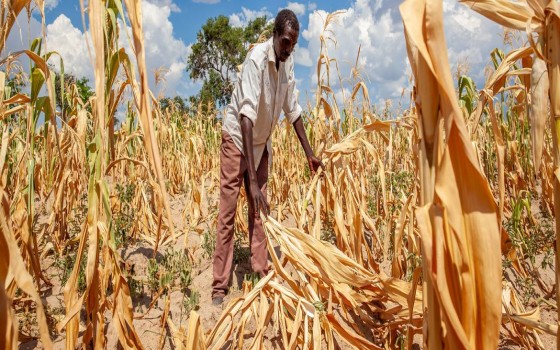
During a press conference in Geneva on Tuesday, WMO Secretary-General Celeste Soolo stated that El Niño "is a major driver of global weather and climate patterns," and its impact extends far beyond its origin in the Pacific Ocean, "affecting agriculture, energy supplies, trade, water resources, supply chains, and livelihoods in entire regions." With tropical Pacific temperatures 6 degrees Celsius above average, there are growing concerns that the current El Niño phenomenon could devastate vulnerable and unprepared communities worldwide.
Saulo noted that the last El Niño event, in 2023-2024, was among the five strongest on record and contributed to record-breaking global temperatures.
The Need for Preparedness
"We understand El Niño better and are better prepared for it thanks to science and the investments made by many countries," she said. "But in addition to El Niño, there are other extreme weather events that require further investment."
Over the coming months, the World Meteorological Organization, in collaboration with meteorological agencies around the world, will be monitoring weather conditions to guide governments, humanitarian organizations, and other sectors in their decision-making.
Saulo emphasized that "pre-seasonal forecasts and early warnings are essential to saving lives and mitigating the impact on our economies and societies."
What are El Niño and La Niña? El Niño and La Niña are opposing phases of the El Niño-Southern Oscillation (ENSO), one of the most powerful natural climate patterns on Earth.
El Niño is characterized by a rise in ocean surface temperatures in the central and eastern tropical Pacific Ocean. It typically occurs every two to seven years and lasts for nine to twelve months.
This phenomenon usually begins between March and June, reaches its peak intensity between November and February, and its effects on global temperatures are most pronounced in the second year after its onset.
El Niño-Southern Oscillation events are classified into four categories: weak, moderate, strong, and very strong.
The World Meteorological Organization (WMO) states that "a moderate El Niño increases the likelihood of some extreme weather events." The organization added that "there is no evidence that climate change increases the frequency or intensity of El Niño events," but it may amplify their associated effects, as warmer ocean and atmospheric temperatures provide more energy and moisture for extreme weather events such as heat waves and heavy rainfall.
It is noted that global average temperatures are likely to remain at or near record highs over the next five years, with the Arctic temperature anomaly expected to continue above the global average. This was stated in a new report from the World Meteorological Organization, prepared by the UK Met Office.
The "Global Annual and Decimal Update" reported that global average near-surface temperatures during the period 2026-2030 are expected to be between 1.3°C and 1.9°C above the 1850-1900 average. He also warned that there is an 86% probability that one of the years between 2026 and 2030 will surpass 2024 to become the hottest year on record.
He further explained that it is very likely (91%) that average global near-surface temperatures will temporarily exceed 1.5°C above the 1850-1900 average for at least one year between 2026 and 2030.
Dr. Leon Hermansson, the lead author of the report, said that the El Niño event is expected by the end of 2026, increasing the likelihood that 2027 will be the next record-breaking year.







No Comments Found