

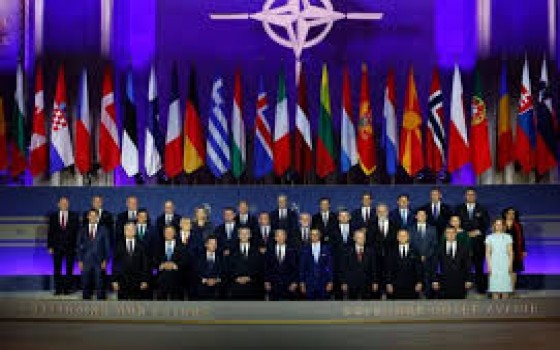
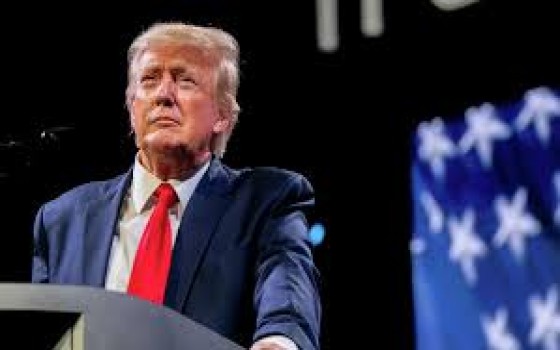
NATO leaders face a difficult test: preventing or avoiding a crisis with Trump over defense spending, and a conflict between the Czech president and prime minister over who will represent their country at the summit.

- Europe and Arabs
- Tuesday , 7 July 2026 9:32 AM GMT
Brussels: Europe and the Arabs
European NATO allies are doing their utmost to avert a crisis with US President Donald Trump, which means highlighting massive defense spending and focusing on the less controversial topic of industry. This comes during the NATO summit that begins this evening in Turkey.
In an exclusive interview with the European magazine Playbook ahead of the NATO summit, Manfred Weber, president of the European People's Party, said that Europe must prepare for a "what if" scenario in which America reduces its presence in NATO. He added: "We must be ready to intervene. This means building our own command structures and developing our own capabilities."
According to Playbook, the European edition of the American magazine Politico, Belgian Defense Minister Theo Francken told Politico that while European leaders must be careful not to anger Trump, there are limits—especially when it comes to attacking Meloni, "the queen of the center-right in Europe. She's hegemony. Leave her alone." A Double Czech Delegation to the NATO Summit
Another dilemma looms as efforts to keep Trump's focus on Turkey continue: the Czech Republic is sending two political leaders to represent it, not one.
Dealing with the situation: This presents a clear dilemma for foreign leaders. Whom will they meet? Prime Minister Andrej Babiš, who is leading the official delegation? Or President Petr Pavel, who is constitutionally entitled to represent the Czech Republic abroad and is known for his pro-NATO stance?
A spokesman for Pavel described the situation as "absurd." This stems from the fact that, for the first time since the founding of the Czech Republic, the president was unilaterally excluded from a NATO summit by the government.
In a related development, Pavel successfully appealed his exclusion to the country's Constitutional Court and is now attending, creating an awkward situation between the two Czech leaders. However, their not traveling together creates logistical and political chaos.
On the plane: Pavel and Babiš will depart for Ankara from the same airport, but on separate planes and at different times. Pavel offered to travel on the same plane, but his request was denied for security reasons. The official spokesperson explained that this is not standard procedure, as it is expected that "Pavel will lead the delegation: one plane, one delegation."
The Prime Minister's perspective: Babiš justified his position by stating that he and his Foreign Minister were best suited to defend Prague's decisions regarding defense spending. A spokesperson for the Prime Minister confirmed that the government is responsible for foreign policy, and that Babiš decided to send a government delegation to Ankara due to the exceptional importance of the NATO summit. Regarding security concerns, the spokesperson explained that they stem from an unwritten rule prohibiting the President and Prime Minister from traveling on the same plane.
In practice, Pavel will not remain idle. The spokesperson stated that the President "believes it is essential to hear directly from the Allied leaders about their positions and opinions," and therefore "intends to make the most of this opportunity to speak with his counterparts and other key participants." What does this mean for the other leaders? That's up to them, given that Babiš is heading the official delegation and will speak at the roundtable meetings. The spokesperson added, "He will have to explain why he isn't spending 2% of GDP on defense, let alone 5%. That's acceptable."
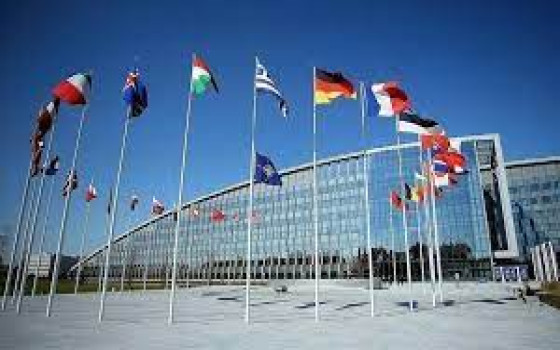
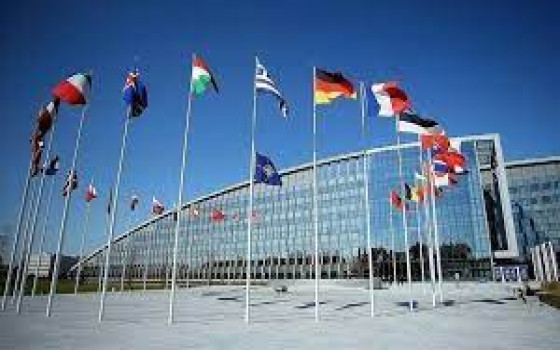
NATO leaders, including US President Donald Trump, are participating in the NATO summit scheduled for Tuesday and Wednesday in Turkey. According to a statement from NATO headquarters in Brussels, Tuesday's events will begin with a keynote address by the NATO Secretary General at the NATO Defense Industries Forum, in the presence of the Vice President of Turkey and the Minister of National Defense. This will take place in the main hall of the conference center, followed by brief remarks from the NATO Secretary General and the President of Ukraine. Then, the foreign ministers will meet with partners of the International Defense Industries Initiative, followed by a reception for defense ministers at the Turkish Ministry of National Defense headquarters in Aydılıdız. According to the program, at 6:30 PM, a reception and dinner will be held for heads of state and government and their spouses, hosted by the President of the Republic of Turkey, Recep Tayyip Erdoğan, and the First Lady. This will be followed by a working dinner for the NATO-Ukraine Council at the level of foreign ministers, and another working dinner for the NATO Council at the level of defense ministers. The program announced by NATO headquarters stated that the foreign ministers of the Kingdom of Bahrain, the State of Kuwait, the State of Qatar, and the United Arab Emirates are invited to attend. The defense ministers of the Commonwealth countries of Australia, Japan, New Zealand, and the Republic of Korea are also invited.
The President of the Republic of Korea, the President of Ukraine, the President of the European Council, the President of the European Commission, and the High Representative of the European Union for Foreign Affairs and Security Policy have also been invited. A statement from the Alliance in Brussels regarding the key events of the first day of the summit said: “The NATO Defence Industries Forum (NSDIF26), NATO’s premier high-level event on transatlantic defence production, investment, and innovation, will be held on July 7, 2026, in Ankara, Turkey.
The forum is an integral part of the NATO Summit 2026, bringing together senior NATO, Allied, and partner officials, industry leaders, and key players in driving industry and innovation to discuss the most pressing issues.”
Previous sessions in The Hague and Washington have demonstrated that there can be no strong defense without a strong defense industry. This year’s forum focuses on the progress Allies have made toward achieving NATO’s historic 5% defense spending target and how these funds can be used to increase defense production, cooperation, and joint procurement, thereby strengthening the Alliance’s industrial deterrent.
The NATO 2026 Defense Industry Forum includes:
A one-day conference comprising six closed morning sessions and live-streamed public sessions in the afternoon. The morning sessions will be held concurrently and are designed to foster interaction in small groups. The afternoon sessions will feature keynote addresses from NATO, Allied, and industry leaders, as well as public sessions broadcast to the public and open to the media.
For the first time, national, multinational, and sectoral agreements, deliverables, and initiatives will be announced. These will be announced throughout the day, on the sidelines of the conference program, at the NATO Defense Industry Forum headquarters. These agreements and initiatives will cover a wide range of NATO's priority capability areas, including space and surveillance; integrated air and missile defense and strike capabilities. They will also address the need to enhance transatlantic joint production, accelerate the adoption of innovations, improve practical cooperation between NATO and industry, and provide tangible guarantees for defense investment.



No Comments Found