

Escalating Israeli military operations in southern Lebanon and a rising death toll… The war in Gaza has doubled the number of female-headed households… Houthi attacks target multiple sites in Saudi Arabia… The success of the transition in Syria requires an end to Israeli violations .

- Europe and Arabs
- Wednesday , 9 September 2026 6:41 AM GMT
Geneva – Gaza – Beirut – Damascus: Europe and the Arabs
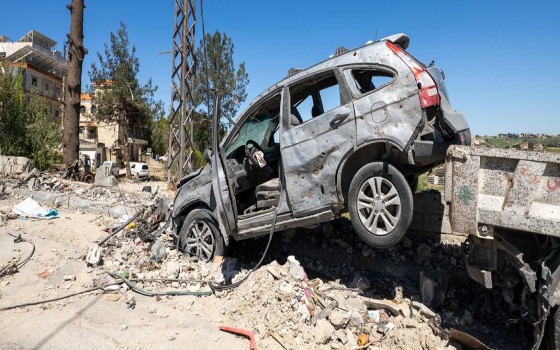
Developments in the Middle East, particularly in Yemen, Lebanon, Syria, and Gaza, dominated the daily news bulletin of the United Nations, a copy of which we received this morning, Wednesday. Regarding the situation in southern Lebanon, UN Secretary-General António Guterres expressed deep concern over the escalation of Israeli military operations in southern Lebanon, especially in and around Nabatieh.
In a statement issued by his spokesperson, Stéphane Dujarric, the Secretary-General condemned the rising number of civilian casualties, including women and children, killed and injured as a result of the escalating attacks, the suffering and displacement caused by evacuation orders, and the widespread destruction and devastation.
The Secretary-General expressed particular concern over reports that Israeli strikes have affected hospitals, healthcare workers, and public institutions, in addition to restrictions on humanitarian access.
The UN spokesperson stated that all parties must comply with their obligations under international law, including international humanitarian law. He added that civilians and civilian objects must be protected at all times, and that attacks against them are unacceptable.
The Secretary-General appealed for an immediate cessation of hostilities. He called on Israel to withdraw its forces from Lebanese territory. He urged all parties to respect Lebanon’s sovereignty and territorial integrity and to fulfill their obligations under Security Council resolution 1701.
Dujarric stressed that the United Nations remains committed to supporting efforts to end the violence, protect civilians, and advance a lasting solution to the conflict.
The United Nations Office for the Coordination of Humanitarian Affairs (OCHA) warned that this escalation is also forcing residents to flee their homes, with local authorities reporting that some 5,000 families – nearly 20,000 people – left the Nabatieh area last week. It also noted that healthcare services are under increasing pressure.
Military Operations and Violations
Meanwhile, the United Nations Interim Force in Lebanon (UNIFIL) continues to monitor developments closely and has expressed concern about the broader deterioration in the security situation. Over the past few days, the mission has observed a marked increase in Israeli troop movements within and around its area of operations, including ground operations, shelling, airstrikes, and violations of Lebanese airspace.
Meanwhile, the United Nations condemned Houthi cross-border attacks on multiple locations in southern Saudi Arabia, noting that these attacks have affected civilians and energy infrastructure.
UN Spokesperson Stéphane Dujarric expressed grave concern over reports of civilian casualties and similar concern over the escalation of military clashes on multiple fronts in Yemen, particularly reports of potential civilian casualties resulting from this fighting.
At the daily press briefing, Dujarric called on all parties to exercise restraint and prevent further escalation. He reiterated his call for them to uphold their obligations under international humanitarian law, refrain from targeting civilians or civilian infrastructure, and take all necessary precautions to protect civilians and civilian objects from harm. Dujarric said that the UN Secretary-General’s Special Envoy to Yemen, Hans Grundberg, continues to engage directly with the parties to contain the current escalation and keep the door open for dialogue.
Dujarric warned that the continued military escalation is having devastating political, economic, and security consequences for Yemen. He called on the parties to engage constructively in the UN-led political process.
Devastating Humanitarian Consequences
On the humanitarian front, aid workers reported that the escalating fighting is having a devastating impact on communities already struggling to survive after more than a decade of conflict in Yemen. More than 5,600 families have been displaced in the governorates of Taiz and southern Hodeidah since the fighting intensified on September 3.
At least 11 civilian casualties were reported in the past week, including two children killed and nine people injured. In Marib, reports indicated that sites housing displaced people were shelled over the weekend, killing two children and injuring 15 others. Shelters were destroyed, forcing families to sleep in the open.
Humanitarian agencies are mobilizing their response. As of Monday, humanitarian partners had reached approximately 2,340 families, mostly in Taiz, with some also in Marib and Abyan. These families received emergency supplies.
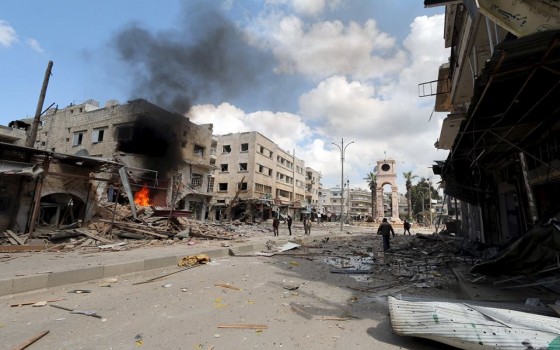
In other news, the Independent International Commission of Inquiry on Syria stated that the country is on a path of "radical transformation despite the enormity of the challenges" it faces. The Commission stressed that the success of this transformation depends on ending Israeli violations, establishing the principle of inclusivity, and ensuring comprehensive accountability.
In a briefing to the Human Rights Council on Tuesday, Commission member Fionnuala Ní Aoláin expressed grave concern about the continued Israeli violations, including ground incursions, raids, repeated searches, and the establishment of permanent military infrastructure on Syrian territory, "at a time when Syrians are focused on rebuilding their country." The commission reported that Israel had detained hundreds of residents, including minors, believed to have been transferred across the Syrian border, asserting that these actions "may amount to war crimes."
Ni-Olain also stressed the need to ensure that all perpetrators of violations in Syria are held accountable "equally," stating: "The commission warns that selective accountability is contrary to international legal obligations and risks reigniting grievances and undermining reconciliation efforts."
While acknowledging the government's efforts to address issues related to the violence that swept the country last year, the Commission stated that fundamental human rights issues in Suwaida remain inadequately addressed—including the displacement of thousands of Druze and Bedouin families, the fate of the missing and detained, and the inability of thousands of students to take their exams—which exacerbates the insecurity there.
"The failure to address these issues is due to the ongoing tension between local authorities and the national government, which has been compounded by Israel's continued involvement in Syria," the Commission said.
It also noted the continued sectarian violations at the local level, confirming that the Commission is investigating reported killings, primarily targeting members of the Alawite community in Homs.
While freedoms have expanded significantly in the country, the Commission encouraged the authorities to strengthen efforts to protect these rights, noting cases in which activists were arrested for criticizing the government. It stressed the need for all parties to make further efforts to combat hate speech, while respecting freedom of expression. “The momentum to strengthen and consolidate respect for human rights in Syria remains strong and should be supported by this Council and the international community,” said Nee Online in her briefing. “Concrete measures must also be taken to compel Israel to cease its violations of the rights of Syrians. By overcoming the legacy of past violence and laying a solid foundation to prevent its recurrence, Syria can fulfill the aspirations of its people.”
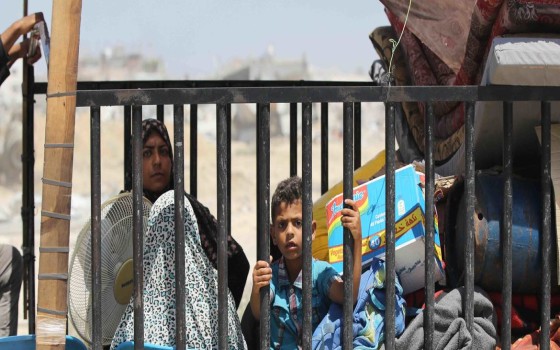
Regarding the situation in the occupied Palestinian territory, UN Women stated that nearly a quarter of households in Gaza are headed by women, including widows and women whose husbands are missing, detained, seriously injured, forcibly disappeared, or whose fate remains unknown. The agency highlighted the suffering these women endure under the continued “unbearable living conditions” in the Gaza Strip.
In a new report released Tuesday, UN Women stated that an estimated 86,290 households are currently headed by women, double the number before October 2023. In a briefing to journalists in Geneva on Tuesday, the head of the humanitarian action division, Sofia Kaltorp, confirmed that the agency had witnessed "a shocking amount of collective pain" when speaking with women in Gaza.
She explained: "Women are experiencing the agony of losing their husbands and fathers, and at the same time, they bear the full responsibility of managing the household, protecting their families, and providing for their needs, all amidst extremely difficult and increasingly dire living conditions."
Suffering upon suffering
According to UN Women, female-headed households in Gaza face even greater hardships than those headed by men, as they are more likely to lack shelter, food, and money. In this context, Kaltorp said: “Around 7 out of 10 female-headed households lack adequate shelter, compared to 55% of male-headed households. Three-quarters of female-headed households reported damage to their homes, compared to two-thirds of male-headed households. Female-headed households have been displaced an average of eight times since October 2023, compared to seven times for male-headed households.”
Continued Killing of Palestinians
Despite the ceasefire agreement, the organization reported that the killing of Palestinians in Gaza as a result of Israeli airstrikes and ground operations continues, including 246 women and girls. Kaltorp said: “This equates to the killing of six women and girls per week between October 2025 and July 28, 2026.” Kaltorp said that among the victims were 18-year-old Raghad Ashour, "killed in an Israeli airstrike while on her way to her high school graduation exam in Gaza City," and a six-year-old girl "killed in a helicopter airstrike on a camp for displaced families in the Mawasi area of Khan Younis."
Kaltorp stressed the need for a full ceasefire, full respect for international law, accountability for perpetrators of violations, and unimpeded and large-scale humanitarian access. She emphasized that the needs of women and girls must be at the heart of the response and recovery efforts in Gaza.
It is worth noting that most of Gaza's approximately 2.1 million residents remain displaced, confined to less than 40% of the Strip, while Israeli authorities continue to restrict access to areas beyond the so-called "yellow" and "orange" lines.







No Comments Found