

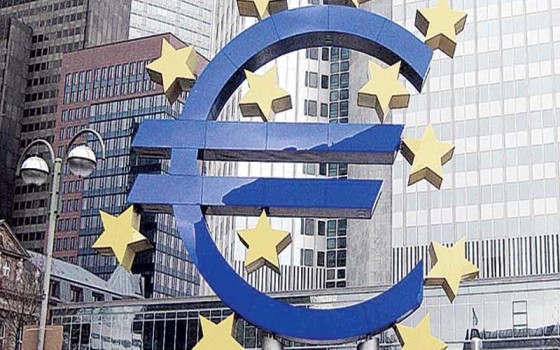
The Euro Slumps Amid France’s Financial Crisis and Europe’s Energy Shock; Challenges Range from the Strait of Hormuz to Student and Union Protests in France and Spain

- Europe and Arabs
- Wednesday , 7 October 2026 6:0 AM GMT
Brussels – Europe and the Arabs
The euro has fallen to a 17-month low amidst concerns over French debt and an energy shock in Europe, placing further pressure on the currency. Bond market tensions could limit the European Central Bank's ability to raise interest rates, with forecasts suggesting the euro could drop to $1.10 if pressures intensify.
At the start of the year, the euro was one of the most popular bets in global markets. Investors anticipated that the European Central Bank would continue raising interest rates while the dollar lost its luster; indeed, in late January, the single currency surpassed the $1.20 mark. Nine months later, that confidence has completely evaporated. The single currency has recorded four consecutive weeks of losses, plunging earlier this week to around $1.116—its weakest level against the US currency since May 2025. Behind this decline lie two simultaneous crises: an energy shock beyond Europe's control and a French budget that no one seems able to pass. Together, these crises have shifted investor sentiment regarding the euro, leading them to bet on its decline at an unprecedented rate. So, why is the euro falling, and how much lower might it go? (Reported by Euronews, Brussels)
A Gas Bill That Keeps Rising
The first issue is the energy crisis, which begins at the Strait of Hormuz. Shipments of liquefied natural gas (LNG) through the strait have been largely disrupted since the outbreak of war with Iran in late February. Europe imports the majority of the gas it consumes, forcing it into fierce competition for remaining supplies. This week, the Dutch TTF gas benchmark hovered around €73 per megawatt-hour—an increase of nearly 120% compared to the same period last year.
Gas stockpiles offer little reassurance; European reserves stood at 71.5% capacity on October 2, down from 82.6% a year earlier, with only a few weeks remaining before the onset of winter. Meanwhile, Brent crude—the global oil benchmark—traded near $100 per barrel on Tuesday, having risen more than 60% since the start of the year. High energy costs are now filtering through to consumer prices; Eurozone inflation climbed to 3.8% in September, up from 3.2% in August—marking its highest level since September 2023, according to Eurostat data—with energy prices alone surging 18.8% year-on-year.
When rising inflation stops supporting the currency
Under normal circumstances, this situation would have bolstered the euro; rising inflation typically prompts the central bank to raise interest rates, and higher rates attract investors seeking better returns on capital. However, this dynamic has broken down this time: at the end of September, markets anticipated roughly three and a half additional interest rate hikes from the European Central Bank, whereas now they are pricing in only about two and a half. Last week, European Central Bank President Christine Lagarde largely dampened these expectations, noting that rising borrowing costs were already slowing economic activity and that there were no signs yet of energy price increases feeding through to wages.
She called for the ECB’s response to be "measured" and gradual. Enrique Diaz-Alvarez, Chief Economist at Ebury, stated that the September inflation surprise "offered no support to the single currency," particularly following Lagarde’s remarks, which "made it clear that the threshold for the Governing Council to approve an interest rate hike in October is already extremely high." Consequently, the euro remains burdened by high inflation without the benefit of higher interest rates. For European households and businesses, the repercussions extend beyond the foreign exchange market; a weak euro raises the cost of dollar-denominated imports, potentially exacerbating the energy shock that is already squeezing purchasing power.
How France’s Budget Affects the Euro’s Value
The second blow came from Paris; investors are now demanding significantly higher yields to lend to France compared to Germany. Last Friday, the spread between ten-year borrowing costs in the two countries closed at over 1.4 percentage points—the widest gap since the Eurozone debt crisis of 2011–2012. The draft 2027 budget presented by Prime Minister Sébastien Lecornu—which includes €43 billion in savings—still lacks the support of a parliamentary majority.
On Tuesday, Bank of France Governor Emmanuel Moulin warned that the country risks being "strangled by interest rates" unless its public finances are addressed. Francesco Pesole, an FX strategist at ING, explains two main ways this situation negatively impacts the euro: the first is direct—when a major Eurozone economy appears riskier, investors demand a premium for holding euro-denominated assets, while some simply prefer to reduce their holdings. Ken Egan, Head of European Sovereign Credit at KBRA, stated: "With rising fiscal uncertainty, intensifying political rhetoric, and policy scenarios—once considered marginal—being openly discussed, the market has greater scope to demand higher yields." The second channel is indirect: as pressure mounts in government bond markets, the likelihood of the European Central Bank continuing to raise interest rates diminishes, adding further strain to the situation. Ana Munera, Head of Global Markets Strategy at BBVA, describes the European Central Bank’s dilemma as a "clear trade-off" between further tightening monetary policy following an inflation surprise and the need to pause to mitigate risks on the Eurozone periphery. She noted that an ECB pause on rate hikes would put downward pressure on the euro due to yield differentials, although stabilizing debt markets could drive capital flows back into the currency. Spain added another layer of political risk this week after Prime Minister Pedro Sánchez called for early legislative elections on November 29.
**Record Bet Against the Euro**
The clearest evidence of this shift in sentiment comes from US futures data. Each week, the US Commodity Futures Trading Commission (CFTC) publishes data on investor positions regarding the euro; a "short" position represents a bet that the currency will decline. In the week ending September 29, speculative traders held 301,439 short contracts on the euro—the highest figure ever recorded in CFTC data. With each contract valued at €125,000, the total value of these bets stands at approximately €38 billion. Their net position—bearish bets minus bullish bets—amounted to 63,256 short contracts, marking the weakest positioning since April 2025.
**How Low Could the Euro Fall?**
Banks are divided between those who believe the worst is yet to come and those who consider the sell-off to have gone too far. Pesole from ING sees room for further losses should the French bond market deteriorate again, stating: "The fiscal risk premium remains relatively limited, leaving scope for the EUR/USD pair to test the 1.110 or even 1.100 level if bond market pressure intensifies." Danske Bank anticipates this decline will persist, noting: "The EUR/USD pair hit our 12-month target of 1.12 ahead of schedule, yet we believe the downward trend will continue through 2027." The bank adds that Europe’s struggle with high energy prices places the European Central Bank in a bind between safeguarding public finances and continuing the fight against inflation. Meanwhile, BBVA’s Monera is less pessimistic in the short term, remarking: "In our view, the punishment meted out to the euro has been excessive, and current levels appear overdone." Nevertheless, she expects the euro to trade well below its recent peaks, as investor sentiment toward the currency has "clearly deteriorated." Large short positions could also fuel a price rebound; any positive news might prompt traders betting against the euro to buy it back, thereby accelerating a recovery. A credible agreement on the French budget, calmer bond markets, or a drop in energy prices could halt the slide, though a sustained recovery requires more than just short sellers taking profits. Investors should see an improvement in the public finance and economic outlook for Europe.
Student protests erupted in Paris in mid-September before spreading across the country, with some demonstrations escalating into violent clashes with police.
When students from a school in the Créteil suburb, southeast of Paris, joined their teachers in a protest demanding more resources and staff, they did not anticipate that their initiative would evolve into a nationwide movement. According to the Brussels-based European news network "Euronews":
The campaign began on September 17 and quickly gained momentum as videos of the protests circulated on social media. This prompted students across France to join the movement, demanding government action on issues such as classroom overcrowding, teacher shortages, and poor facilities, among other grievances.
More than two weeks after the initial protest, student unions called for rallies on Tuesday as part of a day of widespread mobilization. Meanwhile, hundreds of schools closed fully or partially on Monday after authorities determined that necessary safety conditions were not met.
Spanish labor unions move toward a general strike in response to the housing crisis and low wages.
The call for a strike followed a weekend marked by protests in over 50 Spanish cities. In Madrid, thousands demonstrated on Saturday under the slogan "Towards a General Strike," while protests continued on Sunday in various other cities. Spain’s two major trade unions, the General Union of Workers (UGT) and the Workers' Commissions (CCOO), have announced an agreement to call for a 24-hour general strike this autumn. The strike aims to demand decent wages that allow workers to afford housing costs. While the specific date has not yet been finalized, it will be determined in coordination with social organizations and the "Tenants' Union."
In a joint statement, the unions explained that the strike date would be discussed with social organizations and the Tenants' Union. The goal is to mobilize workers to participate in this 24-hour work stoppage to defend the right to housing and demand wages sufficient to cover housing expenses.
This move by the UGT and CCOO follows their announcement on Friday, made after the Spanish Parliament (Congress) rejected housing decrees that had been issued with the force of law.
The unions aim to bring the workforce into the heart of the movement demanding the right to housing, coordinating with social movements, neighborhood committees, and tenants' associations.
The call for a strike follows a weekend of protests across more than 50 Spanish cities. In Madrid, thousands demonstrated on Saturday under the slogan "Towards a General Strike," while protests continued in various cities on Sunday.
The UGT and CCOO link the housing crisis to wage trends and are demanding measures that include establishing a public sector for permanent social housing, capping rent prices, and effectively implementing the Right to Housing Law across all regions.





No Comments Found