

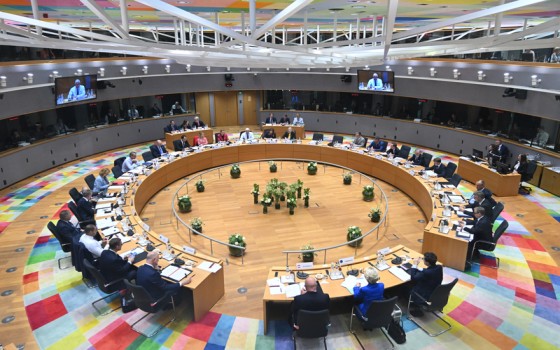
European Summit Fails to Reach Budget Agreement; Seven "Frugal" Nations Withdraw from Talks in Protest; Final Opportunity Set for Mid-December Summit; Consensus Reached Only on Supporting Ukraine

- Europe and Arabs
- Friday , 27 November 2026 7:5 AM GMT
Brussels – Europe and the Arabs
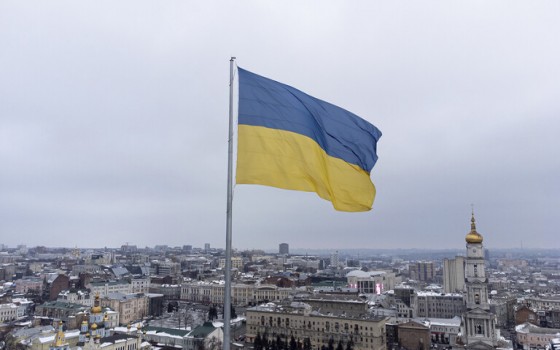
European Council President António Costa acknowledged that leaders failed to reach an agreement on the budget. However, during the concluding press conference following Thursday’s discussions, he noted that leaders did reach an agreement on supporting Ukraine. Speaking in the early hours of Friday morning, Costa stated: "We also discussed the Commission’s proposal to provide an additional loan to Ukraine. The proposal received the support of 24 member states. Bulgaria—one of these states—will participate only in the non-military component, with a focus on regions where its national minority resides. We will return to this issue in December."
"As you know, the primary item on our agenda was the discussion of the European Union’s long-term budget for the 2028–2034 period. Today, I asked the leaders to focus the discussion on three key issues: first, the overall size of the budget; second, the allocation of resources across spending categories; and third, a balanced package of new 'own resources' [revenue sources for the EU budget]."
"We held an engaging discussion during the plenary session, as well as within various working groups, but we did not reach an agreement. Regarding the overall size of the budget, some member states called for further cuts, while the majority opposed this; some even suggested reversing certain cuts, particularly those affecting cohesion policy. As for the allocation of resources among various priorities, a large majority of member states insisted that funding for agriculture and cohesion policy should not be reduced. Finally, we will continue our work regarding 'own resources'." The summit held last night failed to reach an agreement—a result that came as no surprise. The real surprise, however, was the withdrawal of seven countries from the talks in protest. This is according to a report published Friday morning by *Playbook*—the Brussels-based European edition of the American outlet *Politico*.
The summit concluded after midnight, marked by sharp disagreements among the leaders—so intense that they headed back to their respective capitals rather than staying for a second day, as originally planned, to continue negotiations. The seven nations known as the "frugal" group—which advocate for budget cuts—even boycotted the discussion format proposed by European Council President António Costa, which involved dividing participants into small, separate groups.
Both Costa and European Commission President Ursula von der Leyen appeared exhausted—and visibly annoyed—during the closing press conference, held around 1:00 a.m. After delivering brief statements, they took only three questions before ending the session after just 11 minutes.
How did it unfold? Throughout the day, the leaders were divided into groups. Each of the two main camps—the seven "frugal" nations and the 17 countries pushing for a larger budget—selected representatives to engage with Costa. Mette Frederiksen spoke for Denmark on behalf of the first group, while Giorgia Meloni of Italy and Nicușor Dan of Romania represented the second. However, this format—which was somewhat novel—did not bring the parties any closer to an agreement. One diplomat remarked, "No one explained why we were meeting in these groups, or how things were supposed to proceed within them." Another diplomat described the situation as "bizarre," noting that Costa had failed to propose any alternative options. A third diplomat—from one of the seven countries—accused Costa of attempting to "divide" them, asserting that they had rejected the arrangement on principle. A fourth diplomat stated that, as a result of this approach, Costa had completely lost his country's trust. It is like worlds apart: Under this heading, the report’s author notes that Latvian Prime Minister Andris Kučinskis—whom he met on the red carpet at the Council last night—remarked that the leaders seem to be living on different "planets." Maltese Prime Minister Robert Abela echoed this sentiment, telling colleagues Jacopo Barigazzi and Camille Gijs that the discussions had been "difficult."
There was no political "bloodbath," as one diplomat had predicted. According to an EU official, the leaders simply restated their existing positions, with some eventually disengaging from the discussion groups. In this context, Swedish Prime Minister Ulf Kristersson remarked, "Nothing of note happened today." Meanwhile, French President Emmanuel Macron—visibly frustrated—told reporters that Europe is "making a strategic error" by adopting a less ambitious budget. (He also took a jab at Marine Le Pen, a frontrunner in the French presidential race, for her criticism of these talks.)
A final chance: Only one summit remains—beginning on December 17—to reach an agreement before the new year. Several leaders suggested last night that reaching a consensus might become impossible after that date, given upcoming elections and the potential for political upheaval across various EU member states leading up to 2027.
A glimmer of hope: Both Kučinskis and Abela expressed optimism that an agreement could be reached in December. "An agreement must be reached," Kučinskis said. ...to an agreement,” noting that the leaders are all aware that 2027 will be an exceptionally difficult year. For his part, Abela remarked, “I am optimistic about this.” One diplomat mentioned to *Playbook* that their delegation has already begun booking additional hotel accommodations for next month.
Twenty days remain: the serious work begins now. A diplomat explained that Costa will spend the next few weeks reaching out to European capitals to get the talks back on track, in preparation for the crucial December summit.




No Comments Found