
Fishing Opportunities for 2026 in EU and Non-EU Waters: Agreement Reached on Allowed Fishing Volumes and Commercial Stocks

- Europe and Arabs
- Saturday , 13 December 2025 10:13 AM GMT
Brussels: Europe and the Arabs
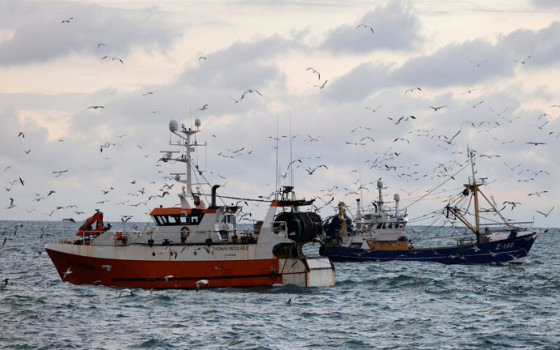
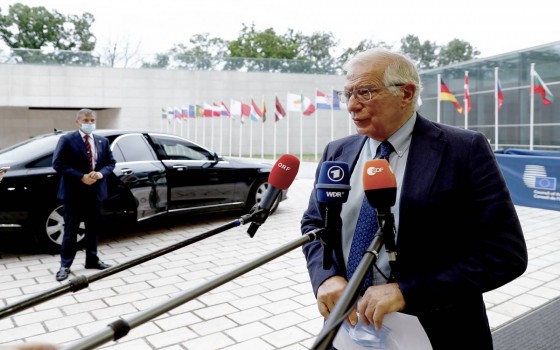
European fisheries ministers have reached a political agreement on fishing opportunities in the Atlantic Ocean, the North Sea, the Mediterranean Sea, the Black Sea, and other waters for 2026, and for certain fish stocks for 2027 and 2028. The agreement, reached after two days of negotiations, sets limits on permitted catch quantities and fishing effort limits for the most important commercial fish stocks. Fishing effort refers to the size and engine power of the vessel, as well as the number of fishing days. According to a statement issued by the EU institutions in Brussels on Saturday morning, the statement quoted the rotating EU presidency, represented by Jakob Jensen, the Danish Minister of Food, Agriculture, and Fisheries, as saying, "We have reached a compromise that enjoys broad support from member states, providing fishermen with certainty about their fishing opportunities for 2026. This compromise strikes a balance between scientific advice and the protection of vulnerable fish stocks, while ensuring the best possible conditions for a sustainable fishing sector in the future." Political Agreement in Detail
The fish stocks covered by the proposals include those managed by the EU either alone, jointly with neighboring non-EU countries, or through agreements reached in regional fisheries management organizations.
Following the UK’s withdrawal from the EU, the fish stocks jointly managed by the EU and the UK are considered common resources under international law. Under the EU-UK Trade and Cooperation Agreement, the two parties hold annual talks to agree on fishing limits and other measures relating to the shared stocks. These talks have concluded successfully, and the outcome of the EU-UK agreement was approved prior to the meeting of the Agriculture and Fisheries Council. The current Political Agreement incorporates the outcome of the EU-UK agreement into the Main Regulations for the Atlantic and North Sea.
Trilateral consultations on the shared stocks between the EU, the UK, and Norway were also successfully concluded prior to the Council meeting. The fishing limits and other agreed measures relating to these stocks form part of the overall Political Agreement reached by the Council. The Atlantic Ocean and the North Sea
The agreement covers 24 fishing zones in the Atlantic Ocean and the North Sea, managed independently by the European Union.
Following positive scientific recommendations and an improvement in fish stocks, the ministers agreed to increase fishing quotas for the following species:
Truffle (+12%) in the southern Bay of Biscay, Portuguese waters, the Azores, and the waters surrounding Madeira and the Canary Islands.
Norwegian crayfish in the Bay of Biscay, excluding the south (+54%).
To protect fish stocks, and in line with scientific recommendations, while also considering socio-economic factors, the ministers agreed to reduce fishing quotas for the following species:
Common sole in the Kattegat and the eastern and western Baltic Seas (-45%) and in the northern and central Bay of Biscay (-1%).
Horse mackerel in Portuguese waters (-5%).
Bullet in the Bay of Biscay, Portuguese waters, the Azores, and the waters surrounding Madeira and the Canary Islands (-13%).
Norwegian crayfish in Portuguese waters, the Azores, and the waters surrounding Madeira and the Canary Islands (-23%). Anglerfish in the Bay of Biscay to the south, Portuguese waters, the Azores, and the waters surrounding Madeira and the Canary Islands (-1%).
Given the ongoing consultations on mackerel among the northeastern Atlantic coastal states, the ministers agreed on provisional catch limits for the first six months of 2026, in accordance with scientific advice (-70%), pending agreement on the total catch. Considering the seasonality of mackerel fishing, the provisional catch limits were set at 90% of the recommended level.
Regarding fish stocks covered by the annual bilateral consultations between the EU and Norway, EU ministers also agreed on provisional catch limits for 2026, pending the signing of an agreed catch register.
Mediterranean and Black Seas
Regarding the Western Mediterranean, the Ministers agreed to maintain the 2025 fishing effort level for trawlers in Spanish, French, and Italian waters.
To mitigate the short-term socio-economic impact and encourage more selective practices, the Ministers agreed to continue, in a slightly modified form, the use of the compensation mechanism. This mechanism was first established in 2022 to allocate additional fishing days to operators who choose more selective fishing gear or who are covered by a national stock protection measure, as an incentive to increase stock protection.
The measures adopted by the Council will help reduce fish mortality while minimizing the socio-economic impact on the sector.
The Council also agreed to maintain the 2025 fishing limits for blue and red shrimp in Spanish and French waters, as well as in Italian and French waters. The same decision was taken regarding giant red shrimp in Italian and French waters.
In the Black Sea, the Council agreed to slightly reduce the Total Allowance (TAC) for turbot compared to 2025, including the rollover of unused EU quotas from 2024. It also agreed to maintain the turbot fishing ban from April 15 to June 15.
For sprats, the ban period was extended compared to last year.
Regarding the next step, the European statement explained, “Following a legal and linguistic review of the texts, the Council will adopt the regulations at a future meeting. They will be published in the Official Journal and will enter into force on 1 January 2026.
The determination of the total catch and quotas is an annual process undertaken by the Agriculture and Fisheries Council in December. Ministers aim to reach a political agreement on fishing limits and fishing efforts for commercial fish stocks for the following years, along with Member States’ quotas for each species.
The political agreement is based on proposals prepared by the Commission and takes into account the best available scientific advice from the International Council for the Exploration of the Sea (ICES) and the Scientific, Technical and Economic Commission for Fisheries (STECF). It also respects the objectives of the Common Fisheries Policy, specifically ensuring the environmental, economic, and social sustainability of EU fisheries. Furthermore, the agreement considers the EU’s multi-year plans for the various marine basins and implements decisions taken within regional fisheries management organizations.”





No Comments Found