
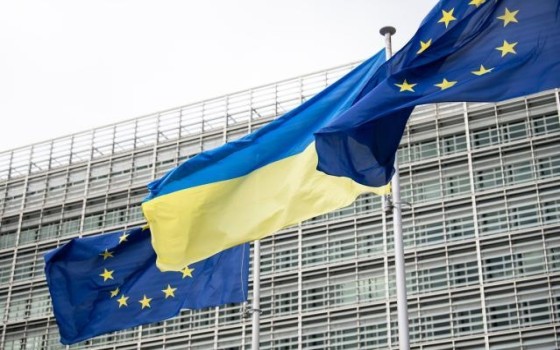
The European Union, after imposing its 20th round of sanctions against Russia: Moscow has suffered its greatest human losses since World War II to seize a few dozen meters of Ukrainian territory daily.

- Europe and Arabs
- Saturday , 7 February 2026 6:52 AM GMT
Brussels: Europe and the Arabs
A European statement issued in Brussels on behalf of European Council President António Costa said, “Russia’s war of aggression against Ukraine will soon reach 1,500 days. Throughout the past year, Russian forces have advanced at a rate of between 15 and 70 meters per day. They have seized only about 0.8% of Ukrainian territory, despite suffering the highest number of casualties in any military offensive since World War II. While Ukraine continues to defend itself with extraordinary courage on the battlefield, the Kremlin is escalating its war crimes, deliberately targeting homes and civilian infrastructure. Energy facilities and heating systems have been targeted, leaving entire communities without power in freezing temperatures. This is not the behavior of a state seeking peace, but rather that of a state waging a war of attrition against an innocent civilian population. With crucial peace talks underway in Abu Dhabi, we must be clear: Russia will only come to the negotiating table in good faith if it is under pressure. This is the only language Russia understands. That is why we are intensifying our efforts today. The Commission is presenting a new package of sanctions, the twentieth.” Since the start of Russian aggression against Ukraine.
The new sanctions package includes the energy, financial services, and trade sectors.
In the energy sector, we are imposing a complete ban on maritime services related to Russian crude oil. This will significantly reduce Russia’s energy revenues and make it more difficult for them to find buyers for their oil. Given that shipping is a global industry, we propose implementing this complete ban in coordination with like-minded partners, following the G7 decision.
We are adding 43 more vessels to the unofficial fleet, bringing the total to 640. We are also making it more difficult for Russia to acquire tankers for use in this fleet and are adding a comprehensive ban on the provision of maintenance and other services to LNG carriers and icebreakers, with the aim of further damaging gas export projects. This ban complements our ban on LNG imports, agreed upon in the 19th Package and the EU Re-empowerment Regulation.
We are then introducing a second set of measures to further restrict the Russian banking system and its ability to establish alternative payment channels to finance economic activity. This is Russia’s Achilles’ heel, and we are putting significant pressure on them.
We will designate 20 We are adding an additional Russian regional bank to the list and will take action against cryptocurrencies, companies that trade them, and platforms that facilitate their trading to close any loopholes for circumvention. We are also targeting several banks in third countries involved in facilitating illicit trade in sanctioned goods.
With the third package of measures, we are tightening export restrictions to Russia by imposing a new ban on goods and services—from rubber to tractors and cybersecurity services—worth over €360 million.
We are also imposing a new ban on imports of metals, chemicals, and bio-metals, which are not currently subject to sanctions, worth over €570 million. We are imposing further restrictions on the export of materials and technologies used in Russian military operations, such as materials used in the production of explosives. We are proposing an import quota for ammonia to limit current imports.
To demonstrate our determination to curb sanctions evasion, we will, for the first time, activate the anti-circumvention tool by prohibiting the export of any computer numerical control (CNC) machines and radio equipment to countries where there is a high risk of these products being re-exported to Russia.
Finally, we are proposing stronger legal safeguards for EU companies. To protect them from intellectual property rights violations or unfair confiscation in Russia as a result of arbitrary court rulings related to the sanctions.
Russia’s oil and gas revenues fell by 24 percent in 2025 compared to the previous year, the lowest level since 2020, further widening its fiscal deficit. Oil and gas revenues in January will be the lowest since the start of the war. Interest rates are at 16 percent, and inflation remains high.
This confirms what we already knew: our sanctions are working, and we will continue to use them until Russia engages in serious negotiations with Ukraine for a just and lasting peace.
I now call on Member States to swiftly adopt these new sanctions. Doing so will send a powerful message ahead of the tragic fourth anniversary of this war: our commitment to a free and sovereign Ukraine is unwavering. It is growing stronger every day, every month, and every year.
We are sending hundreds of generators to ensure that heating and lighting continue in homes, hospitals, and shelters.
The Council recently approved our loan. For Ukraine, we have €90 billion, which will ensure its ability to defend itself and withstand ongoing Russian attacks.
In cooperation with the United States and the Coalition of the Willing, we are developing a peace plan that includes strong security guarantees for Ukraine.
And with our American partners, we are developing a plan for Ukraine’s post-war recovery and long-term growth—a unified framework for prosperity.




No Comments Found