

Research Links Tattoos to Cancer: Nearly 21% of Europeans Have Tattoos, and Warnings of Blood and Skin Cancer Risks

- Europe and Arabs
- Sunday , 8 February 2026 6:53 AM GMT
Brussels – Copenhagen: Europe and the Arabs
Tattoos are more common than ever, but a growing body of research suggests a possible link between permanent ink and the development of certain cancers. How concerned should people be?
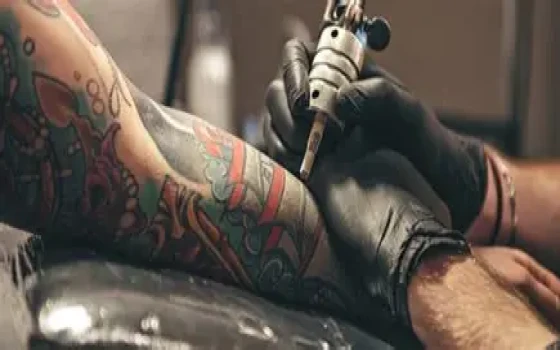
From tribal designs covering arms to butterflies on lower backs, humans have been adorning their skin with tattoos for thousands of years. For most people, the biggest worry is potential future regret, but a growing body of research indicates that tattoos may also pose more serious health risks. Tattoos have become increasingly popular in recent years, with an estimated 13 to 21 percent of Western Europeans having them, according to a study published in the European Journal of Public Health. Despite this widespread adoption, we still know remarkably little about the potential long-term health effects. According to Euronews, a Brussels-based news network, previous research has shown evidence that tattoo ink accumulates in the lymph nodes, potentially causing inflammation and, in rare cases, being linked to lymphoma, a type of blood cancer. More recently, a 2025 study from the University of Southern Denmark reported that tattooed individuals face an increased risk of developing skin cancer and lymphoma.
Using a randomly selected sample of twins, researchers compared those diagnosed with cancer to those without. The study, published in the journal BMC Public Health, showed that twins with tattoos had nearly a fourfold increased risk of developing skin cancer. It also indicated that the size of the tattoo may be a contributing factor, as tattoos larger than the palm of the hand may increase the risk. “We have evidence of an association between the amount of ink used and the risk of lymphoma and skin cancer,” co-author of the study and assistant professor of biostatistics at the University of Southern Denmark told Euronews Health. “For lymphoma, the risk is 2.7 times higher, which is a relatively large number. For skin cancer, it was previously 1.6 and is now 2.4. This suggests that the more ink there is on the body, the higher the risk and the higher the risk ratio.”
However, it is important to remember that these findings are still very preliminary, and their power is limited by the large number of confounding factors. The types of ink, the placement of the tattoos on the body, the subtypes of cancer, as well as other genetic and environmental factors, all need to be accounted for in a more accurate analysis. “The bottom line is that we need more research,” Clemmensen explained, noting that future studies should be based on larger populations and longer time periods. She continues: “I think the next step is also to study the biological mechanisms associated with tattooing and try to understand what’s happening inside the body.”
There is still no conclusive evidence that tattoos cause cancer, but there are other risks to be aware of, including ensuring that the tools used are sterilized to prevent infection and that the inks themselves are safe. All tattoo inks consist of a pigment that provides the color and a carrier that allows this color to be deposited into the middle layer of the skin, known as the dermis. Because most of these inks are imported from different countries around the world, it is sometimes difficult to trace their components, and in some cases, they may contain harmful substances. Manal Mohammed, a professor of medical microbiology at the University of Westminster, explains in an article published on The Conversation: “Some inks contain traces of heavy metals, including nickel, chromium, cobalt, and sometimes lead. Heavy metals can be toxic at certain levels and are well known to trigger allergic reactions and increase the sensitivity of the immune system.” In 2022, the European Union restricted the use of more than 4,000 hazardous substances in tattoo inks and permanent makeup under the REACH regulation, which governs the registration, assessment, authorization, and restriction of chemicals, including any substance classified as carcinogenic or mutagenic. The regulation also mandates that all tattoo inks be clearly labeled. In other countries, regulations remain less stringent, a situation the UK is currently addressing after recently publishing plans to adopt its own restrictions under the UK REACH system.
Ultimately, tattoos are considered a relatively safe procedure when performed under hygienic conditions, with the usual caveat that there is always a potential for long-term harm, as with many aspects of life. However, Clemensson emphasizes that we still lack sufficient data to draw definitive conclusions. She says, "It's up to each of us to choose how to live our lives, isn't it? But as a researcher, it's also my duty to inform people about these risks." She adds: "When it comes to tattoos, our role right now is more about informing people about how limited our knowledge is so far."





No Comments Found