
Europe's losses from the current war in the Gulf region include trade, banking, currencies, and energy... and Putin threatened to halt gas supplies.

- Europe and Arabs
- Friday , 6 March 2026 10:40 AM GMT
Brussels: Europe and the Arabs – Agencies
The repercussions of the ongoing war in the Gulf region between the US and Israel on one side and Iran on the other are not limited to the Gulf states and other countries in the Middle East. According to the European news network Euronews in Brussels, the closure of the Strait of Hormuz has led to a 60% increase in gas prices, further straining Europe's already low winter reserves and prompting economists to revise their 2026 growth and inflation forecasts.
Dutch natural gas futures contracts (TTF), the benchmark for gas pricing in Europe, reached €50 per megawatt-hour on Thursday morning, a 60% increase since the US and Israeli strikes on Iran led to the closure of the Strait of Hormuz.
This development represents the most significant energy shock to hit the continent since the 2012 crisis, and comes in a market already suffering from dangerous fragility, with gas inventories across Europe at their lowest seasonal levels in years. With the Strait of Hormuz, through which nearly a fifth of the world's oil trade passes, remaining closed, economists and energy analysts warn that even a brief disruption could damage growth in Europe, push inflation back above target levels, and potentially force the European Central Bank (ECB) to reconsider its recently settled interest rate path.
Why is the Strait of Hormuz vital to Europe?
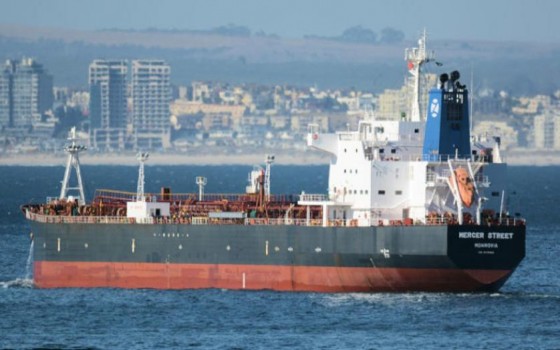
Around 20% of the world's oil supply and nearly a fifth of the world's liquefied natural gas (LNG) trade pass through the strait, making it one of the world's most important strategic energy chokepoints.
The stakes for Europe are high; Qatar supplies about 15% of Europe's total LNG imports, making the continued uninterrupted flow of shipping through the strait a matter of direct European energy security. Europe’s vulnerability to energy flows from the Gulf has increased significantly since the continent sharply reduced its imports of Russian fossil fuels after 2022. Bridget Payne, head of energy forecasting at Oxford Economics, says the biggest risk at present is disruption to trade rather than actual production loss.
Payne estimates that oil supplies could be disrupted by as much as four million barrels per day in the next quarter.
While Gulf producers have spare production capacity to compensate for the shortfall in Iranian supplies, Payne warns that alternative shipping routes can only accommodate about a third of the oil that usually passes through the Strait of Hormuz.
Europe entered March with unusually low gas storage levels; European storage facilities were at around 30% capacity, while Germany, Europe’s largest economy, had reserves at only 21.6%. Oxford Economics warned that disruptions to Qatari liquefied natural gas (LNG) exports could lead Asian buyers to compete more fiercely with Europe for shipments, potentially complicating European countries' efforts to replenish their gas reserves before next winter.
Inflation risks rise and growth slows
Higher energy prices are expected to translate into additional inflationary pressures across Europe.
Oliver Rickau, Oxford Economics' chief German economist, said: "Europe's depleted gas stocks and reliance on Middle Eastern transport routes point to a higher risk of an inflationary supply-side shock. This could further weigh on our already below-market GDP growth forecast for 2026."
Oxford Economics expects the dispute to raise overall inflation in the eurozone by 0.3 to 0.5 percentage points in 2026, to around 2.3%. Higher energy costs could also reduce household purchasing power, thus curbing economic growth.
Rakau estimates that the shock could reduce GDP growth in the eurozone by about 0.1 percentage points to around 1 percent this year.
Goldman Sachs economists said the conflict in Iran has already prompted them to revise their forecasts for economic growth, inflation, and monetary policy.
"We are adjusting our growth, inflation, and central bank policy forecasts in light of developments in the Middle East conflict," said Sven-Jary Stein, Goldman Sachs' chief European economist.
Goldman Sachs also estimates that higher energy prices could shave between 0.1 and 0.2 percentage points off economic growth this year in the eurozone, the UK, Sweden, and Switzerland.
But the outlook could worsen if energy prices rise more sharply or remain at their elevated levels for a longer period. In a negative scenario, oil prices could remain near $80 (€74) per barrel, while gas prices could stabilize around €70 per megawatt-hour, according to the bank's estimates.
In a more severe scenario, oil prices could reach $100 (€92) per barrel, and gas €100 per megawatt-hour.
In these more severe scenarios, the impact on the economy and inflation could be significantly greater.
By the end of 2026, headline inflation could be nearly 2 percentage points higher in the negative scenario, and as high as 3.6 percentage points in the case of a severe shock.
Goldman Sachs expects the European Central Bank to implement two interest rate hikes of 25 basis points each in the second half of 2026 in the severe negative scenario if rising energy prices lead to significant spillover effects on core inflation.
According to Yehuda Levin, head of research at Freetus, the military strikes and retaliatory attacks in the region have prompted several shipping companies to suspend bookings to Gulf ports.
Levin said, "The US-Israeli strikes on Iran and the subsequent Iranian response are causing significant disruptions to shipping services in the region, and their effects could begin to be felt globally if the conflict continues."
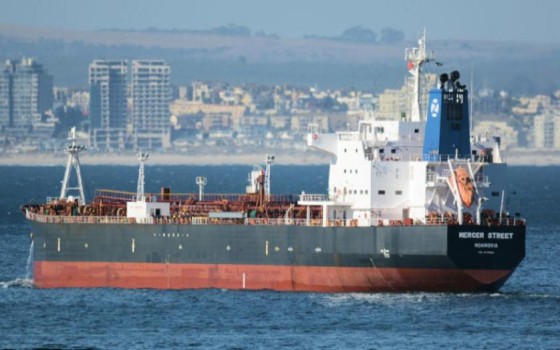
Between two and three percent of the world's container traffic passes through the Strait of Hormuz, while approximately 100 container ships are currently stranded in the Gulf.
Some of the world's largest shipping companies, such as Hapag-Lloyd and MSC, have stopped accepting bookings to and from Gulf ports, while CMA CGM has suspended shipments to the entire region.
The conflict has also brought renewed concerns related to the Red Sea. The Houthi group, which halted its attacks on commercial vessels in October, has threatened to resume them, prompting the few shipping companies that had returned to this route to reroute around the Cape of Good Hope, further increasing shipping costs.
Meanwhile, disruptions to airports and major air hubs in the Gulf have reduced global air cargo capacity.
Qatar Airways Cargo, Emirates SkyCargo, and Etihad Airways together account for approximately 13% of global air cargo capacity and play a pivotal role in connecting Asia and Europe.
With many flights grounded and parts of regional airspace closed, cargo carriers have begun chartering direct flights between Asia and Europe, a shift that is already driving up shipping costs.
According to the Freightos Air Cargo Index, freight rates from Southeast Asia to Europe have risen by more than 6% in recent days.
Currency markets reflect growing risk aversion.
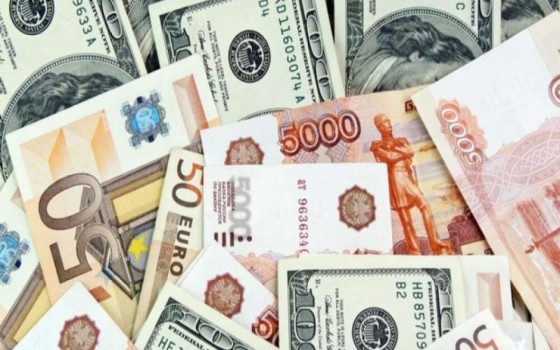
Financial markets are also reacting to geopolitical uncertainty. European currencies weakened as investors sought safe-haven assets such as the US dollar and gold. According to Michał Jozwiak, an analyst at the financial services firm Ebori, the euro has fallen by about 1.8% against the dollar since the escalation of the conflict.
The sell-off was most pronounced in Central and Eastern Europe.
The Hungarian forint fell by about 5% against the dollar, and the Polish zloty dropped by about 3.5%, in one of its sharpest weekly moves since the start of the Ukraine war in 2012. Continued weakness in European currencies could fuel inflationary pressures by increasing the cost of imports.
A fragile energy balance: For Europe, the ongoing conflict highlights the fragility of its energy model after reducing its dependence on Russia.
Although the continent has significantly reduced its reliance on Russian pipeline gas since 2012, a large portion of those supplies has been replaced by seaborne liquefied natural gas (LNG) imports. This shift has made Europe more vulnerable to disruptions in global shipping routes and to geopolitical tensions in key transit areas like the Middle East.
With gas stockpiles already low and storage facilities entering their refilling season, the effects of any prolonged disruption to energy flows from the Gulf could quickly spread to European markets and economies.
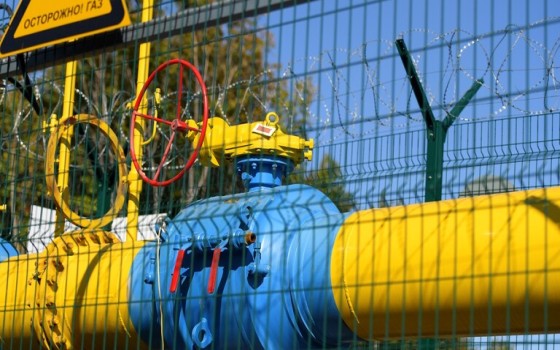
For his part, Russian President Vladimir Putin hinted at the possibility of halting natural gas supplies to EU countries ahead of schedule for commercial reasons, given the escalating conflict in the Middle East.
According to the Spanish newspaper El Economista, Putin said that EU countries are planning to impose new restrictions on Russian gas purchases within a month, and that these restrictions could culminate in a complete embargo within a year. He added, "New markets are opening up for us, and it might be more profitable for us to stop supplies to the European market now and turn to other markets."
However, Putin was careful to emphasize that there was no political motivation behind this move, indicating that his remarks were merely reflections and not a final decision. According to what was published on the Youm7 website in Cairo on Friday:
European Sanctions
Last January, the Council of the European Union approved a ban on imports of Russian gas via pipelines and LNG. The full ban will take effect from January 2027 for LNG and from autumn 2027 for pipeline gas. The Council notes that Russia accounted for approximately 13% of total EU gas imports in 2025.
Russia as a Potential Mediator in the Middle East
On another front, the Putin administration expressed its readiness, if necessary, to play a mediating role in peace talks between Iran and the United States, according to a statement by Mikhail Ulyanov, Russia's Permanent Representative to International Organizations in Vienna. He explained that achieving the goals of both sides cannot be accomplished through military force alone.
Meanwhile, China announced its continued efforts with all parties, including those involved in current conflicts in the Middle East, to enhance communication, mediation, and work towards reaching agreements. It also announced that it will soon send Special Envoy Zhai Jun to the region to work on de-escalating the rising tensions.



No Comments Found