

Military Escalation and Political Pressure: US Special Operations Forces to Extract 1,000 Pounds of Iranian Uranium and Target Defenses. US-Israeli Coordination Meeting. Pakistan Talks Continue

- Europe and Arabs
- Monday , 30 March 2026 5:21 AM GMT
Washington-Islamabad: Europe and the Arabs - Agencies
Developments in the current war in the Middle East continue, oscillating between military escalation and political pressure, as the world awaits results that may emerge in the coming days, or even hours. US President Donald Trump declared that the airstrikes launched by the United States and Israel had led to "regime change" in Iran. At the same time, he stated that negotiations with the new Iranian leadership were progressing rapidly and that oil tankers would soon resume sailing through the Strait of Hormuz.
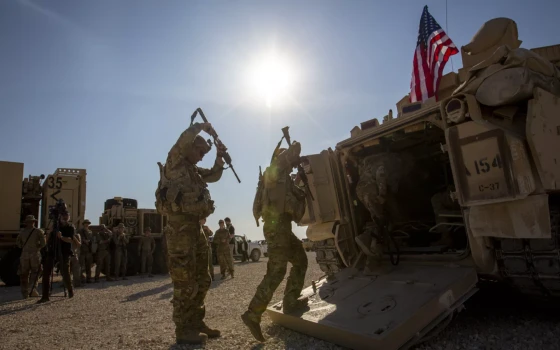
Meanwhile, The New York Times reported the arrival of hundreds of US special operations forces in the Middle East, as part of a rapidly escalating military buildup in the region due to the Iran conflict.
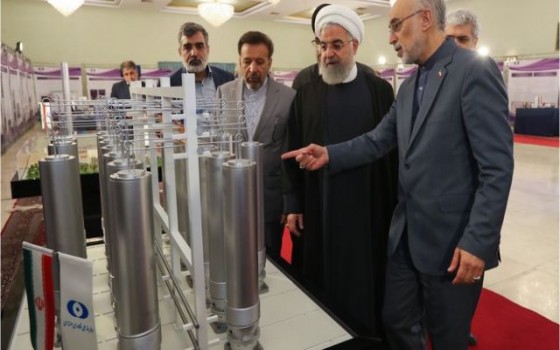
The Wall Street Journal, citing officials, revealed that US President Donald Trump is considering a military operation to extract approximately 1,000 pounds of Iranian uranium, a move that could represent a dangerous escalation in the crisis with Tehran.
The sources indicated that Trump is open to the idea of seizing Iranian uranium but has not yet made a final decision regarding the operation. According to leaks, the plan aims to prevent Iran from using uranium in enrichment programs or developing nuclear capabilities by directly controlling sensitive materials.
This approach raises concerns about a direct military confrontation between the United States and Iran, especially since any such move could be considered a direct violation of Iranian sovereignty.
This development presents the region with several scenarios, ranging from military escalation to political pressure to reach an agreement on the Iranian nuclear program.
Amidst the rapid US military movements toward the Middle East, the 82nd Airborne Division has returned to the forefront as one of Washington's most prominent rapid reaction forces, capable of deploying to hotspots within hours.
The announcement of the deployment of elements from this division coincided with the arrival of US Marine Corps units aboard the USS Tripoli in the Central Command area of responsibility, a move reflecting the increased US military readiness in the region.
In this context, we will review the most prominent characteristics of the 82nd Airborne Division, its operational capabilities, and its role in US military strategy, especially in light of the escalating tensions in the Middle East. The 82nd Airborne Division is known as a highly prepared rapid reaction force, capable of conducting military operations anywhere in the world within 18 hours from its main base in North Carolina.
This division is the spearhead of airborne operations, tasked with securing strategic locations behind enemy lines, thus paving the way for conventional forces to advance and achieve their objectives.
The division comprises approximately 18,000 soldiers, all in a state of constant readiness, making it a fully integrated army capable of conducting multiple operations in diverse and complex combat environments.
The division's personnel are distributed across three infantry combat brigades, which form the backbone of its structure, along with an aviation brigade equipped with attack, transport, and cargo helicopters, providing comprehensive air and logistical support.
The division also includes advanced artillery units, a logistics support brigade responsible for supply and logistics, as well as a command battalion and specialized units in military engineering, intelligence, and electronic warfare. The three infantry combat brigades consist of paratrooper battalions trained to conduct operations behind enemy lines, supported by reconnaissance, engineering, and logistical support elements, enhancing their ability to operate independently.
These divisions trace their roots back to World War I, where they participated in several battles before being disbanded after the war's end. They were later reformed at the outbreak of World War II.
The 82nd Airborne Division and the Normandy Landings
During World War II, the 82nd Airborne Division became the first airborne division in the U.S. Army and participated in significant operations, including the Normandy landings, which proved a turning point in the war in Europe.
Since then, the division has participated in numerous major conflicts, from the Vietnam War to the wars in Afghanistan and Iraq, gaining extensive combat experience in various types of warfare.
This division is considered a key component of the U.S. military's rapid intervention strategy, used to quickly establish control over sensitive areas or contain crises in their early stages. In the context of the current conflict with Iran, military experts are outlining potential scenarios for this division's participation in military operations, particularly given its rapid deployment capabilities and ability to execute precise missions.
These experts believe the division could target Iranian defenses in multiple locations or disrupt them, thus paving the way for broader operations by US forces and their allies in the region.
However, these capabilities do not preclude challenges. Experts point out that US forces may encounter complex Iranian defenses, especially in sensitive geographical areas such as the islands scattered throughout the Gulf.
This comes after Israeli security sources announced on Sunday that the commander of US Central Command, Admiral Brad Cooper, met that day with the Israeli Chief of Staff, Eyal Zamir, and other senior Israeli officials to discuss a special military operation against Iran.
Sources told The Times of Israel that Cooper and Zamir discussed the joint military operation against Iran, which has recently targeted Iranian weapons production facilities in large numbers.
It is worth noting that Israeli military spokesman Brigadier General Efi Defrin stated that the army would complete targeting all "vital" assets in Iran's military production industries "within a few days."
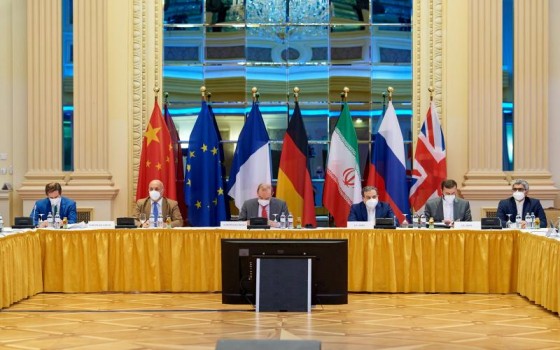
This comes as the foreign ministers of Pakistan, Saudi Arabia, Egypt, and Turkey met in the Pakistani capital, Islamabad, on Sunday to discuss the latest developments in the Middle East conflict, amid Pakistani-led efforts to mediate between the United States and Iran.
The four-way meeting of the foreign ministers in Islamabad lasted for several hours, under tight security at the Pakistani Foreign Ministry. Pakistani Foreign Minister Ishaq Dar said the talks were held at a "critical moment," without the participation of the United States, Israel, or Iran. In a post on the X platform, he explained that the frank and constructive discussions focused on regional developments and ways to enhance peace and stability, as well as strengthening partnerships and deepening cooperation among the participating countries. These meetings are expected to continue until Monday.
Pakistani Prime Minister Shehbaz Sharif had previously announced his country's readiness to host talks aimed at containing the escalating tensions in the Middle East, amid the exchange of attacks between the United States and Israel on one side and Iran on the other.
In a previous statement to AFP, Pakistani Foreign Ministry spokesman Tahir Hussain Andarabi affirmed that Islamabad has always advocated for dialogue and diplomacy as the primary means of promoting peace and stability in the region.
US President Donald Trump confirmed that Iran had granted the United States access to 20 oil tankers, indicating that loading would begin on Monday.
In recent remarks, Trump indicated that he sees the possibility of reaching an agreement with Iran, explaining that the Iranians had agreed to most of the 15 points presented by the United States, which he considered an indication of their seriousness in the negotiations.


No Comments Found