
Two-week truce between the US and Iran... Each side considers itself victorious... Israel announces: The agreement does not include Lebanon... Key outcomes: Oil prices drop, the Strait of Hormuz reopens... Friday's negotiations on a final agreement

- Europe and Arabs
- Wednesday , 8 April 2026 5:43 AM GMT
Tehran – Washington: Europe and the Arabs
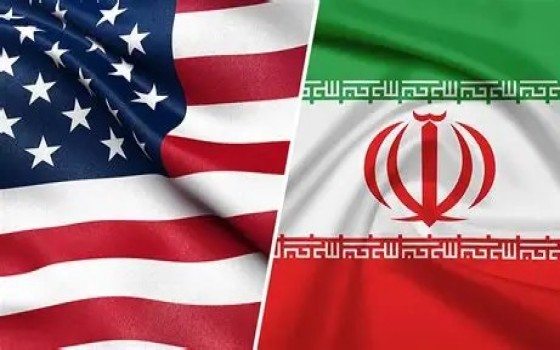
The United States and Iran reached a two-week ceasefire agreement, two hours before the deadline set by US President Donald Trump. Israel also agreed to a temporary truce, but confirmed that it did not include Lebanon. Iran agreed to reopen the Strait of Hormuz (temporarily) to maritime traffic. Both sides described the ceasefire as a victory: according to Trump, the United States achieved "and even exceeded" all military objectives, and he achieved "a total and complete victory."
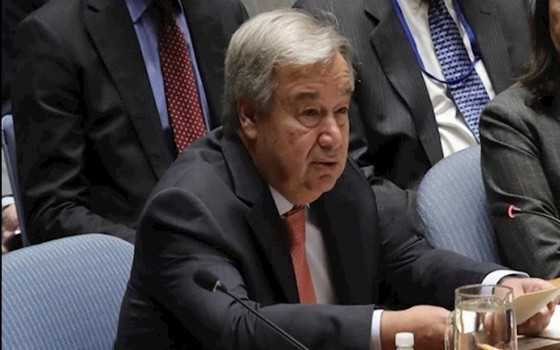
Further negotiations are still needed to reach a final peace agreement; according to sources, the United States and Iran are scheduled to begin direct negotiations. Oil prices fell sharply following the announcement, according to European media reports in Brussels, including the Belgian newspaper Nieuwsblad. The newspaper added that following the announcement of the ceasefire between the United States and Iran, the United Nations called on the warring parties to adhere to the ceasefire. The spokesperson for UN Secretary-General António Guterres stressed that this is essential "to pave the way for a lasting and comprehensive peace in the region."
While Guterres welcomes the two-week ceasefire, he also calls on "all parties to the conflict in the Middle East to uphold their obligations under international law," according to UN spokesperson Stéphane Dujarric.
Iraq welcomes the ceasefire, and a resistance group suspends its operations.
The Iraqi Foreign Ministry welcomed the temporary ceasefire between the United States and Iran, which lasted from Tuesday night until Wednesday morning. The Islamic Resistance in Iraq also announced on Wednesday (local time) the suspension of its operations in the region for two weeks, according to Reuters. A statement issued by the Iraqi ministry read: "Iraq calls for this positive step to be taken advantage of by engaging in a serious and sustained dialogue that addresses the root causes of the disputes and strengthens mutual trust." Seven more civilians, including a child, were killed on Tuesday in the ongoing conflict in the country. Since the war began in late February, the death toll in Iraq has exceeded one hundred.
Iran and Oman to Impose Transit Fees in the Strait of Hormuz During Ceasefire
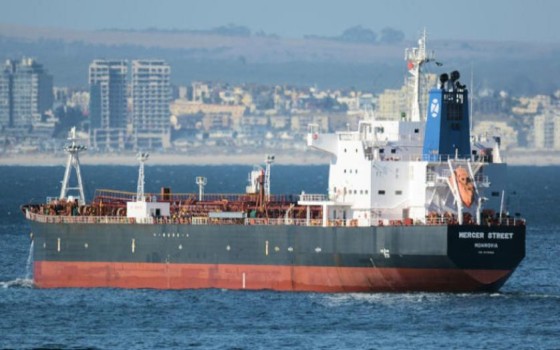
Iran and Oman plan to impose transit fees on ships passing through the Strait of Hormuz during the two-week ceasefire, according to Iran's semi-official Tasnim news agency, as reported by CNN. Tasnim stated that the revenue from the fees is earmarked for reconstruction.
Several oil tankers have transited the strait in recent weeks. Reports indicate that Iran is demanding up to $2 million per ship.
Trump: Iran's Uranium Issue Will Be Resolved "Completely" Under Agreement
In a telephone interview with AFP, US President Donald Trump described the ceasefire with Iran as a "complete and total victory." Trump added that the issue of Iran's enriched uranium stockpile will be "completely resolved" under the agreement. "Otherwise, we wouldn't have reached a settlement."
In the interview, Trump also stated that he believes China pressured Iran to agree to the ceasefire. Israel supports Trump's ceasefire, but says it excludes Lebanon.
Israeli Prime Minister Benjamin Netanyahu issued a statement declaring his support for the US-brokered ceasefire, but emphasized that Lebanon is not included. The statement read: "Israel supports President Trump's decision to suspend attacks on Iran for two weeks, provided that Iran immediately opens the Straits of Hormuz and ceases all attacks on the United States, Israel, and countries in the region."
Netanyahu added: "Israel also supports the United States' efforts to ensure that Iran does not pose a nuclear, missile, or terrorist threat to America, Israel, Iran's Arab neighbors, and the rest of the world. The United States has assured Israel of its commitment to achieving these goals, which are shared by the United States, Israel, and Israel's regional allies, during the upcoming negotiations."
He continued: "The two-week ceasefire does not include Lebanon." With this, Netanyahu contradicts the Pakistani Prime Minister, who explicitly stated in his ceasefire announcement that Lebanon is also included. Israel has been conducting attacks there against the Iranian-backed Hezbollah. The United States and Iran agreed to a two-week ceasefire just one hour before the expiration of Donald Trump's ultimatum to destroy the Islamic Republic, with peace talks set to begin in Islamabad on Friday.
After more than five weeks of Israeli and US strikes on Iran, Tehran announced early Wednesday that talks with Washington would begin Friday in Pakistan, a key mediator in the conflict that began on February 28.
White House spokeswoman Caroline Leavitt said the US administration was considering direct talks with Iran, but no decision had yet been made.
Trump said on his Truth Social platform, "After discussions with Pakistani Prime Minister Shehbaz Sharif and Army Chief Asim Munir, who asked me to suspend the planned military action against Iran this evening, and on the condition that the Islamic Republic of Iran agrees to the full, immediate, and secure opening of the Strait of Hormuz, I agree to suspend the bombing and attacks against Iran for two weeks." Trump had given Iran until 8 p.m. Washington time (midnight GMT) on Tuesday to reopen the strategic waterway through which 20% of the world's crude oil flowed before the war.
"This will be a two-way ceasefire!" Trump added, explaining that the reason for this was "that we have achieved and exceeded all of our military objectives, and we are very close to reaching a final agreement on a long-term peace with Iran, and peace in the Middle East."
White House spokeswoman Caroline Leavitt on Tuesday hailed the two-week ceasefire between Washington and Tehran as a "victory" for the United States.
Ceasefire "everywhere"
Iranian officials, for their part, confirmed that they had agreed to reopen the Strait of Hormuz "for two weeks if the attacks cease."
Iranian Foreign Minister Abbas Araqchi said on the X platform, "For two weeks, safe passage through the Strait of Hormuz will be possible through coordination with the Iranian armed forces and taking into account technical restrictions."
A statement issued by Iran's Supreme National Security Council said, "It has been decided at the highest level that Iran will engage, for two weeks (...), in negotiations with the American side in Islamabad," adding that "this does not mean the end of the war." According to the Brussels-based European news network Euronews, Iran said on Tuesday that it had sent American negotiators a 10-point proposal to end the war with the United States and Israel, stipulating that Washington accept its uranium enrichment program and demanding the lifting of all sanctions. Iran said in a statement released alongside the list of points published by state media that the plan would require "continued Iranian control over the Strait of Hormuz, acceptance of uranium enrichment, and the lifting of all sanctions."
The announcement of the agreement between Washington and Tehran was met with widespread approval in the markets, with oil prices plummeting by more than 15% to below $100 a barrel, and the Tokyo and Seoul stock exchanges rising by 4% and 6% respectively at the opening.
Prior to the announcement of the agreement, two civilians, one of them an eight-year-old child, were killed in the al-Amiriya district of western Baghdad when a projectile struck their home, causing a fire, a police source told AFP.
The Abu Dhabi Media Office announced that authorities in the emirate were responding to a fire at a gas processing facility on Wednesday.
In Lebanon, at least eight people were killed in an Israeli airstrike targeting the southern city of Sidon late Tuesday night, according to the Lebanese Ministry of Health.
Israeli airstrikes on Lebanon since the start of the war have killed more than 1,500 people, according to the Ministry of Health. In Israel, the army issued three consecutive warnings on Tuesday night and Wednesday morning about missile attacks from Iran towards the Jewish state, moments after US President Donald Trump announced his agreement to suspend the attack on Iran.


No Comments Found