

United Nations: Hostilities Continue Between Israel and Hezbollah Despite Ceasefire Extension – Killings and Violations Continue in Gaza, Settlement Activity in the West Bank is Unprecedented, and Funding Shortages Exacerbate Hunger

- Europe and Arabs
- Tuesday , 19 May 2026 5:15 AM GMT
Beirut – Gaza: Europe and the Arabs
The United Nations expressed its regret over the continued exchange of fire between Israel and Hezbollah, despite the announcement of a 45-day extension of the cessation of hostilities. Lebanese authorities reported civilian casualties within their territory, according to the UN's daily news bulletin on Tuesday morning.
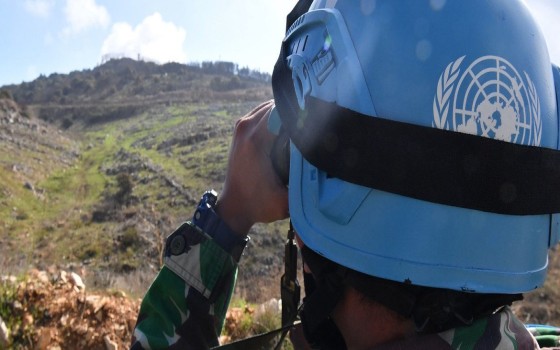
During a press conference in New York on Monday, Farhan Haq, Deputy Spokesperson for the United Nations, stated that the UN peacekeeping force (UNIFIL) continued to observe "ongoing combat aerial activity" in its area of operations since the agreement was reached, which followed talks between Israel and Lebanon facilitated by the United States.
Secretary-General António Guterres welcomed the announcement of the extension of the cessation of hostilities and affirmed the UN's support for all efforts aimed at ending the fighting and alleviating the suffering of communities on both sides of the Blue Line, the demarcation line between the two countries. He urged all parties to fully respect the cessation of hostilities and comply with their obligations under international law.
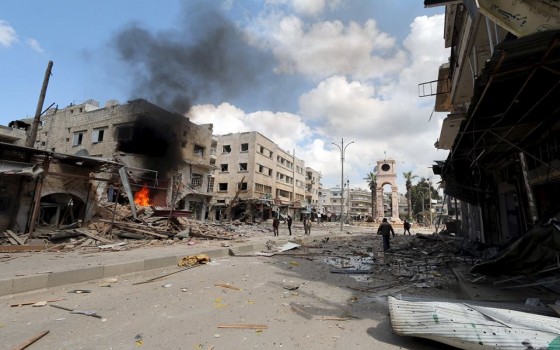
However, UNIFIL confirmed that Israeli airstrikes targeted southern Lebanon, including areas near UN positions. The mission also recorded more than 1,000 incidents of gunfire originating from Israeli positions in the south, as well as the firing of dozens of projectiles attributed to non-state Lebanese armed groups, likely affiliated with Hezbollah, since Saturday.
Haq said that a UNIFIL position near the Bayada area sustained "significant damage as a result of a projectile landing inside the position and another in its immediate vicinity, including extensive damage to structures and equipment."
He noted that the source of the projectile has not yet been determined, reiterating his call on all actors to respect the inviolability of UN premises and to ensure the safety and security of UN personnel at all times.
Regarding the situation in the Palestinian territories, the UN Office for the Coordination of Humanitarian Affairs (OCHA) warned that funding shortfalls are hindering humanitarian operations in the occupied Palestinian territory, leaving more people hungry or without access to basic services. The UN Office for the Coordination of Humanitarian Affairs (OCHA) explained that the 2026 emergency appeal – seeking just over $4 billion to support nearly three million people in the Gaza Strip and the West Bank – has received only 12 percent of the required funding, with only $490 million received so far.
The UN agency stated that one of the most visible consequences of this situation is in the area of food assistance. In Gaza, the UN and its humanitarian partners are supporting kitchens to provide one million meals a day. This figure represents a significant decrease compared to the 1.8 million meals a day provided last February.
UN food security partners are working to gradually shift from providing food assistance to supporting livelihoods and providing cash assistance, enabling people to produce their own food, generate income, and make their own choices. However, partners report that the private sector is not currently providing enough nutritious, diverse, and affordable food. As a result, one in five families is eating only one meal a day, with mothers depriving themselves of food so their children can eat.
In addition to limited funding, humanitarian operations are being hampered by restrictions on the entry of vital spare parts, backup generators, and other equipment, as well as shortages of fuel and motor oil.
Furthermore, these operations are hampered by restrictions on the work of key partners, restrictions on freedom of movement within the Gaza Strip, and damage to roads and infrastructure.
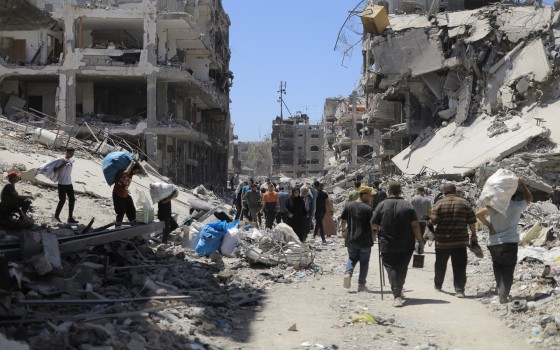
Meanwhile, military operations in Gaza continue to affect civilians. Over the weekend, partners on the ground observed the displacement of more than 150 families from eastern Khan Younis and eastern Gaza City. The affected families reported fleeing tank movements or shelling.
OCHA reported that approximately 20 families have returned to their homes, while most remain displaced. Partner organizations have identified 40 newly displaced families as requiring urgent assistance, having fled with only what little they could carry. A joint response from several aid agencies has already begun to assist them.
Most of the population remains displaced.
It is worth noting that most of Gaza’s 2.1 million residents remain displaced, often living in dire conditions.
The UN stressed the need to protect civilians at all times, including allowing them to move to safer areas where their basic needs can be met. It also emphasized the need to allow them to return voluntarily whenever conditions permit.
The UN also highlighted an incident on Friday in which the movement of peacekeepers was obstructed near the port of Naqoura, where “seven Israeli soldiers stopped a UNIFIL convoy, pointed their weapons at the vehicles, and searched an ambulance before allowing it to proceed.” The director of the UN Office of the High Commissioner for Human Rights in the occupied Palestinian territory said that the ceasefire in Gaza has reduced violence, but killings, destruction and violations continue on a daily basis, and that the rate of forced displacement in the occupied West Bank has reached levels not seen in decades.
At a press conference at the United Nations headquarters in Geneva, Ajit Songhee presented a report issued by the UN Human Rights Office covering 19 months of "widespread violations of international law, including atrocity crimes, from October 2023 to the end of May 2025."
Songhee noted the ceasefire agreement of October 2025, stating that it reduced the massive scale of violence and created a modest humanitarian window of opportunity, "but killings and the destruction of infrastructure continued almost daily, while the overall humanitarian situation remained catastrophic. All this while Hamas continued its violations, including against the people of Gaza themselves."
In the West Bank, the UN report stated that the rate of forced displacement of Palestinians had reached levels not seen in decades, and that Israeli settlement expansion was unprecedented.
Songhee said: "Israeli military and police forces and settlers continue to kill more Palestinians with impunity, often carrying out these operations together. This record of violence and injustice continues and will affect Palestinians for generations to come." Songhai addressed the reasons for the continuation of these violations, attributing it to insufficient efforts to stop them, ensure accountability, and confront the root cause: the prolonged occupation.
The Responsibility of Other States
The UN official stressed the urgent need for other states—in addition to issuing statements of condemnation—to take all available measures, consistent with international law, to end the Israeli occupation, ensure the dismantling of existing settlements, protect civilians, achieve accountability for serious violations by all parties, and guarantee the ability of Palestinians to exercise their human rights.
He concluded his remarks at the press conference by saying, "In such a context, inaction is not passivity; it is complicity."







No Comments Found