
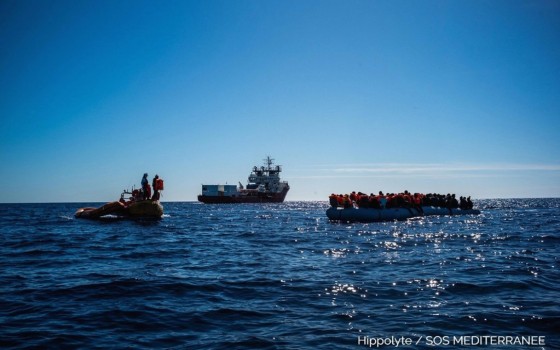
The number of illegal crossings reached 64,000 last year. The European Union announces a new action plan targeting countries of origin and transit to combat human trafficking across the English Channel.

- Europe and Arabs
- Wednesday , 17 June 2026 5:4 AM GMT
Brussels: Europe and the Arabs
The European Commission has presented the EU Action Plan on the English Channel Migration Route, outlining a comprehensive European response to the challenges posed by irregular migration along this route, according to a statement issued by the Commission in Brussels.
The Action Plan proposes practical measures starting in countries of origin and transit and extending along the entire route. These measures include dismantling migrant smuggling and trafficking networks, strengthening the protection of external borders, and intensifying returns. Irregular migration across the English Channel poses a significant challenge, causing loss of life at sea and placing considerable strain on border control, public order, and reception capacities in the most affected Member States. This migration also fuels unauthorized movements across the EU and the Schengen Area and strengthens the organized crime networks that facilitate migrant smuggling.
The EU has already intensified its efforts to manage migration more effectively, resulting in an overall decrease in irregular border crossings at the EU's external borders (-55% since 2014). Illegal border crossings across the English Channel have decreased (-44% so far in 2026), although they remain high, with nearly 64,000 attempted crossings in 2025. To address these challenges, the Action Plan focuses on three key priority areas, which will be tackled with the support of EU agencies and in cooperation with the UK: strengthening migration efforts along the Channel route, dismantling smuggling networks and their criminal infrastructure, and enhancing border management.
The UK is a key partner in realizing the full potential of this Action Plan. Given the shared nature of the challenge, and building on the steps the UK has already taken, further action on its part will be essential across all aspects of the Action Plan to strengthen border security, combat migrant smuggling, and reduce the drivers of irregular migration.
Strengthening migration efforts along the Channel route: Reducing illegal crossings requires sustained and coordinated engagement along the routes used by migrants seeking to cross the Channel. To achieve this, the EU will strengthen its diplomatic efforts on migration and enhance cooperation with countries of origin and transit, as well as with international organizations.
This includes bolstering efforts within a comprehensive approach to migration pathways, coordinating EU-UK awareness campaigns for migrants in countries of origin and transit, and strengthening cooperation on returns and readmission to prevent individuals from undertaking perilous journeys and to keep irregular arrivals low.
Dismantling smuggling networks and their criminal infrastructure
Building on existing cooperation within the Global Alliance against Migrant Smuggling, the Action Plan calls for enhanced joint operational cooperation within the EU's European Multidisciplinary Platform Against Criminal Threats (EMPACT), and for strengthened cooperation between Member States, Europol, Frontex, Eurojust, and international partners.
Member States will also work to map smuggling networks along the English Channel, with support from Europol's Migrant Smuggling Centre. Further measures will be considered to disrupt the logistical supply chains of small boats and to address the cyber dimension of migrant smuggling, in cooperation with the EU Internet Forum and e-service providers.
Strengthening Border Management
This action plan will enhance operational capabilities at the UK border with the most vulnerable Member States, with the aim of improving situational awareness, information sharing, and operational cooperation.
This includes strengthening Europol’s European Centre for Combating Migrant Smuggling and the UK-France Joint Intelligence Unit in Calais, as well as deploying Frontex personnel and equipment (such as surveillance equipment) along the English Channel and North Sea borders.
According to the EU statement, this action plan builds on the European Strategy for Migration and Asylum Management, which calls for strengthening migration diplomacy and consolidating cooperation with partner countries, as part of the EU’s comprehensive approach to migration management. It also supports ongoing joint efforts within the Global Alliance Against Migrant Smuggling.
Migration across the English Channel sees a steady influx of asylum seekers attempting to reach the UK in small, irregular boats departing from the French coast. This journey is fraught with high risks due to its passage through one of the world's busiest shipping lanes. The current situation regarding crossings: Migrant boats continue to cross the Channel despite heightened security measures and intensive patrols by British and French authorities. Arrivals fluctuate significantly depending on weather conditions; recent times have seen tens of thousands of crossings annually. British procedures and policies: The United Kingdom enforces strict laws for dealing with irregular migrants and asylum seekers crossing the Channel. British authorities have suspended the five-year residency program for refugees, replacing it with temporary protection limited to 30 months, after which refugee status is reviewed.






No Comments Found